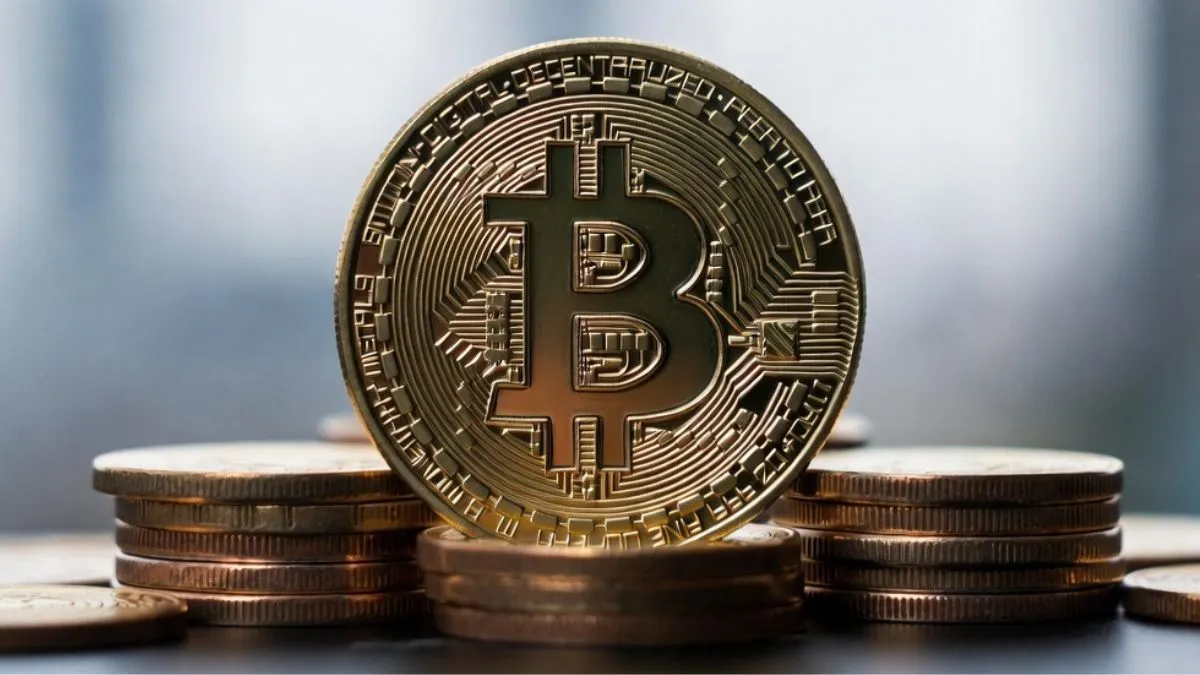
Bitcoin is unique among investments because of its hardcoded scarcity, which no other major asset class can copy. Bitcoin’s protocol limits its total supply to exactly 21 million coins, unlike fiat currencies that central banks print over and over again or commodities whose supply changes all the time. This digital scarcity, which is enforced by code and agreement, is what makes it valuable in the long term. Any serious investor should know this.
Understanding Bitcoin’s Limited Supply
Satoshi Nakamoto, the person who made Bitcoin, wanted it to be like gold in that it was hard to find, but better because it was always predictable. “The halving” happens every four years and cuts the block reward in half. This slows down the issuance of new bitcoins until around 2140, when no new bitcoins will be mined. This predictable model of deflation is very different from the U.S. dollar, which has lost more than 96% of its buying power since 1913 because of inflation.
The effects are huge: as institutional adoption, nation-state reserves, and everyday users all increase demand, the fixed supply puts upward pressure on prices. Michael Saylor of MicroStrategy and other investors have bought billions of dollars’ worth of Bitcoin, calling it “digital gold” because it is so rare. In April 2026, when Bitcoin was trading close to its all-time highs after the 2024 halving, this mechanic still proves that early holders who understood it ten years ago were right.
Why Scarcity Is More Important Than Anything Else
Bitcoin is popular with investors because it is scarce, even though it is decentralized, secure, and portable. No government can make it worth less, no miner can make more than the protocol allows, and its open-source code makes sure that everyone can see the supply schedule. This unchangeability gives economic sovereignty, protecting wealth from the currency devaluation that happens in fiat systems around the world.
Look at how it has done in the past: Bitcoin’s scarcity caused it to grow at a rate that was much higher than stocks or bonds, going from less than $10,000 in 2018 to more than $100,000 by the end of 2024. Even after crashes like the bear market of 2022, it bounced back faster than the S&P 500 after COVID, showing that its supply cap is directly related to its strength. For investors, ignoring this is like ignoring the fact that gold’s mineable reserves are limited. It’s just the way value is kept.
The Halving Mechanism at Work
Halvings of Bitcoin are what make it scarce. The first one in 2012 cut the rewards from 50 to 25 BTC per block. The second one in 2024 cut them to 3.125 BTC, and the next one is due in 2028. Historically, each halving has come before a bull run because the supply is lower while the demand from ETFs, corporate treasuries, and users in emerging markets fleeing currency crises stays the same or grows.
After the halving, prices went up: the 2016 event led to a peak in 2017, and the 2020 event led to an all-time high in 2021. With spot Bitcoin ETFs holding millions of coins by 2026, supply shocks will be even worse. This isn’t guesswork; it’s math. Daily issuance drops in a predictable way, and on-chain metrics like active addresses hit all-time highs, which means real utility growth.
Scarcity vs. Inflation in Fiat
Fiat currencies lose value because they are printed so much; for example, the U.S. M2 money supply grew by 40% during COVID alone. Bitcoin’s 21 million cap means it can’t be diluted, making it a good way to protect against inflation. In countries like Argentina and Venezuela, where hyperinflation destroys savings, Bitcoin’s scarcity is a lifeline. Users there hold more than their fair share of GDP.
This is backed up by BlackRock’s report, which says that Bitcoin has a low correlation with traditional assets, which makes portfolios more diverse. Pension funds and sovereign wealth now allocate, knowing that scarcity is the answer to fiat’s “unlimited supply” problem. Even a 1% allocation captures this asymmetry for the average investor.
Network Effects Make Scarcity Worse
Scarcity alone isn’t enough; Bitcoin’s first-mover advantage makes things better and better. Its network has the most hash power, nodes, and liquidity, which makes attacks too expensive to carry out. With more than 1 million active addresses every day and a market cap of $2 trillion in 2026, it will be hard for altcoins to catch up.
Value grows with the square of the number of users, according to Metcalfe’s Law. As adoption grows, from being legal tender in El Salvador to being held in U.S. strategic reserves, scarcity grows. Investors who don’t pay attention to this miss how network effects can turn a fixed supply into huge returns, just like the early protocols of the internet.
Adoption in the Real World and a Supply Squeeze
Companies like Tesla and Block have billions of BTC in their treasuries, which lowers the amount of BTC that is available for trading. Fidelity and Vanguard ETFs hold even more, with inflows that are higher than the total miner output for 2025. Governments, like the U.S. under President Trump’s pro-crypto stance, stockpile Bitcoin that they take from people, making it even harder to get.
Lost coins, which are thought to be 20% of the supply in wallets that can’t be accessed, permanently lower the effective cap to less than 17 million. PlanB made this “stock-to-flow” model famous. It uses ratios of scarcity to predict prices, just like gold, and it did a good job of predicting past cycles.
You might be interested in:
- What Makes IMAX Dome Theaters Unique?
- Why Silicon Valley Became the World’s Tech and Innovation Hub
- Andreessen Horowitz Launches $42M College Alternative With No Degree
- When Do You Need an Electrician and How to Choose the Right One
- What Is an AI Agent?
Scarcity’s strength lowers risks
Volatility is still there, but scarcity is what makes recovery possible. Regulatory problems or hacks have a bigger effect on altcoins than on Bitcoin, which is decentralized and has thousands of nodes around the world. Over the course of 17 years, it has survived the collapses of Mt. Gox and FTX, as well as bans, always bouncing back because of its unchanging supply.
Diversification reduces risk: a small position increases upside without ruining the whole portfolio. Studies show that putting 2–5% of your money into different things is the best way to get Sharpe ratios. This balances growth with stability.
Proof from the Past of Scarcity’s Strength
Scarcity rewarded patience, as the price of a coin went from 10,000 BTC in 2010 to $100,000 or more in 2024. Early adopters, like the Winklevoss twins, turned $11 million into billions. After the 2024 election, Trump’s administration will look at Bitcoin reserves, just like gold did at Bretton Woods.
Metrics show that long-term holders make up most of the supply, even when prices drop. This diamond-hand behavior makes things even more scarce because short-term sellers turn into patient capital.
What this means for investors’ portfolios
Every investor should know that Bitcoin is scarce because it changes the meaning of “store of value.” Traditional 60/40 portfolios don’t do well when inflation is high, but adding Bitcoin, which has 0% inflation, boosts returns. Fidelity simulations say that 5% allocations will double wealth over the course of decades.
It’s not about getting rich quickly; scarcity makes sure that people survive through cycles. VanEck says that Bitcoin is a good choice for a non-sovereign asset that isn’t tied to debt-ridden fiat.
Changes in the world economy that are good for Bitcoin
De-dollarization is speeding up: BRICS countries are looking into using Bitcoin for payments, which weakens the US dollar’s dominance. In 2026, when oil trades in the Middle East look to BTC, it will be neutral reserve money because it is scarce.
Apps for stores like Cash App and Strike make it easier for millions of people to sign up. According to on-chain analysis, supply can’t keep up with this sudden rise in demand.
The Long-Term Idea: Digital Gold 2.0
Bitcoin’s market cap is $2 trillion, while gold’s is $15 trillion. Bitcoin is much better than gold in many ways, such as being divisible, portable, and verifiable. Analysts say that $1 million BTC will happen when adoption matches gold’s.
Quantum threats or changes in technology? Bitcoin gets better through soft forks, which keep it rare. It’s evolution that has been tested in battle.
Why You Shouldn’t Ignore Scarcity
If you don’t believe in Bitcoin, you’re betting against math: 21 million coins vs. an infinite amount of fiat. Warren Buffett calls it “rat poison,” but Berkshire has cash that doesn’t make any real returns. Smart money, like Paul Tudor Jones and Stan Druckenmiller, likes it because it’s rare.
In 2026’s uncertain world, with geopolitical tensions and debt bubbles, Bitcoin’s reason shines: it will always be scarce.
In conclusion, do something about the one reason
Every investor needs to know this one thing: Bitcoin’s scarcity isn’t just hype; it’s a reality enforced by code that outperforms history. Be careful how you allocate; the 21 million cap doesn’t wait for anyone.
Frequently Asked Questions (FAQs)
What limits the number of Bitcoins?
The creator of Bitcoin hardcoded the protocol so that there would only ever be 21 million coins. This is different from fiat money, which can be printed in unlimited amounts.
How does halving make things less available?
Every four years (210,000 blocks), the block reward for miners drops by half, from 50 BTC in 2009 to 3.125 BTC after 2024. This slows down the supply of new blocks.
Why is lack of supply important for investors?
The value goes up because the supply is fixed and the demand is rising from ETFs and countries. By 2026, about 19.5 million BTC will be mined.
Can the amount of supply ever go up?
No, lost coins (20% estimate) further reduce the effective supply. Changes to the protocol need agreement, which keeps the cap.
How much should I give?
Put only 1% to 5% of your portfolio into this, depending on how much risk you’re willing to take. It boosts returns with little connection to stocks and bonds.

Digital entrepreneur and content expert I help businesses with AI, SEO and the latest tech trends. I started Silicon Valley Weekly to make complex tech concepts easy to understand and use for business growth. I know a lot about systems and help startups, entrepreneurs and brands navigate the fast-changing world of tech and online marketing.
I build strategies that use data, search optimization, content marketing and AI tools to get visibility, engagement and revenue. I love finding ways for businesses to grow increasing their presence and turning new ideas into successful businesses. My goal is to connect the technology, with practical business use so brands can succeed online.