Silicon Valley is and will remain an incubator of the future of cloud computing and SaaS platform development on a worldwide basis. In 2026, across the Valley, a transformation is taking place driven by artificial intelligence, new AI-native cloud architecture, multinuplication cloud ecosystems, cyber security advances and the investment in new infrastructure at new levels.
From start-ups to the largest technology companies in the world, the way in which we build, deploy and manage digital platforms is being reinvented. Cloud adoption has been partly driven by the proliferation of AI-enabled services.
Enterprises no longer just demand a cloud that gives storage and data center infrastructure; they also want a smart cloud, a predictive cloud, a cloud that expands its artificial intelligence applications as demanded. This has Of course not changed. The Valley is the source of much of this innovation. Cloud vendors, SaaS providers, infrastructure firms are all competing to see who can in turn dictate the future of enterprise technology.
The Rise of AI-Native Cloud Platforms
Among the most notable evolutions by the technology in the Valley, AI native cloud platforms come to prominence. For a long time, cloud systems have been implemented to supporting applications and storing data. Now instead they are being constructed to power ‘AI-native workloads, ML tasks, autonomous business systems’.
Based on technology analysts, AI-native cloud platforms are quickly becoming the default enterprise platform for software development. These cloud platforms combine AI directly into infrastructure management, cybersecurity monitoring, business workflows, and application deployment.
Big cloud providers are using generative AI features to empower businesses with the ability to automate workflows and make better decisions.
This has led SaaS developers to start working on more intelligent applications able to process information, forecast user actions, automate help desk services, etc. These companies will describe innovative approaches to “agentic AI”artificial agents that run complex applications with little human intervention.
Massive Investments in Cloud Infrastructure
Growth of cloud computing has led to a significant infrastructure investments in the Silicon Valley. Based on industry estimates, the world’s largest cloud providers will need to spend in excess of $710 billion on AI infrastructure and data center expansion in the year 2026.
This is targeted investments toward high-performance computing, AI accelerators, niche chips, and fast networking systems. Many companies are developing the next generation of data center to efficiently handle machine learning workloads as well as massive AI inference.
This is illustrated by Google recently forming a multi-billion-dollar AI cloud partnership with Blackstone. The two announced [a] multi-billion-dollar AI cloud partnership to use [a] Tensor Processing Unit based compute platform for enterprise AI applications.
This signals a much wider industry occurrence in Silicon Valley where cloud infrastructure is becoming more linked to AI ingenuity. As a more powerful rapid energy-efficient computing environment that can allow for large AI models and instant, real-time analytics, businesses are becoming more aggressive.
Multi-Cloud and Hybrid Cloud Expansion
One of the other most significant trends affecting SaaS development in Silicon Valley is the increasing adoption of multi-cloud and hybrid cloud strategi. No longer is a business reliant on one unique cloud provider.
Instead, workloads are being spread over a number of cloud providers to enhance agility, minimize operational risk and drive down costs. As the research, multi-cloud architecture has emerged as one of the leading enterprise IT models in 2026.
Organizations are utilizing a mix of public cloud, private cloud and edge computing environments to meet performance and regulation demands. That’s why, for SaaS developers, applications have to be portable, scalable and inter-operable across multiple cloud environments.
Cloud native development (containerization, led by Docker, Kubernetes), distributed microservices, serverless computing, etc. is become a key theme in Cloud enabled Silicon Valley SE teams.
Hybrid cloud environments have moved into the fields which need a high level of data privacy, like healthcare, banking and governments.
SaaS Platforms Becoming Smarter and More Automated
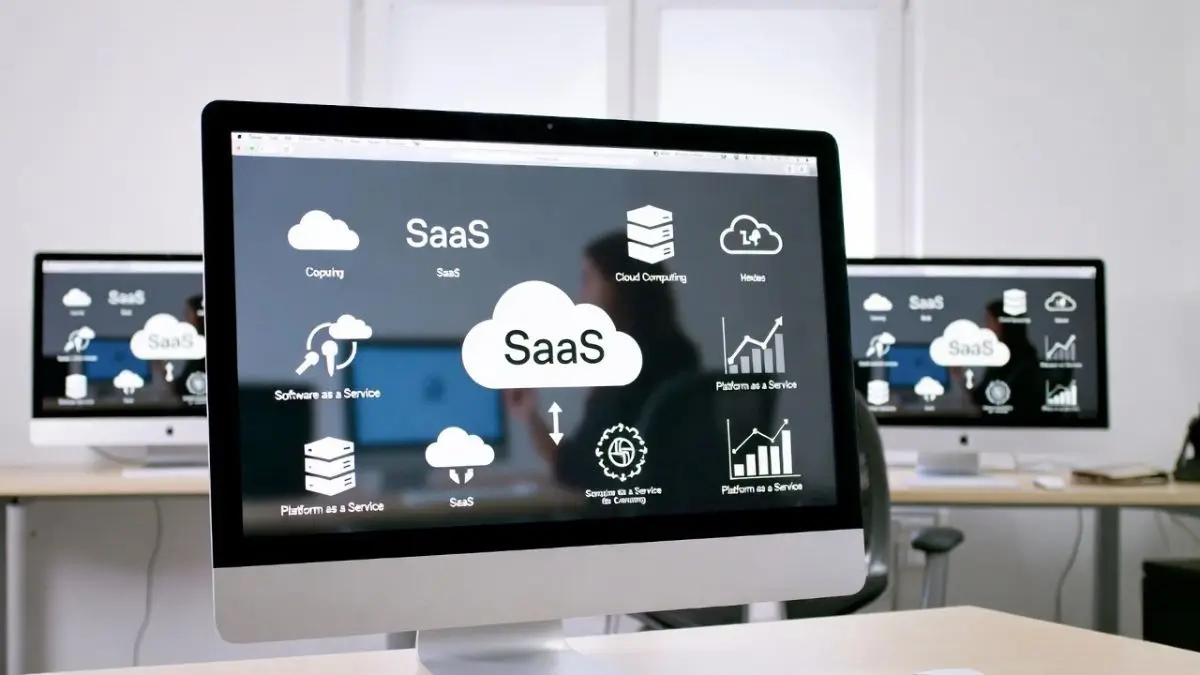
SaaS solutions from Silicon Valley are going way beyond the revenue sharing subscription software of the past. Today’s SaaS offerings include integrated components of AI-powered analytics, intelligent guides, workflow automation and predictive customer engagement.
More and more companies are moving to what they are calling “AI-first SaaS, ” the technology that will be built in to the core of the application, not added on. Developers are doing so by integrating AI into CRMs ERPs marketing programs and accounting software.
In the industry, the conversation about AI is that it is becoming an ever more capable digital employee that can perform everything from lead qualification to automated communication, data analysis, and decision-making for the operation.
This is how the SaaS business is changing.
The gains for those companies that can effectively combine the benefits of cloud scalability with smart automation are enormous.
Since adopting the cloud becomes is more popular, cybersecurity is one of the most important things in Silicon Valley. People tend to implement much investment on zero-trust security infrastructure, as well as AI-based security intelligence and secure identification system.
Focus on Cybersecurity and Data Sovereignty
The prevalence of data sovereignty legislations also shapes SaaS platform development. Governments and enterprises are demanding for a tighter grip on where data is stored, used, and transferred. This drives the need for local cloud services and sovereign cloud play.
Meanwhile, these enterprises are building more transparent governance regimes, implementing encrypted cloud compartments, and designing compliance-oriented SaaS architectures. AI-supported security monitoring has become a feature of most enterprise cloud systems.
Another key concern for cloud providers in the Valley is sustainability. AI is a severely energy intensive domain, and large-scale AI workloads exert great demands on the power systems of cloud providers.
Technology companies are deploying energy-efficient data centers, renewable energy contracts, and optimized machine learning hardware to cut down on costs and carbon dioxide emissions.
Economists indicate that energy efficiency and data-center sustainability are crucial topics weighing on the future of cloud leadership.
Green cloud computing is Because of this gradually playing an increasingly fundamental role in the long-term SaaS strategy and cloud platform architecture.
Conclusion
Hailed as the world’s innovation capital for cloud computing and SaaS platform development, Silicon Valley has it in 2026 is transforming by AI-native cloud architectures, huge investments in infrastructure, increased deployment of hybrid clouds, smart SaaS automation, innovation in cyber-security and sustainable computing.
With enterprises further accelerating their digital transformation, cloud computing is maturing from a basic infrastructure service to one providing the basis for entire intelligent enterprise ecosystems.
SaaS platforms are growing smarter, increasingly scalable, and more autonomous. Innovation from the mind of Silicon Valley continues to appear on the horizon and the CIOs of tomorrow should be prepared to know that the fateful path of cloud computing will be paved by the implementation of AI, evident infrastructure value, ensuring data security and seamless institution of a mutable digital ecosystem.
FAQs:
1. What is driving the growth of cloud computing and SaaS platforms in Silicon Valley?
The growth of cloud computing and SaaS platforms in Silicon Valley is driven by the adoption of artificial intelligence and machine learning remote work tools and companies changing to digital. This is making cloud computing and SaaS platforms very popular in Silicon Valley. Companies are spending a lot of money on cloud infrastructure that can grow with them and application platforms that use intelligence.
2. How is intelligence influencing SaaS platform development?
Artificial intelligence is changing the way SaaS platforms are made with features like predicting what will happen automating tasks personalizing how customers interact, using chatbots that use intelligence and making workflows better. Many companies in Silicon Valley are now making SaaS platforms that use intelligence first for big businesses.
3. What are the latest trends in cloud computing in 2026?
Some of the developments in cloud computing are clouds that are made for artificial intelligence using many types of clouds computing without servers computing at the edge infrastructure that is focused on security and data centers that are good for the environment and use energy more efficiently.
4. Why are businesses adopting -cloud and hybrid cloud environments?
Businesses are using clouds and hybrid clouds to be more flexible not have to rely on just one company keep their business running smoothly save money and follow data privacy rules. This also lets companies run their workloads in different environments.
5. What role does Silicon Valley play in the SaaS industry?
Silicon Valley is the center of innovation for SaaS and cloud technologies. Many new technology companies, start ups, investors and research groups in Silicon Valley are always coming up with ideas and bringing new cloud infrastructure, artificial intelligence based apps and enterprise software to the market. This affects trends, around the world in transformation and cloud computing and SaaS platforms. Silicon Valley is where many companies go to find cloud computing and SaaS platforms.
Digital entrepreneur and content expert I help businesses with AI, SEO and the latest tech trends. I started Silicon Valley Weekly to make complex tech concepts easy to understand and use for business growth. I know a lot about systems and help startups, entrepreneurs and brands navigate the fast-changing world of tech and online marketing.
I build strategies that use data, search optimization, content marketing and AI tools to get visibility, engagement and revenue. I love finding ways for businesses to grow increasing their presence and turning new ideas into successful businesses. My goal is to connect the technology, with practical business use so brands can succeed online.