
The Moment the Grid Began to Tremble
For decades, supercomputing had been the quiet domain of national laboratories, elite research universities and a handful of defence contractors. It was deliberate, slow, and insulated from the frenzy of consumer markets. That time is past. The rise of artificial intelligence, particularly the training of large language models and the inference engines that use them, has made the supercomputer, once a scientific instrument, the central nervous system of the global economy. And the infrastructure built to support it is cracking under the pressure of expectations it was never supposed to bear.
The reckoning is not an abstraction. It’s being played out in the stress on power grids, in the rush for specialized silicon, in the mad scramble to build data centers on three continents, and in the quiet but urgent conversations taking place between heads of state and technology executives about who will control the computational high ground of the twenty-first century.
What Does “Supercomputing” Mean Now
When one thinks of “supercomputer” one thinks of tower-like machines humming in temperature-controlled rooms solving problems in fluid dynamics or nuclear simulation. That definition has not gone away — it has just been swamped. By most meaningful measures, today’s biggest AI training clusters — systems like xAI’s Colossus in Memphis, buildouts by Microsoft and OpenAI in Wisconsin and Meta’s sites across Louisiana and Texas — are the most powerful supercomputers assembled to date. They’re not defined by FLOPS alone but by the density of interconnected GPUs, the bandwidth of networking fabric, and the uninterrupted electrical draw sustained over months.
What you’re doing is you’re changing the economics completely. Traditional supercomputers were government-funded, custom-built and depreciated over a decade. Private capital builds modern AI supercomputers hoping to see a return on investment in two to four years, only to be obsoleted by the next generation of chips before the concrete poured around their foundations has fully cured. The infrastructure logic of the world of research and the infrastructure logic of capital markets are now forced to co-exist – and the friction is enormous.
The Power Problem Isn’t Coming It Is Here
And the most immediately binding constraint of all is power. Training a frontier AI model can use as much power in several months as a small city uses in one year. The draw of running inference — providing responses to millions of users simultaneously — is unending and growing. Data centres that previously drew ten or twenty megawatts from utilities are now applying for five hundred megawatts, or more, in interconnection requests. The queues at grid operators in Virginia, Texas and Georgia have swelled to years.
Utilities were not made for this. The US electrical grid, in particular, is a patchwork of aging infrastructure designed to accommodate slowly and predictably shifting industrial and residential load profiles. Hyperscale AI demand is not coming slowly or predictably. Transmission lines that took 15 years to plan and permit can’t keep up with a technology cycle that turns over every 18 months. Something has to give, and increasingly it is the timeline, the cost or the geography of where these systems can even be built.
The answer has been a global quest for power. Companies are looking at stranded natural gas in remote locations, restarting retired nuclear plants, building dedicated solar and wind farms right next to data centre campuses, and, in some cases, running diesel generation at levels that would have been considered scandalous in any other context. The energy cost of intelligence has become one of the defining economic and environmental issues of the decade.
The Geopolitical Chip and Silicon Scarcity
But a more basic problem lurks behind the power problem: the chips themselves. The supply chain for the GPU clusters that power AI supercomputing is extraordinarily fragile. Taiwan’s TSMC makes the most advanced nodes. The machines that make those nodes possible are extreme ultraviolet lithography machines made by ASML in the Netherlands. To close the loop, there are a few packaging plants in South Korea and Japan. This capability is concentrated in a narrow geographic band that runs through a region of significant geopolitical tension, and policymakers are not blind to this fact.
The CHIPS and Science Act in the US, the European Chips Act and China’s aggressive domestic semiconductor investment programs are all essentially responses to the same realization: that the supercomputing infrastructure of the future depends on a supply chain that no single nation controls at the moment and that several nations are actively working to disrupt. “Export controls on advanced chips have already remade the market, creating shortages for some buyers, black markets for others, and a furious push for domestic alternatives in China. The chip is no longer just a part. It’s a geopolitical weapon.
The Data Center Construction Boom and Its Limitations
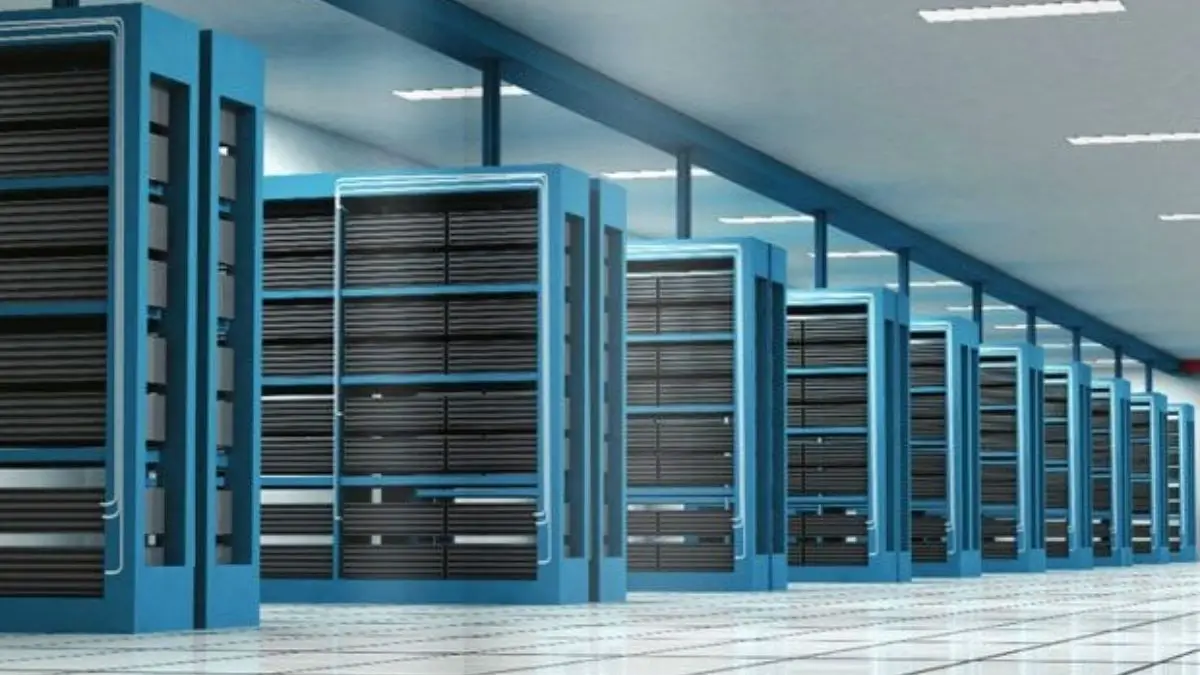
The physical scale of what is being built today is unprecedented in the history of commercial construction. Hundreds of billions of dollars are committed to data centre campuses worldwide – in the American South and Midwest, in Scandinavia (for its cool climate and renewable power), in the Gulf states (for their capital and ambition), in Southeast Asia and across India. The buildings themselves are massive, sprawling complexes, with an architectural signature of an endless row of cooling units on the roof and a substation the size of a neighbourhood at the fence line.
But there are limits to construction that capital cannot just override. There aren’t that many electrical engineers that can design high voltage substations. There are only so many specialised contractors who can install the raised-floor cooling systems, the precision power distribution units, the fibre backbones. The labor market for building data centers is as tight as the market for the chips that go inside them. The lead times for critical electrical equipment such as transformers, switchgear and uninterruptible power supplies have stretched to two years or more, bottlenecked by manufacturing capacity that was sized for a pre-AI world.
The result is a paradox: unprecedented financial willingness to spend, and an equally unprecedented difficulty in actually turning that capital into operational compute. The companies that got this first — that locked in supply chains, land and interconnection agreements ahead of the wave — have built in a structural advantage that will be hard to overcome.
Cooling The Unsexy Edge
Thermal management, one of the least discussed and most consequential problems in supercomputing infrastructure, GPUs for AI workloads generate extreme heat densities that cannot be sufficiently managed by traditional air cooling. A rack that used to pull five kilowatts may now pull eighty or a hundred. Moving heat out of a building at that density with air is difficult. Water makes it feasible but operationally complicated. Immersion cooling – putting hardware into dielectric fluid – makes it highly efficient but necessitates a complete re-imagining of data centre design and maintenance.
The industry is in the middle of a transition, which is its own chaos. You can’t just upgrade older facilities.” New facilities have to be built from scratch to accommodate liquid cooling architectures. The chip manufacturers — NVIDIA, AMD, Intel, and the expanding constellation of custom AI silicon designers — are churning out successive generations of hardware that run hotter and denser than the last, outstripping the cooling infrastructure being built to contain them. It is an arms race between thermal physics and engineering ambition and right now there is a growing divide between the two.
The Mandate for Sovereign Computing
One of the most important structural shifts that is happening is the emergence of sovereign compute as a policy category What used to be a procurement convenience for governments is now a matter of national security, economic competitiveness, and cultural sovereignty in the realm of cloud computing. It is not just a question of who analyses the data, but who controls the infrastructure which will form the backbone of the next generation of scientific discovery, economic modelling, medical research and military capability.
The European Union has also set up initiatives to develop AI-optimised supercomputers across all its member states. The Gulf Cooperation Council countries — led by the UAE and Saudi Arabia — are investing heavily in domestic GPU capacity, in part to escape dependence on American infrastructure and American export policy. National AI compute missions have been launched in India . Japan, South Korea, Canada and Australia are all asking the same question in different ways: if frontier AI is built on compute, and compute is owned by three American companies and one Taiwanese manufacturer, what does that mean for us?
The answer increasingly is that it means exposed. And it’s this vulnerability that’s driving a level of infrastructure investment by nation-states in this area not seen since the space race.
The Environmental Ledger
The environmental impact of the supercomputing expansion is real, and it is growing and it is in uncomfortably stark contrast with the climate promises made by many of the same companies behind the expansion. In already water scarce regions cooling water use is a major drain on local watersheds. Even where renewable energy is nominally procured, the marginal electricity for data centres’ carbon emissions is often gas or coal on grids. In some cases, the heat rejected from large data centres is being explored for district heating – a genuine use – but most of it just dissipates into the atmosphere.
That is not to say that the build out should not happen. The argument for AI-powered acceleration in drug discovery, materials science, climate modelling and a dozen other fields is serious and well-evidenced. But the environmental ledger needs to be kept honestly. The industry’s tendency to use net-zero commitments and renewable energy certificates as rhetorical cover for unconstrained growth is a long-run liability, both reputationally and — as regulatory frameworks tighten — legally. The infrastructure reckoning is in part an environmental reckoning, and companies that approach it honestly will be better off than those that don’t.
Infrastructure Race: Who Wins?
The supercomputing infrastructure race will not have a single winner. It will establish tiers. At the top will be the companies — and perhaps one or two nation-states — that can manage to lock down the full stack: the supply of chips, access to power, the cooling infrastructure, the networking expertise and the software systems to use it all efficiently. Below these will be a second tier of organisations who will have access to rented capacity that should be adequate for most commercial applications but which will be structurally dependent on the good-will and pricing of the tier above. And further down the long tail of organisations for whom frontier compute is just within reach.
The implications of this stratification are huge. Who is in what tier will increasingly shape scientific research, financial modelling, pharmaceutical development, defence applications and the development of AI systems themselves. Infrastructure is never neutral. It is, in the deepest sense, the architecture of future power – economic, intellectual and geopolitical.
The Way Forward
The infrastructure reckoning is not a crisis to be solved and shelved. It’s a permanent fact of life in the AI era: a constant battle between the exponential ambitions of a technology that doubles its capabilities every year or two, and the linear, friction-filled reality of physical infrastructure that takes years to permit, build and operate. Managing that collision — with intelligence, with honesty about constraints, with genuine coordination between the private sector, governments, and civil society — is one of the central challenges of the next decade.
Supercomputing has always been important. Now it is indispensable, so much so that every decision concerning its infrastructure – where it is built, funded, governed, and accessed – has ramifications far beyond the machine room. The time has come for reckoning. The question is whether the institutions, policies, and engineering disciplines necessary to meet it will arrive soon enough.

Digital entrepreneur and content expert I help businesses with AI, SEO and the latest tech trends. I started Silicon Valley Weekly to make complex tech concepts easy to understand and use for business growth. I know a lot about systems and help startups, entrepreneurs and brands navigate the fast-changing world of tech and online marketing.
I build strategies that use data, search optimization, content marketing and AI tools to get visibility, engagement and revenue. I love finding ways for businesses to grow increasing their presence and turning new ideas into successful businesses. My goal is to connect the technology, with practical business use so brands can succeed online.