AI has been living in a glasshouse for the better part of the decade. It has crafted our emails, made summaries of our meetings, and conjured pictures using words we have typed. However, it has never been able to lift a coffee mug from the table. This is about to end soon, and the implications could be more dramatic than ever before.
From Language to Locomotion
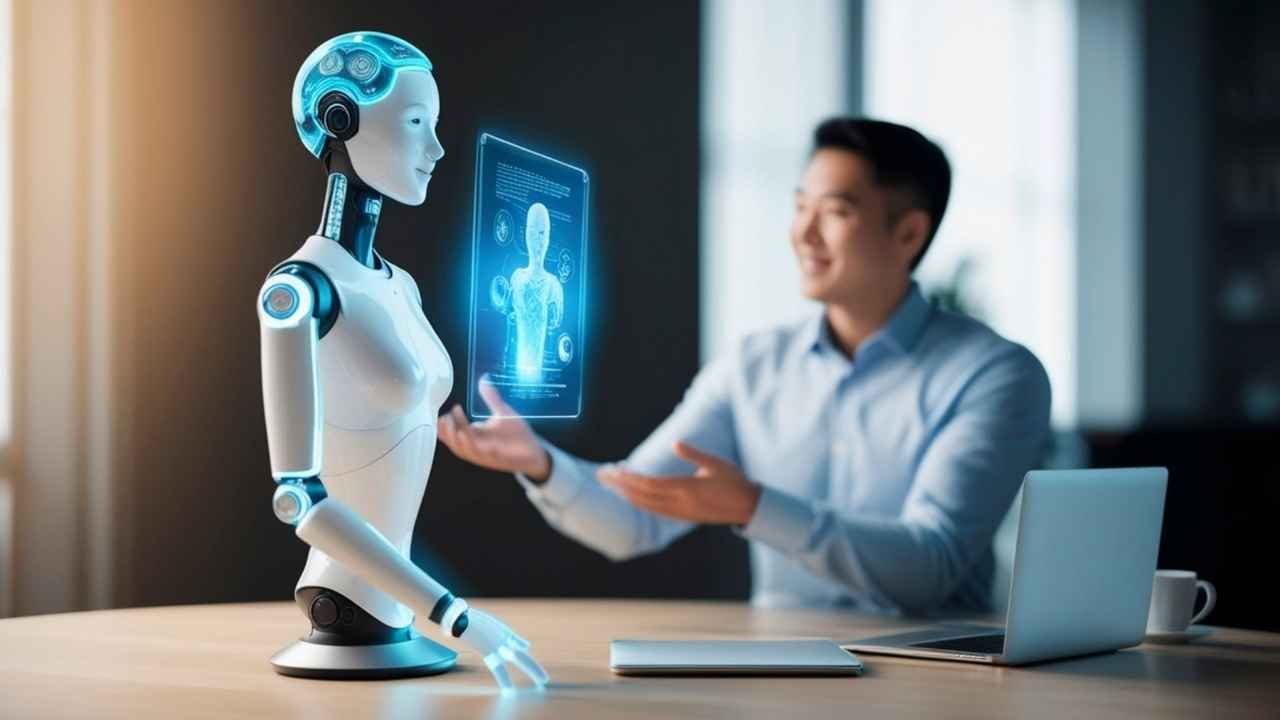
The idea of physical AI is defined as an intelligence embedded into a machine that is capable of perceiving, reasoning and acting in the material world. As compared to language model, where the symbols can be manipulated, the physical system needs to be able to manipulate the atoms – picking up fragile objects, balancing on uneven terrain, recovering from an unforeseen spill. This difference appears to be minor.
Robotics researchers knew the humble truth, stated by Moravec’s paradox for decades: the tasks which people find difficult, such as playing chess or solving mathematical equations, are relatively simple for a computer to perform, whereas the tasks performed effortlessly by children, such as crossing an obstructed room or folding a towel, remain incredibly complicated. Millions of years were required to evolve sensory-motor skills, whereas abstract reasoning became a more recent acquisition.
The Convergence Moment
Why now? There are three trends in the convergence that make this a special point in time compared to previous robotic breakthroughs.
First, foundation models entered the physical world. Vision-language-action models enable the robot to perceive a verbal command, see things around, and act according to the instructions without tedious programming of every specific task. The knowledge gained by studying huge amounts of text and image data provides the machine with some understanding of how the world operates.
Second, simulations have become more advanced. Teaching robots in real life takes much time, effort, and can sometimes be dangerous. Modern physics simulations help test millions of iterations in just a few hours and then use this accumulated knowledge for the real device. Thus, the process of learning turns into several days of practice instead of many years.
Third, hardware is getting more affordable and advanced. Actuators, batteries, sensors, and processors became cheaper thanks to the developments in these technologies. What used to be available only for aerospace now enters the realm of mass production.
Why the Human Form?
This humanoid robot inspires doubt. A wheeled robot is sturdier, and a special-purpose robotic arm is more accurate. Why require two legs and five digits?
The reason for that lies in pragmatism, not sentimentality. Our world is designed around human form. Stairs, door handles, tools, automobiles, shelves, workstations—all are made to a specific size and reach. A humanoid can, in theory, walk right into existing manufacturing facilities and warehouses without needing to rebuild them. Being humanoid is effectively the universal interface to the infrastructure of civilization.
Recommended for You:
- Playground Global Returns to Taiwan: AI Hardware and Innovation
- How AI Is Redefining Human-Machine Interaction
- The Ultimate Guide to Using Artificial Intelligence for Lead Generation
Then there is the data issue. There are millions of videos taken by humans of humans doing various jobs. A humanoid robot can learn from such videos much better than any other kind.
The Gap Between Demo and Deployment
In this case, the editorial warning is justified. Showcases of robots dancing, sorting packages, or brewing coffee show nothing about dependability. A device which works correctly in nine out of ten cases would be miraculous in the lab but useless on the production line.
There are many challenges which are not yet overcome:
Dexterity: The human hand is an amazing tool combining power, sensitivity, and dexterity. The development of this kind of ability is not yet solved by engineers.
Energy: The operation is limited by batteries, and moving by walking is an inefficient method of locomotion.
Safety: The device should be able to operate safely alongside people, and proving this property is not easy.
Economics: In many cases, a human being or another automation is cheaper than the robot. It has to meet a high price criterion to be efficient.
Scarcity of data: Unlike text, there is no huge internet archive for experiences of the robots.
Work, Wages, and the Social Contract
If these barriers can be overcome, there will be some big economic impacts. The most likely area to see early adoption would be logistics, manufacturing and other boring, dirty and dangerous jobs. These areas are already suffering from labour shortages and repetitive strain. However, eldercare is a more emotional use case. As Japan, Europe and increasingly India and China suffer from demographic issues.
However, this will not be evenly distributed. As this technology can replace manual labour many jobs will be threatened. This cannot be ignored by policy makers. There needs to be retraining programs, support during the transition and honest discussions around who owns and benefits from robotic labour.
A Geopolitical Contest
Robotics is becoming an increasingly important infrastructure technology. The Chinese have very ambitious objectives and are backed by a strong manufacturing industry. The US are ahead in terms of research and funding on AI. Japan and South Korea have been working on robotics for several decades. Whoever dominates the manufacturing and supply of actuation, sensing, and advanced chip hardware will be at an advantage. Nations such as India which have a large pool of manpower and rapidly growing IT sector will have to make their choices.
The Verdict
Physical AI won’t be an overnight sensation. It will creep into our lives gradually, starting with controlled environments in industry. The timescales given by excited founders should be viewed with some scepticism.
However, we can be confident that intelligence will move off screen. The bigger question will be whether our infrastructure, labour market and ethical concerns are ready for this. This is the real work of this decade.

Digital entrepreneur and content expert I help businesses with AI, SEO and the latest tech trends. I started Silicon Valley Weekly to make complex tech concepts easy to understand and use for business growth. I know a lot about systems and help startups, entrepreneurs and brands navigate the fast-changing world of tech and online marketing.
I build strategies that use data, search optimization, content marketing and AI tools to get visibility, engagement and revenue. I love finding ways for businesses to grow increasing their presence and turning new ideas into successful businesses. My goal is to connect the technology, with practical business use so brands can succeed online.