

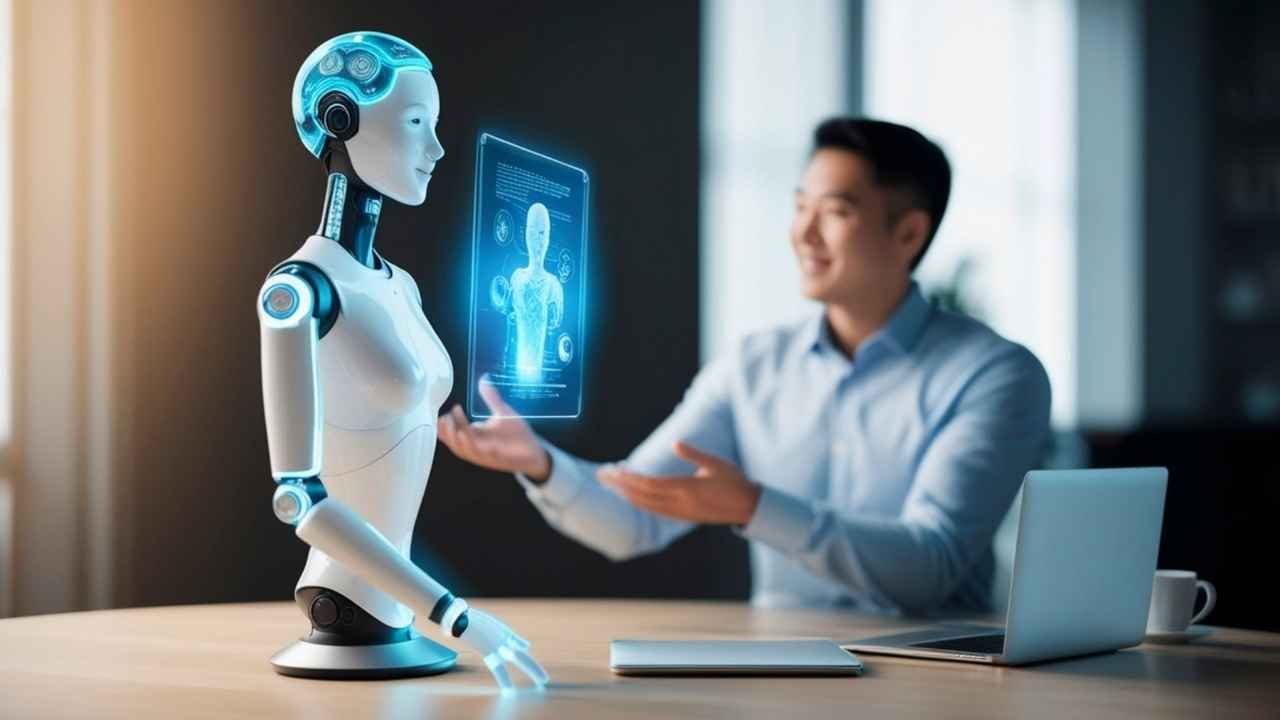
In the past, human-machine interaction has taken place in a very strict format. We would type, click or press buttons to tell the software what we wanted and get an accurate yet unintelligent response. But this is coming to an end thanks to artificial intelligence.
Perhaps the most striking shift is that we can now interact with our devices using natural language. The emergence of large language models allows us to interact with our machines using natural language. In other words, we can command them to do what we want using either speech or writing. No specific knowledge or multiple menus are required for doing so. As a result, we get a new experience of interacting with our devices. The machine adapts its interface and provides us with a new way of interaction. This way of interaction is much more powerful and inclusive compared to traditional ones.
AI is allowing us to interact with our devices in a more natural way. Vision models allow devices to understand what is in an image or video. Speech recognition has improved to be almost human-like. Gesture and facial recognition are improving. This means we can have a system which can see, listen and interact with us using text, audio and visual outputs. As a designer we can draw out our ideas and describe how we feel. The AI will then provide suggestions based off both of these. As a doctor we can dictate our observations and the AI will analyse the images and any relevant literature.
As a whole, this means the software we are using is moving from being reactive to being more of a collaborator. AI systems are being used to predict requirements, provide relevant information and suggest actions. In creative fields, they can provide variations and challenge assumptions. In knowledge fields, they can collate research and provide arguments. In everyday life, they can help with organisation, reduce unwanted information and retain context. The AI is becoming a more active part of our work.
This has huge implications. We are now interacting with our machines in a more relational way. We can have conversations with our AI systems which will know our preferences, adapt to our style and keep a consistent flow. Some people are using AI systems as a sounding board, teacher or creative collaborator. Others are using them for emotional support or to help make decisions. This means the line between tools and companions are being blurred.
However, there are issues with this. As the systems are providing incorrect yet fluent responses, we need to become more sceptical. There are also concerns with privacy. Machines will understand personal conversations and context. Biases can occur due to the training data. This can cause the AI to suggest things based off of biases. As it is so easy to interact with, it can cause over dependence. Certain skills may be lost however other skills will be improved. If not everyone has access to this technology it can cause new exclusions.
Overall, the future of human machine interaction will be focused around systems which understand context, adapt to individuals and act as a collaborator. The best interfaces will feel more like you’re working with a competent and responsive partner.
This implies that designers, engineers and policy makers must make sure that the interfaces are not misleading about its limitations. The system should assist the humans in decision making and not dictate them. It is important for us to be very cautious about the relationship that we wish to maintain with intelligent machines. As the technology is rapidly evolving, many organizations will find it difficult to cope with the change. Would we be able to control the influence of AI on our interaction with machines?
Previously, we had to think like machines. Now the machines are adapting to us. This can provide amazing opportunities but there are risks involved. Ensuring we find the right balance may determine if AI will improve our capabilities or reduce them. The conversation is only just beginning.

Digital entrepreneur and content expert I help businesses with AI, SEO and the latest tech trends. I started Silicon Valley Weekly to make complex tech concepts easy to understand and use for business growth. I know a lot about systems and help startups, entrepreneurs and brands navigate the fast-changing world of tech and online marketing.
I build strategies that use data, search optimization, content marketing and AI tools to get visibility, engagement and revenue. I love finding ways for businesses to grow increasing their presence and turning new ideas into successful businesses. My goal is to connect the technology, with practical business use so brands can succeed online.

Pingback: Playground Global Returns to Taiwan: AI Hardware and Innovation