Introduction
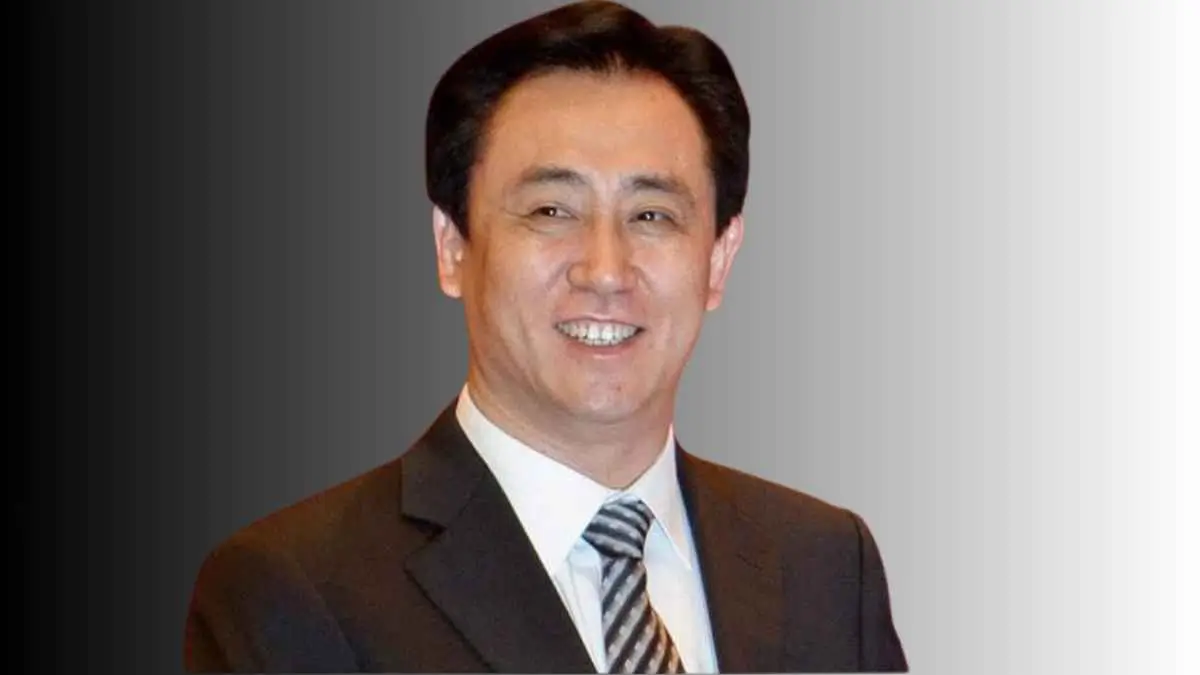
One of the rare business tales that truly capture the rollercoaster heights and depths of capitalist ambition of a modern day is definitely that of Hui Ka Yan. After working as a teacher, in 2017 he founded Evergrande Real Estate with just 3 million, the company went on to grow quickly as one of the largest real estate developers in China. But then, in 2020 the company was exposed to a debt that led to its collapse and a crisis of trust in China. As chairman of Evergrande Group, Hui Ka Yan was arrested in 2022 on suspicion of embezzlement, corruption and fraud and was later tried and convicted on July 13 2022 to 12 years in prison, with his assets frozen. The former chairman of Evergrande has never commented on his case through the media, only to state in January 2023 that “I was never against the state’s anti-corruption campaign.” At present, Evergrande is reorganizing its business after its debt crisis but the group has yet to pay the government loans that have been extended to it.
Humble Beginnings
Hui Ka Yan, son of a poverty-stricken farmers family born in Jutaigang village ofTaikang county in Henan Province China is a self-made industrialist with a heart for the poor – a combination of qualities he got both from his father, the local CCP leader as well as from his mother. In fact, it is very likely that had his mother died when he was one and a half, he would have ended being an illiterate, land-sweat-pouring farmer himself because the father, a communist at heart and in practice, is said have taken no pains to educate the children. He did a degree in a very competitive and prestigious engineering discipline from his first choice university without even taking the entrance examinations which he was qualified for because of his mother’s background and connections.
Being the son of his mother, a poor but educated lady, and the son of his father, a communist who cared nothing of educating his children, Hui Ka Yan was a child of great potential but also of a life of poverty. His poor family background is one of the great reasons which led to the hardships he went through during his early years. In a speech which he gave several months ago, he mentioned what he used to eat as a schoolchild: mainly sweet potatoes and, on occasions even, steamed buns. Making the best of these conditions, he managed to study. As he was an exceptionally bright student, he was able to enrol at Wuhan University of Science and Technology to study metallurgical engineering which was an extremely rare achievement for those of his background at the time. In his own words, his education opened doors which eventually led him to a career in business.
Founding Evergrande
After obtaining his education, Hui worked in different sectors that led him to the real estate sector. In 1996, he established China Evergrande Group with the headquarters at Guangzhou and so set the stage for the emergence of one of the most powerful property companies in the history of China. He was ahead of his time, as he grasped that the fast-developing urban middle classes in China would be the major drivers in the house market and as a result he placed Evergrande in a position to take advantage of that. Evergrande decided to go all out and focus on the large scale creation of apartment complexes. The company built thousands of apartments in hundreds of cities across China and its expansion rate made many of its competitors lose their breath. Starting with just a small regional property developer, Evergrande transformed into a multi-sector giant, with businesses in real estate, electric vehicles, healthcare and even professional football.
The Peak of Power and Wealth
Midway in the decade of 2010s, Hui Ka Yan ranked among the business magnates of China. Evergrande too had reached such heights to be the second-largest in property development in China by sales and, at one point, the most valuable real estate firm globally. By 2017, Hui’s wealth peaked to about $45.3 billion, which put him as one of the wealthiest worldwide as well as in China. During that year himself, he managed to surpass even Jack Ma in the fortune stakes briefly to become the richest man in Asia. A mark of his individual success but also one of China’s stunning economic development, this symbolic recognition was very much a landmark. He had a lifestyle in sync with his money: yachts, luxury villas or homes, with a high-end social profile. In 2010 he snapped up Guangzhou football club which was in a slump and renamed it to Guangzhou Evergrande, then went on spending on world stars and top notch coaches, leading to his team becoming one of China’s top sports teams. From poverty back in the countryside straight up to the elite billionaire world, Hui’s story became quite a popular example of what one could achieve by being ambitious and China’s economic miracle being your background.
Cracks in the Foundation
Beneath Evergrande’s splendid exterior, the ground was extremely shaky. The company’s rapid expansion had been almost entirely financed through debt – an aggressive combination of dollar bond issuances, bank loans, share sales, and shadow financing. When the signs began to appear, Evergrande already had total liabilities over $300 billion, an amount equivalent to about 2% of China’s GDP alone. Turning point came when, in 2020, Beijing enacted “three red lines” policy which set limits on three different debt ratios for real estate developers. These laws effectively shut off one of primary financial tools that companies were using to borrow and make repayments. Having lost this avenue, debt-ridden Evergrande couldn’t even pay its debts and so started to go under. A few months into next year, it’s 3rd quarter U.S. dollar bond that Evergrande failed to pay led to financial shock waves in the world. Millions of home buyers all over the country who paid for their apartments through the down payments ended up at a loss with their purchase left incomplete and not being deliverable in the future. In other words, their houses are not even going to be built let alone handed over.
Arrest, Investigation, and Conviction
With Evergrande’s crisis spiralling out of control, investigators were drawn to Hui Ka Yan as well. In Sept 2023, he got a summons through Chinese media that he was to be watched at a police detention centre – a form of restriction in Chinese law indicating that crisis is moving from corporate collapse to a crime stage. The shares of the company, which had already fallen dramatically from its highs, were suspended and eventually delisted from the Hong Kong Stock Exchange in 2025. March, 2024 saw China’s securities regulator, the CSRC, accuse Evergrande Group of exaggerating revenues of about $78 billion cumulatively in 2019 and 2020.
It was regulators who stated that Hui had personally given the order to manipulate books of accounts. He was fined roughly equivalent to $6.5 million and prohibited for life to work in Chinese securities markets. Evergrande’s fine was over 580 million. The Shenzhen court by April 2026, acknowledged Hui pleading guilty and regretful of the fraud he had committed among other crimes. On August 20 2026 this same court found him guilty and he was given a death sentence, but the Supreme People’s Court in October 2026 commuted the death penalty for Hui Ka Yan to life imprisonment meanwhile Evergrande Group and its subsidiary were penalized by the court with fines totaling over $2 billion.
A Legacy of Wreckage
The devastation caused by Evergrande’s crash both about human and financial aspects is immense. Tons of Chinese homebuyers still dream about the houses they paid for in full. About 160,000 retail investors who were holding Evergrande’s stocks saw their holdings become almost nothing when the company was off the stock market. Lenders, suppliers, and financial institutions are involved in ongoing liquidation processes with the future of their returns still unclear. More generally, China’s property sector which is responsible for nearly a quarter of the economy has suffered from the effects of the housing bubble burst that was partially triggered by the Evergrande situation. As ever, it’s the ordinary people who bear the brunt of these events.
Conclusion
Hui Ka Yan’s story reflects the economic miracle of China together with its contradictions. His poverty stricken youth and subsequent arrival at great wealth made him the perfect embodiment of the opportunities that decades of fast growth have unfolded in China. But his downfall revealed that, in fact, such growth was based in many ways on deception – revenue growth through fictitious numbers, overreliance on borrowed funds, and a tendency to grow big quickly without taking time for sustainability. Previously he was praised as what a self-made man could do with determination, now he is a warning story of when ambition is unchecked by responsibility of the person and of when an empire is built on sand instead of on stone by debt.

Digital entrepreneur and content expert I help businesses with AI, SEO and the latest tech trends. I started Silicon Valley Weekly to make complex tech concepts easy to understand and use for business growth. I know a lot about systems and help startups, entrepreneurs and brands navigate the fast-changing world of tech and online marketing.
I build strategies that use data, search optimization, content marketing and AI tools to get visibility, engagement and revenue. I love finding ways for businesses to grow increasing their presence and turning new ideas into successful businesses. My goal is to connect the technology, with practical business use so brands can succeed online.