
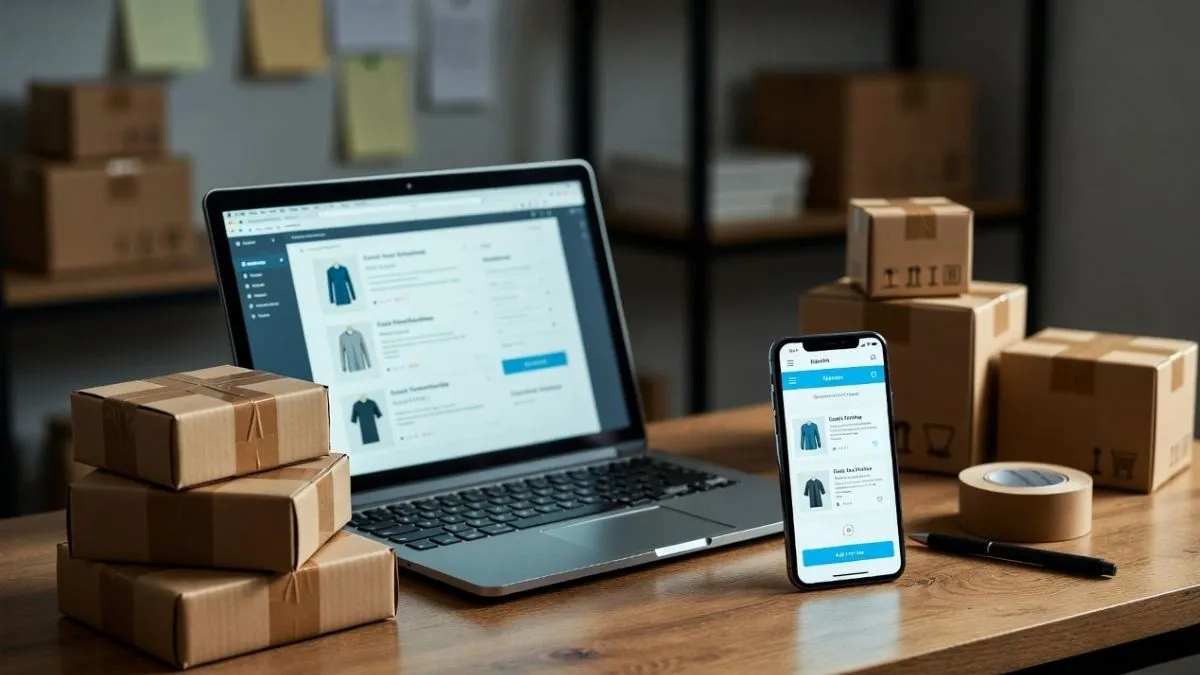
The world of e-commerce is changing fast. In 2026 it is easier to start a business but it is also harder to succeed. New technologies like intelligence are helping stores personalize their products for each customer. People also expect to get their products on the day they order them. And customers have power to choose what they buy so they are more careful about what they spend their money on. If you understand these changes and plan carefully you can do well.
This guide is not about finding shortcuts. It is a step-by-step plan to build an e-commerce business that will last. We will show you how to create a business that people trust that gives them value and that can grow in a smart way.
1. Start with Market Research, Not Your Passion
Many people who start e-commerce businesses make a big mistake. They think that just because they love something they can turn it into a business.. Passion is not a business plan. Before you start your business you need to do a lot of research.
First find a niche that people really want. Use tools like Google Trends, Semrush and Ahrefs to see what people are searching for. Look for things that’re consistently popular, not just trendy. In 2026 some popular niches include eco- home products, wellness technology, tools that use artificial intelligence to help people be more productive and personalized pet care products.
Once you find a niche test it. Ask customers what they think. Create a webpage and run a small test to see if people will actually buy what you are selling. At this point you are not trying to build a business you are just trying to see if people will pay for what you want to sell.
It is also important to look at your competition. Study what they are doing. Do not just copy them. Look for gaps in the market that they are not filling. What are their customers complaining about? What prices are they not offering? Who are they not selling to? Every gap in the market is a chance for you to start a business.
2. Choose Your Business Model
E-commerce is not just one type of business. There are different models, each with its own way of making money its own risks and its own needs. Choosing the one is crucial.
Direct-to-Consumer (DTC): You. Buy products and sell them directly to customers under your own brand. This model gives you the profits and helps you build a strong brand but it requires a lot of money upfront to buy inventory and manage your supply chain.
Dropshipping: You sell products that are shipped directly from a supplier. It is easy to start. You do not have to worry about inventory but the profits are small and it is hard to stand out from the competition. In 2026 successful dropshippers are not just selling any products they are curating selections giving great customer service and becoming experts in their niche.
Print-on-Demand: You sell custom products, like t-shirts or mugs that are made when someone orders them. It is a low-risk model that’s great for creators and designers but it can be hard to grow unless you have a strong brand.
Subscription Commerce: You sell products or boxes on a basis. This model gives you income and very loyal customers. It is complicated to manage. It is very valuable if you do it well.
Marketplace Selling: You sell products on platforms like Amazon or Etsy. You already have a audience. You have to pay fees and the competition is fierce. Many successful sellers use this model along with their store to make more money.
Experienced e-commerce entrepreneurs recommend starting with one model and getting good at it before trying others. Adding much complexity too early can hurt your business.
3. Build a Brand, Not a Store
There is a big difference between a brand and a store. In a world where every store looks the same the businesses that succeed are the ones that have a place in their customers minds and hearts.
A brand is everything your customers think about your business: how it looks, how it sounds, what it stands for what it feels like to buy from you and how you treat them. All of these things have to be intentional and consistent.
Start by defining your brand: who’re you for and what do you stand for? Your ideal customer should be a person with their own age, income, hopes, frustrations and buying habits. Every decision you make should be based on this person.
Invest in making your brand look professional from the start. A good logo, colors and typography are not just nice to have they are essential for making your business look legitimate. In 2026 you can use intelligence to help you design your brand and it does not have to cost a lot of money.
The way you write and talk to your customers is also important. Your brand should sound human, specific and meaningful. Brands that feel real and authentic do better than those that feel generic.
4. Choose Your Technology Carefully
The tools you use to build your business will determine what you can do and what you cannot do. In 2026 there are options and they are more powerful than ever.
For new e-commerce businesses Shopify is still the best platform to use. It has a lot of apps easy payment options and a user experience that lets you move fast without needing to know how to code. Its artificial intelligence features, like pricing and personalized product recommendations are getting better and better.
WooCommerce is an alternative if you need to customize your store a lot and do not want to pay platform fees. It requires technical knowledge but it is very flexible.
BigCommerce is good for businesses that expect to sell a lot from the start. It has features for businesses at prices that smaller businesses can afford.
Beyond your store you will need a payment gateway, an email marketing platform, a customer relationship management tool and an inventory management system if you are selling products.
Do not try to use many tools at first. The ones you need to start are simpler than the ones you will need later. Start with what you need to move and add more tools as you grow.
5. Find Good Products to Sell
For businesses that sell products the quality of your supply chain is crucial. A product that arrives broken late or different from what you promised is bad for your brand no matter how nice your store looks.
If you are buying from manufacturers use platforms like Alibaba. Indiamart to find them.. You have to be careful. Ask for samples before you buy a lot. Check if the supplier is certified. Visit the factory if you are going to buy a lot. In 2026 there are rules about product quality and ethical sourcing so make sure your supply chain is compliant.
If you are working with manufacturers or artisans you have to build a good relationship with them. Agree on quality standards. Have a plan in case something goes wrong.
For products, like software or ebooks you have to make sure they are high quality. Invest in production because in a market where artificial intelligence can make mediocre products people are willing to pay more for something that is really good.
You might also love:
- What Makes IMAX Dome Theaters Unique?
- Why Silicon Valley Became the World’s Tech and Innovation Hub
- Andreessen Horowitz Launches $42M College Alternative With No Degree
- When Do You Need an Electrician and How to Choose the Right One
- What Is an AI Agent?
6. Get Good at Finding New Customers
A store with no visitors is like an empty gallery. Finding customers is the key to an e-commerce business and in 2026 it is more complicated and expensive than ever.
Search Engine Optimization (SEO): Getting traffic from search engines is still the way to get customers without paying for ads. Invest in keyword research optimize your website create content and use technical SEO from the start. It takes time. It is worth it.
Paid Advertising: Ads on Facebook, Google and TikTok are the way to pay for traffic. The cost of ads is high so you need to be good at creating ads and targeting the people. Do not spend a lot on ads until you know your store can convert visitors into buyers.
Influencer Marketing: Partnering with influencers is a way to reach new customers. Micro-influencers are often better, than influencers because their followers are more engaged. Treat these partnerships like performance collaborations, where you both win
7. Focus On the Customer Experience
The customer experience is really important for your business. It can. Break you. Think about it. People can write reviews. Share them on social media right away. They can return things with one click. So you need to make sure the customer experience is good.
Map out the customer journey. This means looking at how customers find you how they decide to buy from you how they buy, how they get their stuff and what happens after that. Find any problems. Fix them. How fast does your website load? Is it easy to check out on your phone? Do you tell people when they will get their stuff? Is it easy for them to return things if they need to?
Customer support should be helpful before people even ask for it. You can use computers to answer questions right away.. For harder questions people should be able to talk to a real person who can make decisions. Customers want their problems solved, not to be passed around.
Doing things for customers like loyalty programs or surprise gifts is a good investment. It makes customers want to come and buy from you again. The time someone buys from you might not make a lot of money.. If they keep coming back that is when you start to make more money.
8. Understand Your Money
A lot of e-commerce businesses fail because the people running them do not understand their finances. Before you try to grow your business you need to know some numbers.
– Cost of Goods Sold is how much it costs to make or buy the things you sell.
– Customer Acquisition Cost is how much you spend on marketing and sales divided by how new customers you get.
– Average Order Value is how money you make from each sale.
– Customer Lifetime Value is how money a customer will spend with you over time.
– Gross Margin is the money you make after you subtract the cost of goods sold from your revenue.
A good e-commerce business makes money from customers over time than it spends to get those customers. If your numbers are not good growing your business will not save it. You need to fix the basics
Open a bank account for your business and keep track of all your finances. Work with an accountant who knows about e-commerce. They can help you with taxes and other money issues.
9. Launch, Learn and Improve
Trying to be perfect can stop you from making progress. The successful online stores started small and improved over time. Start with a products and use what you learn from customers to make decisions.
Check how your business is doing regularly. Look at what’s working and what is not. Understand why some products are popular and why people are leaving their carts behind. Every piece of information can help you make your business better.
If you listen the market will tell you what it wants. The people who succeed are those who have a plan but are also willing to change based on what they learn.
Frequently Asked Questions
Q1: How money do I need to start an e-commerce business?
It depends on your business plan. If you are dropshipping you might need little as ₹15,000 to ₹30,000.. If you are making your own products you will need more money at least ₹1,50,000 to ₹5,00,000. Do not forget to budget for marketing.
Q2: Do I need to register my business?
In India it is an idea to register your business before you start selling a lot. You might register as a proprietor or a company. You need to register for GST if you make than ₹20 lakhs in a year. Not registering can cause tax problems.
Q3: Which e-commerce platform is best for beginners?
Shopify is a choice for most people. It is easy to use and has support. If you are selling in India you might also consider Instamojo or Dukaan. If you are selling on Amazon or Flipkart they have made it easier to get started.
Q4: How long does it take to make a profit?
Most e-commerce businesses take six to eighteen months to make a profit. It depends on what you’re selling how much money you start with and how well you market and run your business. If you start with products and a solid plan you can make a profit sooner.
Q5: Is e-commerce a good opportunity?
Yes it is. Even though there are a lot of businesses there is still room to grow. You just need to find a niche or a way to stand out. Do not try to compete with businesses on price alone. Instead focus on making your business unique and providing a customer experience.
Q6: How important is social media?
Social media is important for building your brand and helping people find you.. It is not the best way to sell things directly. Use it to show off your products and build a community. Just remember, you do not own your social media followers also build your own email list and other ways to reach customers.
Q7: Should I sell on my website or on Amazon/Flipkart?
Ideally you should do both. Selling on marketplaces can help you get started and make some money away. It is also important to build your own website and customer base. This way you are not relying on someone Platform.
Starting an e-commerce business takes thought, hard work and a willingness to learn. Start with a plan build your business honestly and grow based on what works. The opportunity is there, for those who take it seriously.

Digital entrepreneur and content expert I help businesses with AI, SEO and the latest tech trends. I started Silicon Valley Weekly to make complex tech concepts easy to understand and use for business growth. I know a lot about systems and help startups, entrepreneurs and brands navigate the fast-changing world of tech and online marketing.
I build strategies that use data, search optimization, content marketing and AI tools to get visibility, engagement and revenue. I love finding ways for businesses to grow increasing their presence and turning new ideas into successful businesses. My goal is to connect the technology, with practical business use so brands can succeed online.