
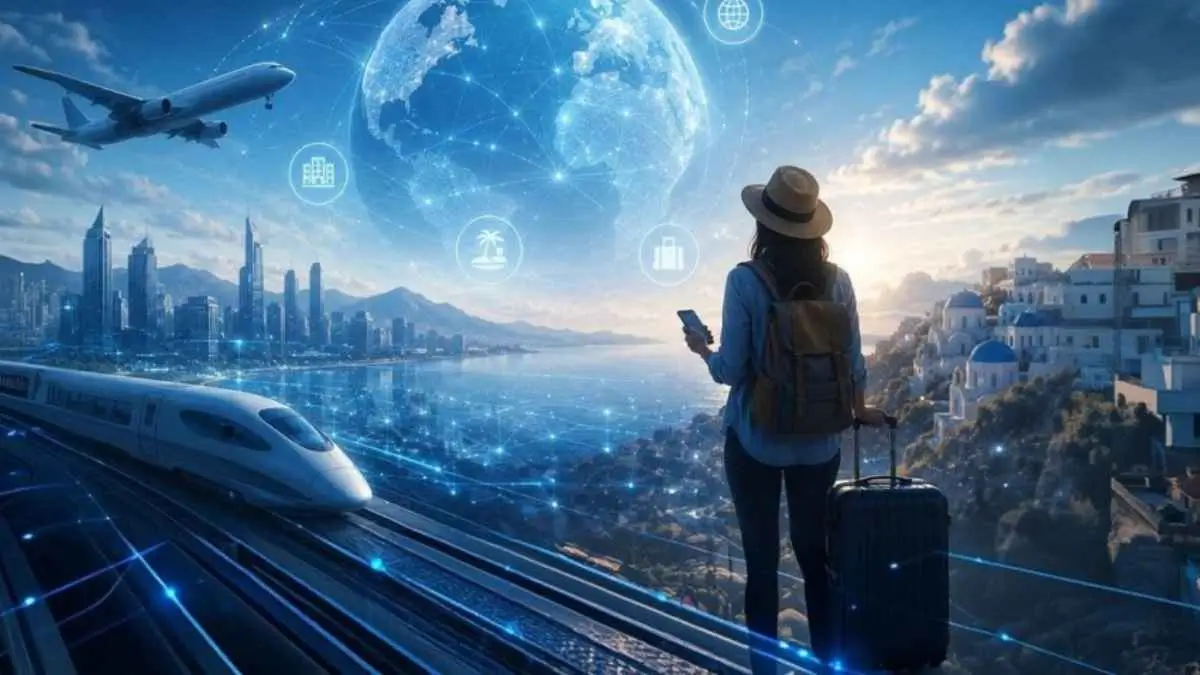
In the past few years travel has shown us how fundamental our desire to experience new things is. In 2024 International tourism reached above pre-pandemic levels. 1.52 Billion people travelled across borders in 2025, up 4% on the previous year. However, 2026 has reminded us that this industry is not always going to be a sure thing.
Due to conflict in the Middle East, increased oil prices and ongoing inflation the travel industry saw only a 0.4% increase in the first half of the year, and the UN Tourism has reduced its forecast for the year to 1-2%, down from a hopeful 3-4%. This is a great time to look ahead to how the future of travel looks as there are many factors at play.
For many years the industry has been driven by numbers. How many people can we move and across how many borders? However recently, travellers have proved that they will continue to travel despite the disruption. This has come in the form of adjusting their holiday plans.
Many people will look to shorten their journey, pick a nearby destination and opt for a train ride across borders when airports are closed, fuel prices are high and regions are uncertain. The future will be driven by those companies and destinations who are adaptable to the changes. They will create trips, prices and policies to fit within the new trends.
Artificial Intelligence is having a huge impact on how people plan their trips. Surveys have shown that around 40% of people have used AI tools to plan out their holiday in 2025, with younger travellers ahead of older generations. Skyscanner has also shown that traveller confidence is increasing with 47-54% of people now confident using these tools.
While this is obvious as they can create a plan using your budget, date, preferences and weather instantly rather than searching through multiple tabs for hours. What we should be looking at is what comes next. As these tools make planning easier the scarcity has moved to trust. Travellers still want to know if they are going to a place that locals really love rather than just an optimized place. Destinations and brands who provide genuine, detailed and accurate recommendations will be the winners.
Technology is making travelling easier, however there are many places where it is becoming less enjoyable. Residents in popular cities and islands have become more vocal about rising rental prices, busy streets and feeling like they are living in a movie set.
Public opinion seems to be moving with this. Nearly half of people in one major survey in 2026 said they would support encouraging people to travel outside of peak times. There will be more innovations to limit the number of visitors such as limits, time slots, tourist taxes and encouraging people to visit unknown areas. The travellers who will succeed will be those who take longer trips, spend more locally and view destinations as somewhere with local people.
The climate impact of flying has become a mainstream issue. Surveys have shown that large majorities of travellers say they want to travel more sustainably. While this may not always be reflected in the actions of travellers, there are more clear details available when booking, more interest in trains and land travel and pressure on hotels to provide evidence for their sustainability claims.
Greenwashing has been common in the past but will likely be looked at more closely by regulators and customers. While cleaner fuels and more efficient planes will help, they will not be quick enough to allow for guilt free long haul trips. Therefore the industry must be honest.
There are many changes happening to how we physically travel. Digital ID checks, biometric entry and pre-authorisation systems are being introduced. Europe has finally planned to introduce its travel authorisation system for visa free visitors, ETIAS, in the last quarter of 2026. Other countries are doing similar things meaning there will be more pre-screening.
While this will make travelling quicker for travellers, it will mean more digital paperwork and understanding new rules. Those who plan ahead and keep their documents organised will have an easy time, however those who leave it until last may find they have more friction.
Many of the changes in travelling will be due to younger travellers. They are travelling more often and putting more money into travelling.
Wellness holidays, solo travel and ‘quiet’ holidays are increasing. People are looking to take a break from their screens. The desire to see everything is shifting to wanting to feel something. They want to know a neighbourhood, cook a local dish and be still. This subtle shift will favour destinations that offer more depth.
Conclusion:
While there won’t be one big change in the future of travel, there will be an overall shift. Technology will make travelling easier, borders will become more digital and communities will have more control over how many people they let in.
We will see more informed, adaptable and aware travellers in the next decade. The industry must be honest, resilient and respectful to ensure they can meet this demand. If they can, the next chapter of tourism may be bigger and better.

Digital entrepreneur and content expert I help businesses with AI, SEO and the latest tech trends. I started Silicon Valley Weekly to make complex tech concepts easy to understand and use for business growth. I know a lot about systems and help startups, entrepreneurs and brands navigate the fast-changing world of tech and online marketing.
I build strategies that use data, search optimization, content marketing and AI tools to get visibility, engagement and revenue. I love finding ways for businesses to grow increasing their presence and turning new ideas into successful businesses. My goal is to connect the technology, with practical business use so brands can succeed online.