Smart glasses may seem like the inevitable next step in consumer technology, but they have continued to find it difficult to go from being a trendy gadget only available for hardware developers to something that mainstream users would embrace without any doubts or reservations. Too big, too awkward and also quite unimpressive, usually only hardware developers have been seen wearing them in public places or events like an office workplace or a dinner party. The Even Realities G2 Though seems to be the closest thing we have to a solution to the problem, since it doesn’t look like a pair of hardware developer’s smart glasses at all. In fact, it looks just like a pair of ordinary glasses on a first view, but it also has a truly subtle design, comes with a handful of AI-powered features that may turn out to be very handy (Mainly the voice dictation and translation that you might use when you want to write a message, e-mail or even a note), and has very good battery life, everything you need and more is included into a design that, from the outside, is almost indistinguishable from a regular pair of glasses.
Design and Build: Finally, Glasses That Look Like Glasses
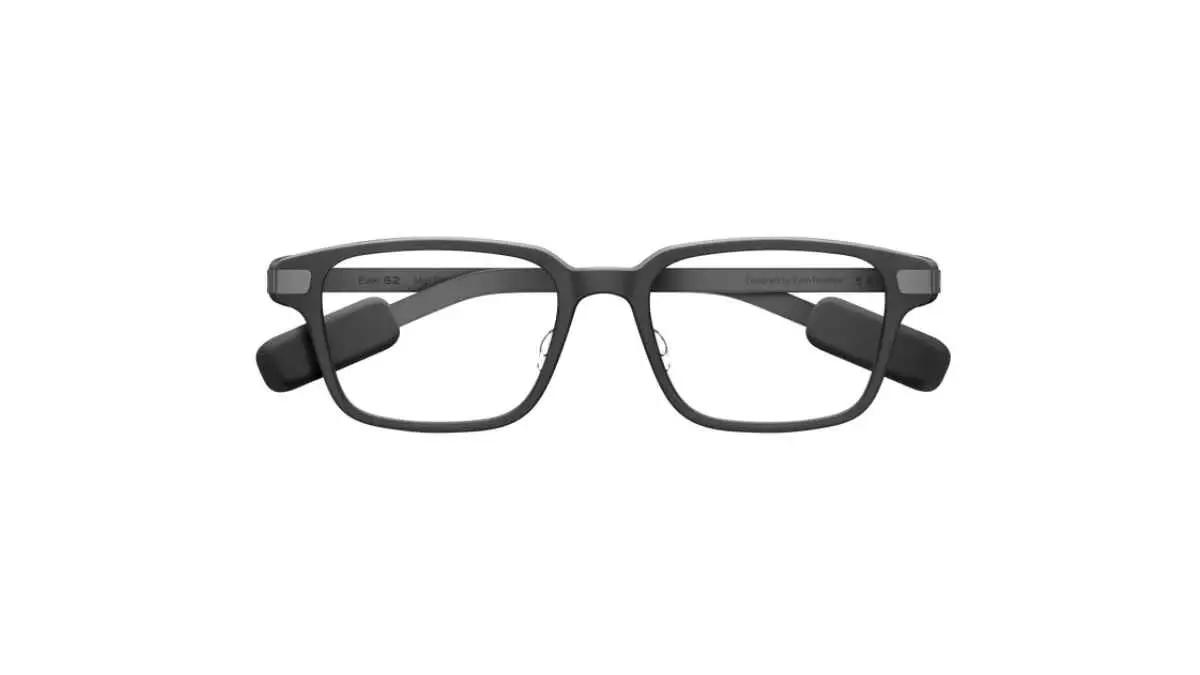
Probably the first thing that would strike people about the G2 is how they look very simple and plain. I repeat, it’s no criticism, actually it is the highest possible compliment for a pair of smart glasses. While other companies like, for illustration example, Rokid Glasses choose the method of thick plastic frames to hide the electronics in them, the G2 has developed a smart glasses combination of magnesium alloy and titanium so a frame that is not only very solid but impressively slim as well.
Weighing just around 36 grams, they have a feel so light of ordinary glasses, to an extent that the presence technology in the temples of glasses does not produce discomfort. This is a problem that most of the similar products cause. The G2, compared to the G1, has an evolution in design that is quite remarkable. The arms are now 20% thinner (end pieces 15% more compact) and temple thickness has decreased by 53%. A pair of glasses that, on top of all these upgrades, has such a minimalistic look, so smart you could hardly tell that they had anything in them.
Slightly bulky blocks at the ends of each arm that house the batteries and internal hardware are the only giveaway that you’re wearing smart glasses. The G2 is available in three main colors, dark grey, olive green and dark brown and comes in a circular or a rectangular design. Obviously the G2 is the right mix of fashion and functionality. Also the glasses come with an IP54 water rating, That means rainproof. One design decision that deserves special attention and which in all likelihood even the best engineer cannot have thought of is to omit camera
The Display: Subtle, Clear, and Surprisingly Capable
In a pair of lenses, G2 uses a waveguide optic Micro LED panel: dual screens, one for each eye. Unlike Meta’s Display glasses which have a single lens with the screen, these micro displays are transparent so they project information on the real scene without blocking your vision in any meaningful way. They are single-colour (green), so you are going to miss out on things like scrolling Instagram or playing with your favourite apps in a multi-coloured version. Still, within their function, glanceable information on a heads-up display, they deliver well.
Being one of the brightest displays on the marketplace (1,200 nits) with a 27.5-degree field of view, this makes them easily readable even when being exposed to direct sunlight and producing enough of a screen-like effect so that information feels truly immersed rather than being weak and peripheral. When the glasses are just worn without any interaction, you basically get nothing displayed, they appear like ordinary lenses. A simple glance up will do or even just a double-tap on the arm and you will wake up the dashboard with time date weather, and personalized information widgets. It feels like a nice solution: the tech is present when you need it and disappears when you are done with it.
AI Features and Smart Capabilities
The headline software feature of the G2 is Conversate. Conversate is a real-time transcription and contextual AI tool that gives closed captions like text overlay of conversations while it is happening and, if it finds more information, it will surface it for you as you speak. In calm areas, Conversate really works as it shows you a live transcript of the discussion together with helpful background for new terms or names introduced during the conversation. But it will find it difficult to work in loud situations and at times it will stop mid way through transcription of the text which is really annoying. A software patch is expected to fix this problem. The G1 is greatly improved now with its navigation which allows a user to find the way more easily. A built-in compass allows the glasses to follow the wearer’s direction and Because of this the on-screen map turns more user-friendly. For each turn, you will get your next direction displayed in your eye line on the glasses.
The maps do not reach the same level of detail as Google Maps, and at the same time, Google Maps integration has yet to happen, but still, the product has a great deal of advantage for one-time users, since it is far better than constantly taking out the phone. At the moment walking directions only are included while driving directions have been deliberately excluded due to safety concerns. Beyond these great features, the G2 offers smartphone notifications, calendar access, real-time translation of foreign languages, teleprompter mode, a built-in AI assistant for general knowledge questions, and QuickList feature for hands-free reminder. The app, which is supported by both iPhone and Android, ties all the features together and makes easier customisation of the look of the dashboard on the glasses.
The R1 Smart Ring: A Worthy Companion
The G2 can be operated by touch-sensitive panels on arms but the additional R1 ring brings a much better user experience. With a price tag of $240 it is a major accessory, but it serves a very subtle controlling mechanism in the form of wearable ring with touch sensitive surface allowing wearer to press, slide, and hold on glasses’ interface without drawing attention of nearby people. This ring is also capable of double as a health tracker with heart rate HRV step count and sleep monitor. Though the precision of its health trackers is not that good compared with dedicated wearable devices. Battery life of the ring is around 2 days. Though the actual usage indicates it may last a bit less.
Battery Life: An Unexpected Triumph
The built-in display on this device doesn’t affect the battery life which is a very good point about G2. With two days of use, the glasses are claimed to be fully functioning, and as it turns out, this is the very real two-day battery life rather than an overly optimistic one-day estimate that is made on the minimum of usage. If you use the glasses for 14 hours straight with different purposes (like receiving notifications, navigation, and having conversations), it is usually the case that 50-60% of the battery remains. The carry case gives about seven full charges, which These days makes the G2 ideal for a really long trip when you have no access to mains power.
Limitations and Caveats
The main reason for my disappointment after using G2 is its performance issues in Bluetooth connectivity which often drops down randomly. This is really frustrating as the whole operation from these smart glasses is completely dependant on the connected smartphone. The app library is still under development, and only limited third-party apps are available for download but Even Realities has hinted at an open developer platform. The frame of the model is one-size-fits-all, so maybe not every face shape and size will be satisfied with it. The pricing, $599 for the glasses, $240 for the ring, and more for prescription lenses if needed, clearly shows the G2 is aimed at an early-adopter target group not at a mass-market.
Verdict: The Smartest Smart Glasses You Can Actually Wear
The Even Realities G2 is the strongest case so far that smart glasses can really be wearable, usable and stylish as well. The design is as close as possible to being a regular pair of spectacles – a new and a high level in this field. The display technology is transparent and well done, and features like Conversate and the improved navigation system are real-world value instead of just fun. There are rough edges – problems with the connection, a small amount of applications, and some UI issues that would need to be fixed – but for early adopters who are fine with these imperfections, the G2 brings a delightful and convincing picture of what future everyday wearable technology looks like.

Digital entrepreneur and content expert I help businesses with AI, SEO and the latest tech trends. I started Silicon Valley Weekly to make complex tech concepts easy to understand and use for business growth. I know a lot about systems and help startups, entrepreneurs and brands navigate the fast-changing world of tech and online marketing.
I build strategies that use data, search optimization, content marketing and AI tools to get visibility, engagement and revenue. I love finding ways for businesses to grow increasing their presence and turning new ideas into successful businesses. My goal is to connect the technology, with practical business use so brands can succeed online.