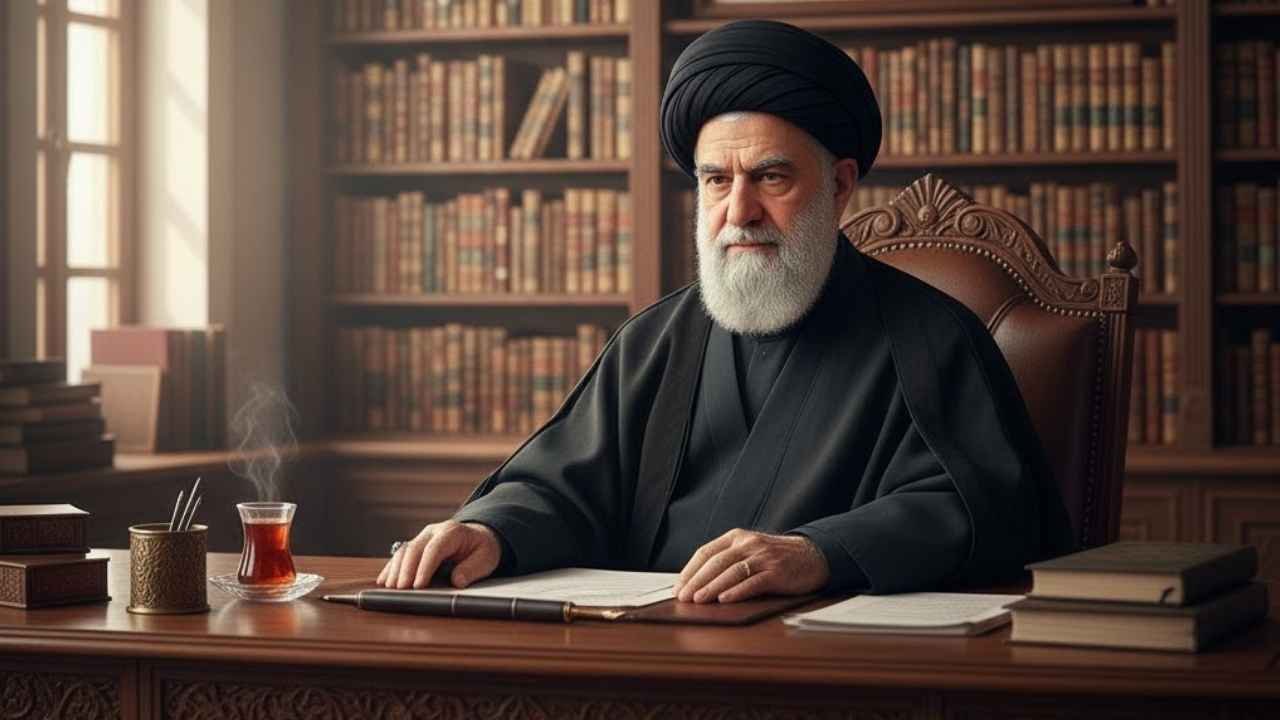
Ayatollah Ali Hosseini Khamenei was born on April 19, 1939, in the holy city of Mashhad, Iran. He came from a poor background and became one of the most powerful and divisive people in modern Middle Eastern history. He was Iran’s Supreme Leader for almost 37 years, having almost complete control over the country’s political, military, and religious affairs. He died on February 28, 2026, at the age of 86.
Khamenei’s father was a Shia cleric, and he grew up in a poor family. He said that his childhood was full of simple meals like bread and raisins. He started studying religion at a young age and became a cleric by the time he was 11. Later, he went to Mashhad and Qom to get more advanced training in theology. He started working against the Shah in the 1960s, which put him in close contact with Ayatollah Ruhollah Khomeini, the charismatic leader of the 1979 Islamic Revolution that overthrew the monarchy.
Ali Khamenei Net Worth
Ali Khamenei’s net worth is a complex subject because his official personal wealth was modest, but his financial influence was vast:
| Category | Estimated Value | Notes |
|---|---|---|
| Personal Net Worth | Around $50,000 | Reported as his direct personal wealth at the time of his death in 2026. |
| Controlled Assets (Setad) | Up to $200 billion | Through Setad Ejraiye Farmane Hazrate Emam (“Headquarters for Executing the Order of the Imam”), a powerful organization managing confiscated properties and investments. |
| Effective Financial Influence | $100–200 billion | Analysts suggest his control over Setad gave him enormous indirect wealth and influence, far beyond his personal holdings. |
Key Context
- Setad was established in 1989 and grew into a massive empire spanning real estate, finance, and industry.
- While Khamenei’s personal declared wealth was small, his role as Supreme Leader gave him control over Setad’s assets, making him one of the most financially powerful figures in the Middle East.
- His death in February 2026 highlighted the gap between his official net worth and the empire he effectively commanded.
After the revolution, Khamenei held important positions, such as being a member of the Revolutionary Council and leading Friday prayers in Tehran. He was elected President of Iran in 1981, after an assassination attempt left him permanently disabled in his right arm. He served two terms until 1989. The Assembly of Experts chose Khamenei as Supreme Leader that year after Khomeini died, even though he was only a mid-level cleric at the time (he was later made an ayatollah). Khamenei changed the role into a more centralized, hard-line institution after this decision.
Khamenei was the Supreme Leader and oversaw Iran’s rise to regional power by expanding the Islamic Revolutionary Guard Corps (IRGC), which became a powerful military and economic force. He was a strong supporter of the “Axis of Resistance,” which included groups like Hezbollah in Lebanon, Hamas and Palestinian Islamic Jihad in Gaza, and the Houthis in Yemen. These alliances gave Iran more power and led to long-lasting conflicts with Israel, Saudi Arabia, and the United States, which Khamenei often called the “Great Satan.”
During his time in office, he strictly enforced Islamic law, silenced dissent, and repeatedly cracked down on protests. The Green Movement started after the 2009 election, which was disputed, and the fuel price protests in 2019. The Woman, Life, Freedom uprising in 2022 happened after Mahsa Amini’s death. Critics said he allowed harsh actions like mass arrests, executions, and blackouts of the internet. He often got involved in politics, disqualifying reformist candidates through the Guardian Council and vetoing laws that went against the regime’s core beliefs.
Khamenei was always hostile toward the U.S. and Israel on the world stage, and he refused to negotiate nuclear weapons because he saw them as a sign of weakness. During his time in power, Iran made progress on its nuclear program despite harsh sanctions. Tensions rose until the Twelve-Day War in 2025 and more fighting in 2026.
By early 2026, there were more and more rumors about who would take over after the current leader. This was because of ongoing health problems (including treatment for prostate cancer) and wars in the region. Reports said that people were getting ready for people like Ali Asghar Hejazi or others, but there was no clear heir who had been publicly confirmed.
Khamenei’s life came to an end suddenly on February 28, 2026, when U.S. and Israeli forces attacked Iranian targets, including his home in Tehran. Iranian state media confirmed his death, calling him a “martyr” and declaring a national day of mourning. Donald Trump, the President of the United States, made the event public. Some Iranians living abroad and in Iran celebrated, seeing his death as a chance for change after years of repression.
According to Iran’s constitution, a temporary three-person leadership council, which reportedly includes President Masoud Pezeshkian and high-ranking judges, took over as the country’s leaders until the Assembly of Experts could choose a new Supreme Leader. With strikes and retaliatory actions still going on, the future of the regime is unclear. Analysts are debating whether the Islamic Republic will become more rigid under the influence of the IRGC or if it will break apart from within.
In many ways, Khamenei had a bigger impact on Iran’s future than Khomeini did, and he outlasted several U.S. presidents. His legacy, which caused divisions at home and abroad, includes strengthening theocratic rule, building proxy networks, and resisting Western pressure. However, he also oversaw economic hardship, isolation, and widespread discontent. As Iran enters this new chapter, the question remains: will his death signal the end of the system he built, or will it just lead to another hard-line era?

Digital entrepreneur and content expert I help businesses with AI, SEO and the latest tech trends. I started Silicon Valley Weekly to make complex tech concepts easy to understand and use for business growth. I know a lot about systems and help startups, entrepreneurs and brands navigate the fast-changing world of tech and online marketing.
I build strategies that use data, search optimization, content marketing and AI tools to get visibility, engagement and revenue. I love finding ways for businesses to grow increasing their presence and turning new ideas into successful businesses. My goal is to connect the technology, with practical business use so brands can succeed online.