What Is a Micro Break?
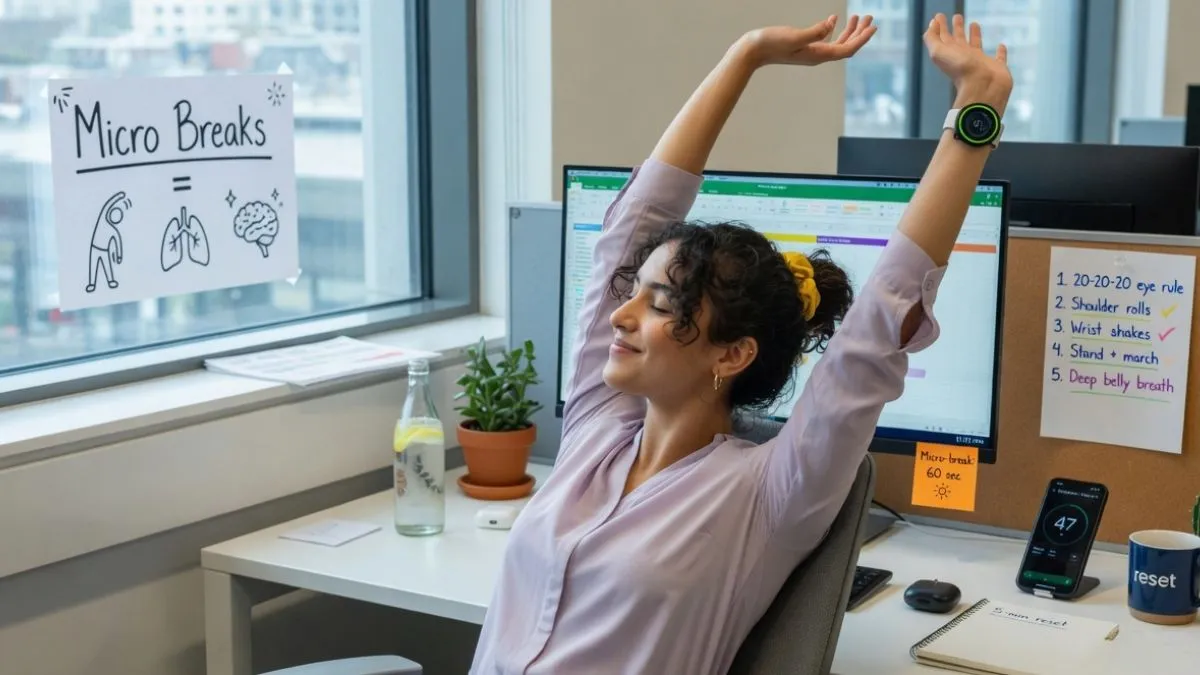
A micro break is a brief and intentional pause from work ranging from 30 seconds to five minutes. Micro breaks are different from a lunch break or a coffee run. They happen at your desk or a few steps from it. They’re not long enough to disrupt your workflow, but they’re powerful enough to refresh your mind and body. Research in occupational health has consistently shown that these short breaks are effective in relieving mental fatigue, reducing stress levels, and increasing concentration during the workday.
Why Your Brain Needs a Break
The human brain is not designed for long, unbroken concentration. After about 45 to 90 minutes of focused work cognitive performance begins to decline, sometimes called “attention residue.” It’s like running on fumes, keeping going without a break. Your error rate goes up, your creativity goes down and your decision-making suffers. Micro breaks break this cycle by giving the prefrontal cortex a chance to recover, which means you return to your task sharper and more capable than if you’d just grounded through.
The 20-20-20 rule to avoid eye strain
If your job requires screen time — and most jobs do these days — one of the most common productivity killers is eye strain. One of the simplest micro break techniques is the 20-20-20 rule: every 20 minutes, look at something at least 20 feet away for 20 seconds. It relaxes the ciliary muscles of your eye, and can help to relieve digital eye strain, headaches and the blurry vision that tends to creep in during long stints at the screen. Until it becomes a habit, set a quiet timer or use a browser extension to remind you.
Get Up and Get Your Body Moving
Sitting for long periods of time is hard on both the body and the mind. Even micro breaks such as standing up, stretching or taking a short walk – even just to the window and back – have a measurable effect on alertness. Exercise pumps blood to the brain, providing a quick delivery of oxygen and the release of mood-enhancing neurotransmitters. Try a few shoulder rolls, a quick neck stretch or a quick walk to the water cooler. You don’t need to do an entire workout, just 60 seconds of movement can make a noticeable difference in your mental state.
Practice Mindful Breathing
Not all micro breaks have to be movement-oriented. A few slow, deep breaths can be just as rejuvenating. Breathing exercises activate the parasympathetic nervous system, helping to counteract the low-level stress that builds up during a busy workday. Try box breathing – breathe in for four, hold for four, breathe out for four, hold for four. Do that a couple of times, two or three times. It takes less than two minutes, no equipment required, and you can do it right at your desk and no one will know.
Get Outside When You Can
If your workplace allows, stepping outside for two or three minutes is one of the most powerful micro breaks at your disposal. Natural light helps keep your circadian rhythm on track and inhibits the creation of melatonin that causes you to feel sluggish in the afternoon. Studies have found that fresh air and even a little time spent around greenery can reduce cortisol levels and elevate mood. Step outside for a quick break—around the building, on a balcony, or by a sunny window—to revitalize your energy more effectively than another cup of coffee.
Intentionally Take Breaks From Your Screen
A scroll on social media does not count as a real break. Studies show that when you move from work material to digital amusement, your brain remains in a comparably stimulated, reactive state — it doesn’t really relax. To be restorative, a micro break should involve stepping away from screens entirely. Flip through a paper notebook, brew a cup of tea, water a plant or simply sit in silence and let your mind wander. It is during this kind of unfocused mental time that the brain is consolidating information and making creative connections.
Use a Timer to Make Breaks Habitual
The main reason we don’t take micro breaks is that we forget to take them. When you are in the flow of a task, time flies. If you set up a structured reminder system, your willpower won’t be needed at all. That’s why techniques like the Pomodoro Method – 25 minutes of focused work followed by a 5-minute break – are popular. Or you might set a simple repeating alarm on your phone or use a productivity app. The idea is to make the pause automatic rather than something that you have to consciously choose every time.
Calibrate Break Frequency To Your Work
Not all work needs the same break schedule. Highly cognitive tasks such as writing, coding and strategic analysis drain mental resources more quickly, and taking a break every 25 to 45 minutes can be more helpful. More routine or physical work may allow longer periods of time. Listen to your own energy signals: If your attention is drifting, you feel the need to check your phone, or you begin to feel fidgety, it’s a sign that a micro break is necessary. The ability to read those cues and react to them quickly rather than powering through is a skill that pays compounding dividends over a career.
Design a Workspace That Encourages Breaks
The environment you’re in can either help you or get in the way of taking restorative breaks. Having a few simple items on hand makes it easier to take quality pauses. A resistance band for stretching, a calming playlist, a small plant to care for, a journal for a few minutes of free writing. For example, if you’re in an office, identifying a quiet corner or a nearby outdoor space beforehand means you’re not wasting your break trying to decide where to go. Little environmental cues like a visual timer on your desk can serve as gentle nudges to pause before fatigue sets in.
The Long-Term Payoff:
Micro breaks aren’t a productivity hack in the trendy sense — they’re a basic respect for how human attention actually works. People who take short breaks regularly say they are more satisfied with their jobs, less likely to experience burnout and have more energy at the end of the day than people who power through without pausing. Over weeks and months, that adds up to a lot: more consistent output, fewer mistakes, and a healthier relationship with work itself. The few minutes you spend away will almost always pay you back more than you spent.

Digital entrepreneur and content expert I help businesses with AI, SEO and the latest tech trends. I started Silicon Valley Weekly to make complex tech concepts easy to understand and use for business growth. I know a lot about systems and help startups, entrepreneurs and brands navigate the fast-changing world of tech and online marketing.
I build strategies that use data, search optimization, content marketing and AI tools to get visibility, engagement and revenue. I love finding ways for businesses to grow increasing their presence and turning new ideas into successful businesses. My goal is to connect the technology, with practical business use so brands can succeed online.