
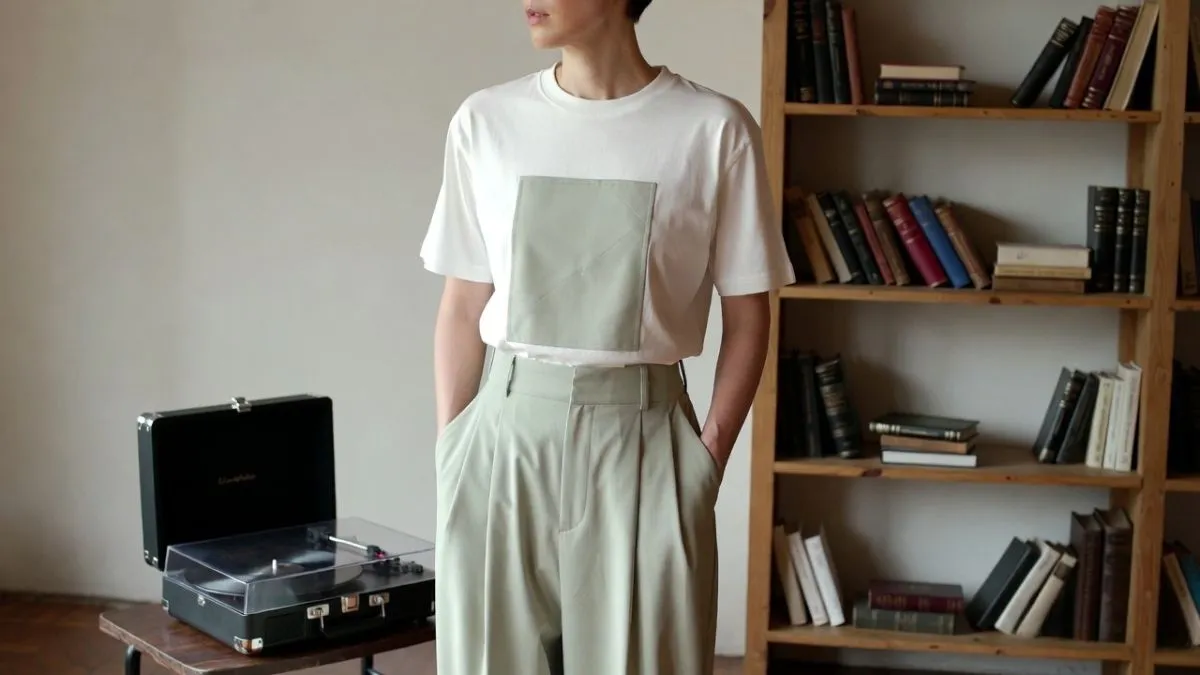
There is rarely any reason for fashion to change. It shows the feeling of people about the world they live in. In recent years there has been a definite move away from too much. There is also a pull to the past, to styles that are familiar, down to earth, and have worked in the past. This is the retro-minimalist meeting.
Minimalism creates a need for clarity. Retro satisfies a need for connection. They make a language of style, calm and expressive at the same time, not loud. It’s not to be different, just to be different. It’s about choosing what matters and wearing it on purpose.
Minimalism: Less, But Intentionally Selected
Many people think minimalist fashion is boring or plain. It’s very planned, actually. Every piece has its place. The cuts are sharp. The colors are under control. People select fabrics based on how they move and how durable they are. Minimalist fashion is about cutting back. You cut out the extraneous, so that what is left can speak clearly. Imagine a good-fitting white shirt. It doesn’t pop but it can make or break an outfit depending on how you wear it.
It is mostly in neutral colors. The base is black, white, beige, gray and soft earth tones. These colors work well together because they don’t clash. They make things work in unison. This makes it easier to put together looks that work well together with a minimum of effort. But it’s not just the colors of minimalism. It’s all about the form. The look is constructed with straight lines, structured fits and subtle proportions. There are big pieces but they are still controlled, not chaotic.
The Psychology of Easy Things
Minimalism is a good thing right now. People are just too much. Too many choices. Too much noise. Too much stimulation all the time. Minimalist fashion to the rescue. Fewer clothes make fewer decisions. You don’t have to think as much about what to wear. You get a better feel for your own style because you’re not running after trends every week.
There is also a deeper change in values taking place. Quality is better than quantity. People would rather buy one durable thing than ten cheap ones. This is in keeping with environmental concerns, but it’s also about self-respect. When you wear something well made it changes the way you act.
Fashion of the Past: Memory as Mode
Minimalism pulls back, retro fashion looks back for ideas. Minimalism looks forward. It draws ideas from the past and gives them a new meaning for today. Wearing retro clothes is not about copying history exactly. It’s a sensation. The 1950s were very structured and stylish, the 1970s were bold and experimental and the 1990s were laid-back and rebellious. Each epoch has its own individuality.
Retro is potent because it is familiar. You may not have lived through a certain decade, but you’ve seen it in movies, pictures or family albums. When you wear clothes that look like they came from the past you feel like you are in a story that already happened.
Why Retro Is Back Again
Fashion repeats itself. Trends come around because they never really go away. Designers take old ideas and reshape them for the current tastes. But it’s not just about doing the same thing again and again. Retro style gives you a feeling of security. When the waters are uncertain, people look for tried and tested. Older styles give you that feeling of security.
Retro also gives you the feeling that you are unique. When fast fashion produces identical styles for all, turning to the past can help you stand out without trying too hard. A vintage jacket, or a pair of denim from the 1990s, can feel more intimate than something that’s in style now.
Where the Past Meets Minimalism
Minimalism and retro might seem like two opposite things at first glance. One is about doing away with things. The other is about bringing back the past. But they are more alike than they appear. There are many retro styles that are quite easy to pull off. Consider the slip dress of the 1990s. It’s a simple shape, but it has a lot of cultural meaning. A simple closet is a good place for a classic trench coat from the yesteryear.
The intersection happens when retro pieces are styled with restraint. People don’t always wear clothing from the same era, but like to mix one or two retro pieces into a clean, modern look. This keeps the look real. For example, you could wear high-waisted vintage jeans with a plain fitted t-shirt and the outfit will look better. The jeans bring personality. The t-shirt keeps things simple. Neither is too much for the other.
Fabric and Texture Matter
The fabric is more important than the decorations in both minimalist and retro styles. Get rid of the heavy patterns or go for classic cuts and the material becomes the main thing. There is a lot of use of natural materials like cotton, linen and wool. They look and feel real and they improve with age. They are materials directly related to the periods of time they are talking about.
Texture also has a minor effect. You can add depth with a ribbed knit, soft suede or crisp poplin without making things look busy. This is especially important for minimalist looks, where prints do not add any details.
A Statement in Color, Quietly
Minimalism tends to use a small range of colors but retro fashion tends to add contrast. “The trick is to find the right balance. You may remember a neutral outfit with one stand-out color from the past. For example, a beige dress with a dark mustard-colored jacket. The color catches the eye, but doesn’t dominate.
You can also desaturate retro palettes. But instead of the bright oranges and greens of the 1970s, designers often give them a new look in softer shades. This way it is easier for them to wear in real life.
The impact of customization
Fit is critical to these trends. Minimalist fashion requires precision. A simple outfit that fits poorly looks sloppy. A well fitted one looks classy. Retro fashion also relies on tailoring when it takes from eras that prized structure. Good fit is important for high-waisted pants, cinched waists and defined shoulders.
In the modern interpretations these shapes are often a little less strict. They are more comfortable, but you still get the original effect.
Long term and sustainable
Minimalist and retro styles work together with being eco-friendly. Minimalism is making you want to buy less. Retro is about getting people to reuse and rediscover things. People buy more at vintage stores these days, because they bring something new. It also prolongs the life of clothing that would otherwise be thrown away.
Minimalist wardrobes are made up of classic pieces so they tend to last longer. A nice coat or timeless pair of shoes will last you a very long time. All these trends are in the opposite direction to the idea of disposable fashion. They encourage a more considered, slower pace.
The Significance of Personal Identity
These trends might be most important because they allow people to be themselves. Minimalism offers you a clean start. Retro is what makes you different. People are now creating their own style and not following every new trend. They take the parts that resonate with them and omit the rest.
Makes it easy to be you. Two people can be into the same minimalist, retro styles, but look really different. Some people might like the simple style of the 1990s and some might like the textures of the 1970s.
Getting It Right Problems
These styles look good, but aren’t always easy to get right. Minimalism can be boring if you forget the details. When you go too far, retro can feel like a costume.
The most important is to hold back. You need not say it all. Usually one good piece is sufficient. It also requires your consciousness. It’s more important to know what works for your body, your lifestyle and your environment than to follow any trend.
What will these trends do
Minimalist and retro fashion are not going anywhere anytime soon. They fulfill deeper needs than short-term thrills. They will evolve over time, not disappear, as long as people value sustainability, clarity and authenticity. There will be new fabrics and new cuts and new combinations, but the ideas will be basically the same.
Minimalism will continue to get better. Retro is going to keep going back to different decades.” Between them the gap is only going to get bigger.
Last Thoughts
Minimalist and retro styles are not just about clothes. They tell us how people want to live. Less complicated. More intentional. More meaningful. Minimalism allows your focus. Retro style makes you think of the past. Together they develop a style that is both grounded and expressive.
These are trends in the opposite direction of what the world usually wants – more, faster, louder. They tell you to be patient, to make good decisions, and to wear your decisions with purpose.

Digital entrepreneur and content expert I help businesses with AI, SEO and the latest tech trends. I started Silicon Valley Weekly to make complex tech concepts easy to understand and use for business growth. I know a lot about systems and help startups, entrepreneurs and brands navigate the fast-changing world of tech and online marketing.
I build strategies that use data, search optimization, content marketing and AI tools to get visibility, engagement and revenue. I love finding ways for businesses to grow increasing their presence and turning new ideas into successful businesses. My goal is to connect the technology, with practical business use so brands can succeed online.