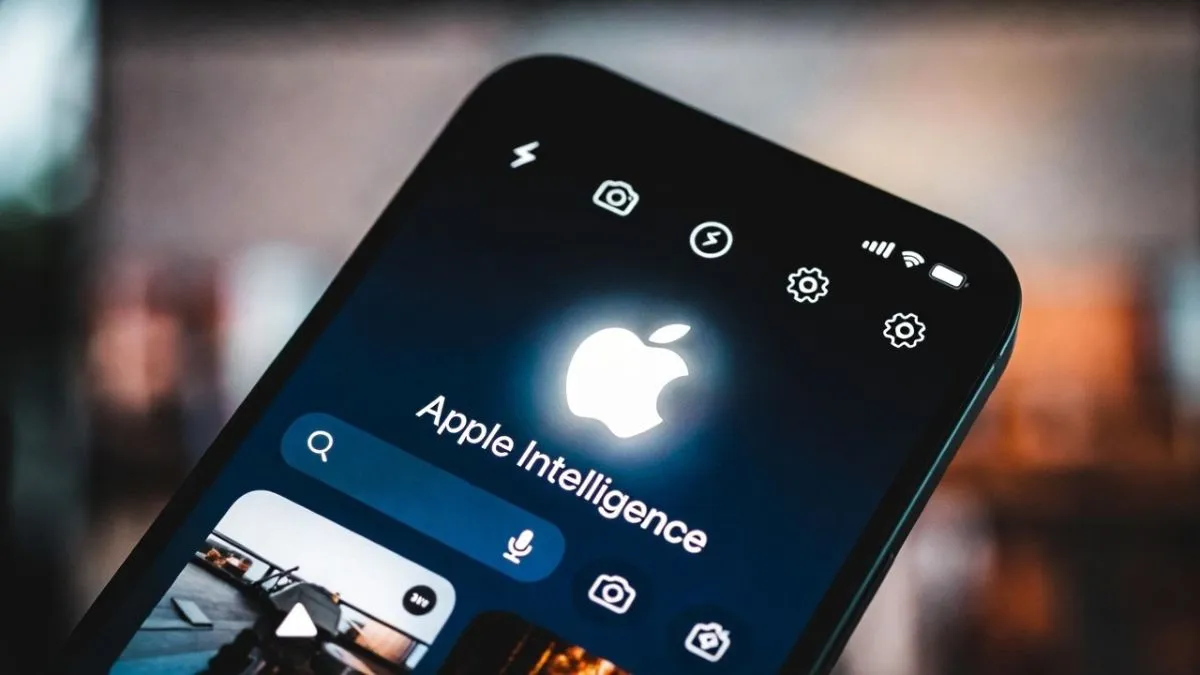
The tech industry is now fighting over artificial intelligence, and Apple, which never jumps on trends without a well-thought-out plan, came into the ring with something that was clearly its own. Apple Intelligence is a catch-all term for different generative AI features built right into Apple’s operating system. These features change the way people write, talk, and do everyday tasks. Apple did things very differently than making a standalone chatbot. Apple Intelligence isn’t a separate feature; it’s about adding to what you already have, with large language model (LLM)-driven technology working behind the scenes. Apple CEO Tim Cook said that the goal is to make your most personal products even more useful and fun.
A System Built into the Operating System
Apple Intelligence add-ons Apple already has machine-learning tools that use generative AI technology, which is similar to what OpenAI’s ChatGPT uses. It currently uses two systems: an older one that uses machine intelligence and pattern matching, and a newer one that uses large language models to create new things. For example, it can handle questions to Siri that change context.
What sets Apple’s approach apart is how deeply this intelligence is a part of how people use their devices every day. You can start a task on one device and finish it on another, and AI context will stay the same across the iPhone, iPad, and Mac. This ability to continue across devices lets users write on a Mac, edit on an iPhone, and use Siri to do things without losing context. This makes the user experience more seamless and efficient. This isn’t so much about a chatbot window as it is about an operating system that can think with you.
What Can It Really Do?
Apple Intelligence gives users a wide range of features that are always getting better. At its core are strong writing tools. You can proofread, rewrite, make the text friendlier, shorter, or more professional, just like you can with popular AI writing tools like Grammarly. The system goes beyond writing and into almost every part of using a device every day.
Users can make a custom memory movie in the Photos app by just typing in a description. Apple Intelligence finds the best matching photos and videos, makes a story with unique chapters based on themes it finds, and puts them together into a movie with its own story arc. Apple Intelligence can also figure out what questions you were asked in an email and suggest relevant answers for you to include in your response. This means that with just a few taps, you can send a reply with all the important questions answered.
Users can mix and match emoji and add descriptions to make a brand-new Genmoji. When making images based on family and friends, they can change the expressions or personal traits like hairstyle to match the latest look of a contact. At the same time, visual intelligence can tell when a user is looking at an event and suggest adding it to their Calendar. Apple Intelligence then pulls the necessary information to make the event happen automatically.
People who are into fitness also benefit. Workout Buddy is the first fitness app of its kind that uses Apple Intelligence to look at a user’s workout data and fitness history and give them personalized, spoken motivation throughout their session, based on things like heart rate, pace, distance, Activity rings, and personal fitness goals.
Siri’s New Look
Siri is an important part of any conversation about Apple Intelligence. Apple Intelligence is a long-awaited update for the smart assistant. The new Siri works with all apps. For example, you can ask it to edit a photo and then send it right away in a text message. This is something the assistant couldn’t do before.
Apple also worked with OpenAI to add ChatGPT to the mix. When it’s appropriate, Siri can give users access to ChatGPT’s vast world knowledge without having to switch to a different browser or app. That being said, a more personalized version of Siri that knows about your relationships, how you communicate, and your daily routines is still being worked on and should be available in a future update.
At the Heart of Privacy
Apple’s biggest advantage over other companies in the AI race is privacy. A lot of Apple Intelligence models work only on the device. For more complicated requests, Private Cloud Compute takes the privacy and security of the iPhone into the cloud to get more information. A user’s data is never stored or shared with Apple and is only used to fulfill their request.
This design is one of a kind. Apple Intelligence’s cloud models are different from other generative AI services like ChatGPT because they are run entirely on Apple servers with custom Apple silicon hardware built for end-to-end encryption. It was also made to make sure that the software on those servers matches software that researchers can check for themselves. If there is a mismatch, Apple devices will not be able to connect. This is a strong promise for people who are becoming more careful about where their data goes.
What devices can use it?
You need an iPhone 15 Pro, iPhone 15 Pro Max, or iPhone 16 series device to use Apple Intelligence. It also works on Macs and iPads with an M1 or later chip, as well as Vision Pro and Apple Watch. This hardware dependency is by design. Apple’s own A17 Pro, A18-series, and M-series chips have a neural network component that lets Apple Intelligence run generative operations on the device. This also means that AI features are becoming a major reason to upgrade hardware, not just to make it faster but also to get access to new software features.
The Road Ahead
Apple has made it possible for any app to connect directly to the on-device foundation model that powers Apple Intelligence. Using AI inference that is free of charge, developers can use the Foundation Models framework to create smart, offline experiences that protect users’ privacy. This could lead to a new generation of third-party apps that work as well and feel as smart as Apple’s own.
Apple Intelligence is still changing. Some features have been delayed, and they are only available in certain languages and regions. But the main idea is clear: Apple is making AI that works for you in a quiet, private, and deep way. It’s not a flashy add-on; it’s the intelligence that makes everything your device does work.
Frequently Asked Questions (FAQs)
Is Apple Intelligence free to use?
Yes. Apple Intelligence is available at no extra cost — it comes built into supported devices as part of a software update. There are no subscription fees or per-request charges for using Apple’s own on-device models.
Which devices support Apple Intelligence?
It requires an iPhone 15 Pro, iPhone 15 Pro Max, or any iPhone 16 model. On the iPad and Mac side, any device running an M1 chip or later is supported. Apple Watch and Vision Pro also gained support in recent updates.
Does Apple Intelligence send my personal data to the cloud?
Not by default. Most features run entirely on your device. When a more complex task requires cloud processing, Apple uses Private Cloud Compute — meaning your data is used only to fulfill your request and is never stored or shared with Apple.
Do I need an internet connection to use Apple Intelligence?
For most features, no. The on-device models work fully offline. Some features, like accessing ChatGPT through Siri or using Private Cloud Compute for heavier tasks, do require an internet connection.
Is Apple Intelligence available worldwide?
It has been rolling out globally and now supports a wide range of languages including French, German, Spanish, Japanese, Korean, Chinese (Simplified), and many more. However, it is currently not available on devices purchased in mainland China or for Apple Accounts set to mainland China.

Digital entrepreneur and content expert I help businesses with AI, SEO and the latest tech trends. I started Silicon Valley Weekly to make complex tech concepts easy to understand and use for business growth. I know a lot about systems and help startups, entrepreneurs and brands navigate the fast-changing world of tech and online marketing.
I build strategies that use data, search optimization, content marketing and AI tools to get visibility, engagement and revenue. I love finding ways for businesses to grow increasing their presence and turning new ideas into successful businesses. My goal is to connect the technology, with practical business use so brands can succeed online.