On April 7 every year, the world stops to think about how healthy the world is and what we all need to do to make it better. World Health Day is the anniversary of the founding of the World Health Organization (WHO) in 1948. After World War II, countries came together to say that “the enjoyment of the highest attainable standard of health is one of the fundamental rights of every human being.” The theme “Together for health” gives this observance a lot of meaning in 2026. Be on the side of science. It starts a year-long campaign that promotes working together in science as the best way to protect the health of people, animals, plants, and the planet.
The theme brings out a deep truth: health problems in the 21st century are all connected and can’t be fixed on their own. Solutions to new infectious diseases, antimicrobial resistance, the worsening effects of climate change, and non-communicable diseases (NCDs) all require scientists from different fields to work together and a strong belief in evidence-based methods. Dr. Tedros Adhanom Ghebreyesus, the Director-General of the World Health Organization, has said many times in the last few years that standing with science means rejecting false information, funding research, and building strong systems that protect the most vulnerable.
The history of World Health Day and why it is still important
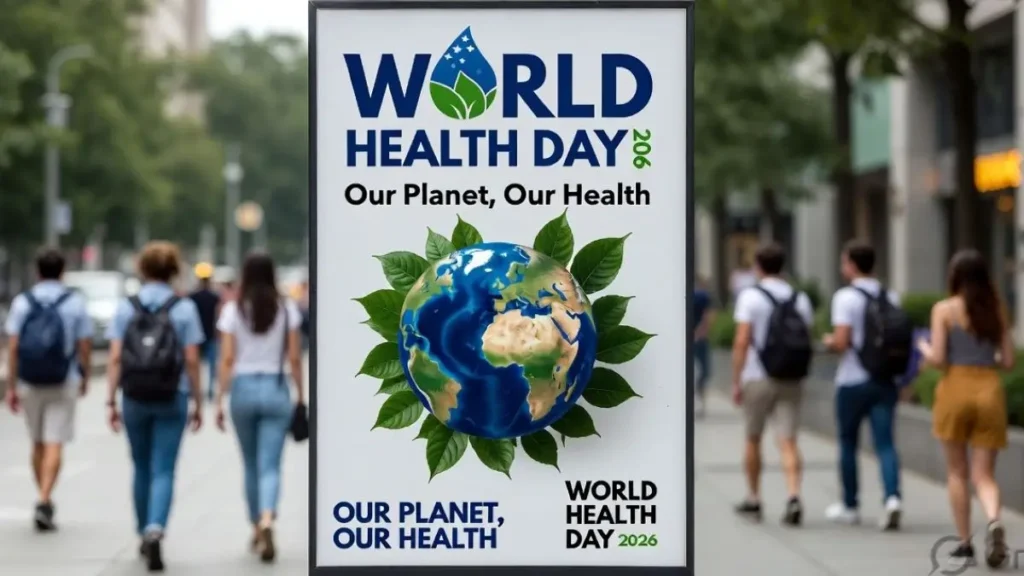
The First World Health Assembly decided to celebrate World Health Day for the first time in 1950. Over the years, it has brought attention to important issues like getting rid of polio in 1995, fighting antimicrobial resistance in 2011, universal health coverage in 2018 and 2019, and the health effects of climate change in 2008 and 2022 (“Our planet, our health”). Past themes have changed with the times, from safe motherhood and mental health to helping nurses and midwives during the COVID-19 pandemic.
In 2026, the emphasis transitions to science as a cohesive element. This is in line with WHO’s Fourteenth General Programme of Work (GPW 14) for 2025–2028, which aims to save 40 million lives by fixing the problems that cause people to be sick, making primary health care better, and getting ready for emergencies better. Climate change is a major strategic goal because it causes vector-borne diseases, food insecurity, and extreme weather events that put a lot of stress on health systems.
The 2026 campaign is based on what we learned from the COVID-19 pandemic, the Pandemic Agreement that was signed in 2025, and the ongoing work to get everyone health coverage (UHC). It supports “One Health,” which is an approach that sees the connections between the health of people, animals, and the environment. Scientific breakthroughs, like mRNA vaccines and genomic surveillance, have shown that working together across borders and fields can speed up progress.
Why Science Is More Important Than Ever in 2026
There are a lot of threats to global health right now. More than 70% of deaths around the world are now caused by non-communicable diseases. This is because people are getting older, eating poorly, not exercising, and breathing in polluted air. Antimicrobial resistance (AMR) could make common infections impossible to treat. In some areas, one in six bacterial infections is already resistant. Climate change makes these risks worse: higher temperatures let mosquitoes that carry dengue, Zika, and malaria spread to more places, and extreme weather makes it harder to get medicines and vaccines.
Conflicts and humanitarian crises make things even harder. WHO’s emergency appeal for 2026 aims to raise nearly $1 billion to deal with 36 crises, including long-running wars in places like Sudan, Ukraine, and the occupied Palestinian territory, where health systems are weak and cholera and mpox outbreaks are possible. Changes in geopolitics and cuts to funding have made it harder to get help, which has left gaps in vaccination programs and surveillance.
But science gives us hope. The power of innovation is shown by new long-acting injectables for HIV prevention, triple diagnostic tests for HIV, hepatitis B, and syphilis, and digital tools for tracking diseases. The 2025 Pandemic Agreement makes it possible for everyone to get countermeasures through a pathogen access and benefit-sharing system. This system is expected to get better in 2026. Big data and artificial intelligence are changing the way we predict outbreaks, and traditional medicine strategies that were approved in 2025 want to combine these new methods with proven ones.
To stand with science also means fighting false information. Misinformation has made people less likely to trust vaccines and treatments during recent health crises. To rebuild trust, the 2026 campaign calls for teaching people how to use the media, making health authorities’ communication clear, and getting people involved in their communities.
One Health: Bringing together different fields for the good of the planet
The One Health framework is a key part of the 2026 theme. Many new threats, like Ebola, SARS, and maybe even future pandemics, come from zoonotic diseases, which are diseases that spread from animals to people. It is not only good for the environment to protect biodiversity and sustainable agriculture; it is also good for public health.
Here, scientific collaboration really stands out. The Global Influenza Surveillance and Response System and other international networks share viral samples and data in real time. Studies on climate-resilient crops and livestock help make sure everyone has enough food, and studies on urban planning help reduce pollution and heat islands. In 2026, WHO and its partners will share success stories, like countries that use genomic sequencing to quickly track variants or communities that use integrated vector management to keep arboviruses under control as climates change.
Putting money into science pays off in real ways. For every dollar spent on vaccines, societies save many times that amount in lost productivity and treatment costs. The most cost-effective way to reach universal health care (UHC) is through primary health care based on scientific evidence. However, 4.6 billion people still don’t have access to basic services, and 2.1 billion people face huge health care costs.
What People, Communities, and Governments Can Do to Help
World Health Day 2026 is more than just a day to remember; it’s a call to action. People can “stand with science” by getting vaccinated, living a healthy lifestyle, and supporting efforts to protect the environment. Parents can make sure their kids get their regular vaccinations, and adults can make sure they get screened for noncommunicable diseases (NCDs) like diabetes and high blood pressure.
Local initiatives like school programs on nutrition and hygiene, farmer cooperatives that use sustainable farming methods, and citizen science projects that keep an eye on air and water quality are all important ways that communities can help. Health professionals, researchers, and teachers are the first line of defense, turning research into care that is easy to get to.
Funding for research and development should be a top priority for governments and international organizations, especially in low- and middle-income countries. To make health systems stronger, we need to spend money on training workers (to fill the expected 11 million health worker gap by 2030), digital infrastructure, and making sure everyone has equal access to new ideas. Policies should include health in agreements about climate change, agriculture, and trade. The UN High-Level Meeting on UHC in 2027 is a very important event that will help speed up progress.
Partners from the private sector and charities are very important. Partnerships between the public and private sectors have sped up the development of vaccines and diagnostic tools. In 2026, it will be important to grow these kinds of partnerships while making sure they are fair and open.
Looking ahead: Making the world healthier and stronger
As the year-long campaign goes on after April 7, 2026, you can expect things like scientific conferences, community health fairs, and policy talks at the World Health Assembly. It’s clear that health is not something you can do on your own. It necessitates unity among nations, fields, and industries.
There are still problems, like funding issues, geopolitical tensions, and the sheer size of the inequities, but history shows that when the world works together with science, great things happen. The world worked together to get rid of smallpox. There have been very few cases of polio. Even though there have been problems, life expectancy has gone up.
Let’s remember the WHO Constitution’s vision on World Health Day 2026. We can get closer to a world where everyone has the best health possible by accepting science, encouraging cooperation, and putting the needs of the most vulnerable first. No one is left behind when we work together for health. Standing with science shows us the way forward.
The campaign says, “Science saves lives, but only when we stand with it—united, informed, and committed.” Let that promise inspire action at all levels this April 7 and all year long. It is important for the health of our shared future.

Digital entrepreneur and content expert I help businesses with AI, SEO and the latest tech trends. I started Silicon Valley Weekly to make complex tech concepts easy to understand and use for business growth. I know a lot about systems and help startups, entrepreneurs and brands navigate the fast-changing world of tech and online marketing.
I build strategies that use data, search optimization, content marketing and AI tools to get visibility, engagement and revenue. I love finding ways for businesses to grow increasing their presence and turning new ideas into successful businesses. My goal is to connect the technology, with practical business use so brands can succeed online.