Richard and Maurice McDonald opened a small barbecue restaurant in San Bernardino, California, in 1940. At first, it wasn’t anything special—just another diner on the side of the road in a country full of them. But in 1948, the brothers made a big choice: they cut their menu down to nine items and added the “Speedee Service System,” which was the first step toward modern fast-food assembly lines. The kitchen was set up like a factory floor, with each worker given one job that they had to do over and over again. Prices went down, speed went up, and customers loved it. That idea of running a business with as little waste as possible became the core of everything McDonald’s would become.
McDonald’s Profile Summary
| Attribute | Details |
|---|---|
| Company Name | McDonald’s Corporation |
| Industry | Restaurant – Fast Food |
| Founded | May 15, 1940 (San Bernardino, California, USA) |
| Incorporated | April 15, 1955 |
| Founders | Richard & Maurice McDonald (original chain), Ray Kroc (corporation) |
| Headquarters | Chicago, Illinois, USA |
| CEO & Chairman | Chris Kempczinski |
| Number of Locations | 45,356 restaurants (2025) |
| Area Served | Worldwide – 119+ countries |
| Key Products | Burgers, chicken, fries, soft drinks, shakes, coffee, breakfast wraps, desserts |
| Revenue (2025) | $26.9 billion |
| Operating Income (2025) | $12.4 billion |
| Net Income (2025) | $8.56 billion |
| Total Assets (2025) | $59.5 billion |
| Total Equity (2025) | −$1.8 billion (negative equity due to share buybacks) |
| Employees | Hundreds of thousands globally |
| Stock Exchange | NYSE: MCD (part of DJIA, S&P 100, S&P 500) |
| ISIN | US5801351017 |
The Franchise Revolution and Ray Kroc
The story could have stopped in California. It didn’t happen because of one man: Ray Kroc, a milkshake machine salesman who went to the brothers’ restaurant in 1954 and saw something the McDonalds had never fully thought of before: a business that could be copied over and over again. Kroc became the franchise agent, and in 1961 he bought the whole company for $2.7 million, which he famously borrowed at very high interest rates. He didn’t just want to sell hamburgers; he wanted to sell a system—a standardized, scalable operation where every burger, fry, and smile was tightly controlled. There were more than 7,500 McDonald’s around the world when he died in 1984. Kroc was smart because he knew that consistency, not food, was the real product.
The Art of the Brand: Marketing that Moves Billions
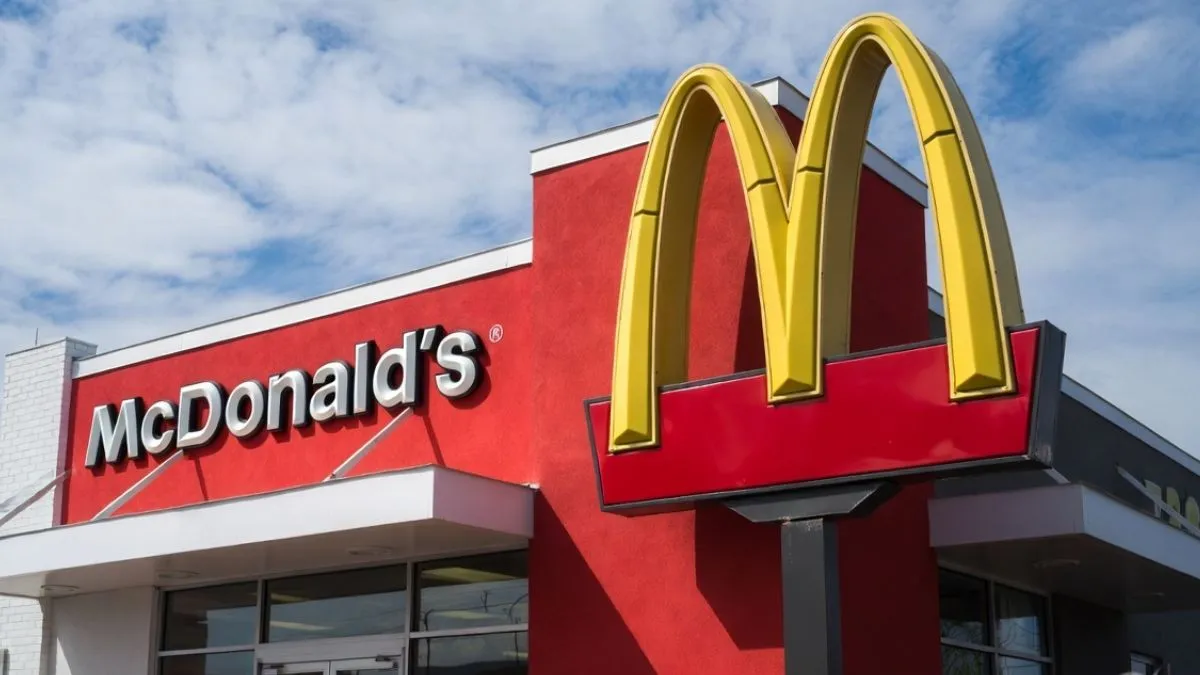
Not many brands have been able to keep their marketing going for as long as McDonald’s has. The Golden Arches, which were first put up in the 1960s, are now one of the most well-known symbols on Earth. Some say they are even more well-known than the Christian cross. The Big Mac, Happy Meals, Ronald McDonald, and the immortal jingle “I’m Lovin’ It” (which started in 2003 and is still going strong) are all examples of a branding engine that never stops. McDonald’s is different because it can adapt to different places without losing its identity. The McAloo Tikki burger is popular in India, where most people are vegetarians. The Teriyaki Burger is a cultural icon in Japan. McCafé has become a real coffee place in France. The arches stay golden while the brand changes to fit the culture.
The Franchise Model: Making Operators Owners
Independent franchisees own and run about 95% of McDonald’s restaurants. This business model has been one of the most successful ways to make money in corporate history. Franchisees pay an initial fee, ongoing royalties, and rent, which is usually paid to McDonald’s, which owns or controls the real estate. In exchange, they get a proven system, a brand that people around the world trust, and constant help with operations. This structure keeps McDonald’s corporate side lean while spreading entrepreneurial energy and local knowledge to tens of thousands of operators around the world. Many franchisees have turned their businesses into family businesses that have lasted for generations. Some have even grown to dozens of locations. The model makes sure that everyone’s interests are aligned: franchisees only do well when the brand does well, which creates a cycle of quality and growth.
McDonald’s current market capitalization (often referred to as its “net worth” in corporate terms) is approximately $216.6 billion USD as of the latest trading session, with its stock priced at $304.85 per share.
McDonald’s Net Worth
| Attribute | Value |
|---|---|
| Stock Symbol | MCD (NYSE) |
| Current Share Price | $304.85 USD |
| Previous Close | $309.76 USD |
| Market Capitalization | $216.6 billion USD |
| 52-Week High | $341.75 USD |
| 52-Week Low | $283.47 USD |
| P/E Ratio | 25.50 |
| Dividend Yield | 2.44% |
| Average Daily Volume | 3.17 million shares |
| Latest Trading Volume | 15,666 shares (after hours) |
Key Insights
- Market Cap as Net Worth: For companies that are traded on the stock market, like McDonald’s, net worth is usually measured by market capitalization (the price of a share times the number of shares outstanding).
- Strong Dividend Play: With a 2.44% dividend yield, McDonald’s is still a good choice for investors who want to make money.
- Resilient Business Model: Even though inflation is rising around the world, McDonald’s is still doing well because it has a lot of franchises and a well-known brand around the world.
- Negative Equity Note: McDonald’s has had negative shareholder equity in the past few years because it has been buying back a lot of its own shares. However, this doesn’t change how much the company is worth on the market.
Innovation Under Pressure: How to Live and Grow
There have been times in McDonald’s history when things went wrong that forced the company to change. In the early 2000s, the company had to deal with falling sales, bad press from the documentary “Super Size Me,” and more and more people becoming health-conscious. The answer was quick and well-planned: salads, wraps, fruit bags, and calorie labels were added. The McCafé brand grew around the world to get into the high-end coffee market. The insides of restaurants were changed to have a more modern, warm look that would appeal to a younger crowd. McDonald’s has put a lot of money into digital ordering, mobile apps, loyalty programs, and self-service kiosks in the last few years. During the COVID-19 pandemic, its drive-through infrastructure—already one of the best in the business—became a vital lifeline, letting the company stay open when dining rooms around the world were closed.
The Next Frontier in Technology and Data
McDonald’s is now as much a tech company as it is a restaurant chain. Dynamic Yield was bought in 2019, and it brought AI-powered menu personalization to digital boards. These boards suggest items based on the time of day, the weather, and what other people like. Hundreds of millions of people have signed up for the MyMcDonald’s Rewards loyalty app, which has given the company a lot of behavioral data. Voice-activated drive-through ordering and automated kitchen technology are being tested in some markets. McDonald’s knows that in the 21st century, the fight for customers isn’t just about taste; it’s also about making things easy for them. That’s why the company is putting money into it. The company that changed the way food was served with a stopwatch and an assembly line is now doing it with algorithms and machine learning.
A Legacy Built on People, Systems, and Hard Work
It’s not really about hamburgers that McDonald’s is a success story. It’s about how systems thinking can help us understand human experience. Every choice, from the height of the counter to the shape of the logo, was made to have an effect. This is the story of a milkshake seller who had bigger dreams than the people who made the milkshake. It is a story about franchisees who put all their money on a brand and won. And it’s a story about a company that has changed and grown over the course of eight decades without ever losing its hold on what people want. The Golden Arches are more than just a logo; they are a symbol of what hard work, consistency, and constant change can build. Those arches mean something to people all over the world, and that’s McDonald’s biggest success, even more than any one product.
Frequently Asked Questions (FAQs)
Who really turned McDonald’s into a brand that people all over the world know?
Richard and Maurice McDonald came up with the idea for fast food, but Ray Kroc made it a worldwide business. Kroc bought the company in 1961 after going to their California restaurant in 1954. He then built the franchise empire we know today.
How does the franchise system at McDonald’s work?
Independent franchisees own about 95% of McDonald’s restaurants. They pay an upfront fee and then ongoing royalties and rent, which is usually to McDonald’s, which owns the property. In exchange, they get a tried-and-true system, help with their brand, and training on how to run their business.
What does McDonald’s do to make its menu work in different countries?
McDonald’s does “glocalisation,” which means keeping the same brand while changing the menus to fit local tastes. The McAloo Tikki in India, the Teriyaki Burger in Japan, and the McBaguette in France are all examples. Core items are the same everywhere, but local flavors fill in the gaps.
How has McDonald’s changed because of people who care about their health?
McDonald’s added salads, wraps, fruit options, and calorie labeling in the early 2000s after getting a lot of bad press. It also made McCafé bigger for high-end coffee, redesigned the inside of restaurants, and since then, it has spent money on making nutrition information more clear in all of its major markets.
What part does technology play in McDonald’s these days?
McDonald’s strategy now revolves around technology. It has digital menu boards powered by AI, a global loyalty app with hundreds of millions of users, self-service kiosks, and is testing voice-activated drive-through ordering. All of these things turn a fast-food chain into a data-powered experience platform.

Digital entrepreneur and content expert I help businesses with AI, SEO and the latest tech trends. I started Silicon Valley Weekly to make complex tech concepts easy to understand and use for business growth. I know a lot about systems and help startups, entrepreneurs and brands navigate the fast-changing world of tech and online marketing.
I build strategies that use data, search optimization, content marketing and AI tools to get visibility, engagement and revenue. I love finding ways for businesses to grow increasing their presence and turning new ideas into successful businesses. My goal is to connect the technology, with practical business use so brands can succeed online.