
A Special Place
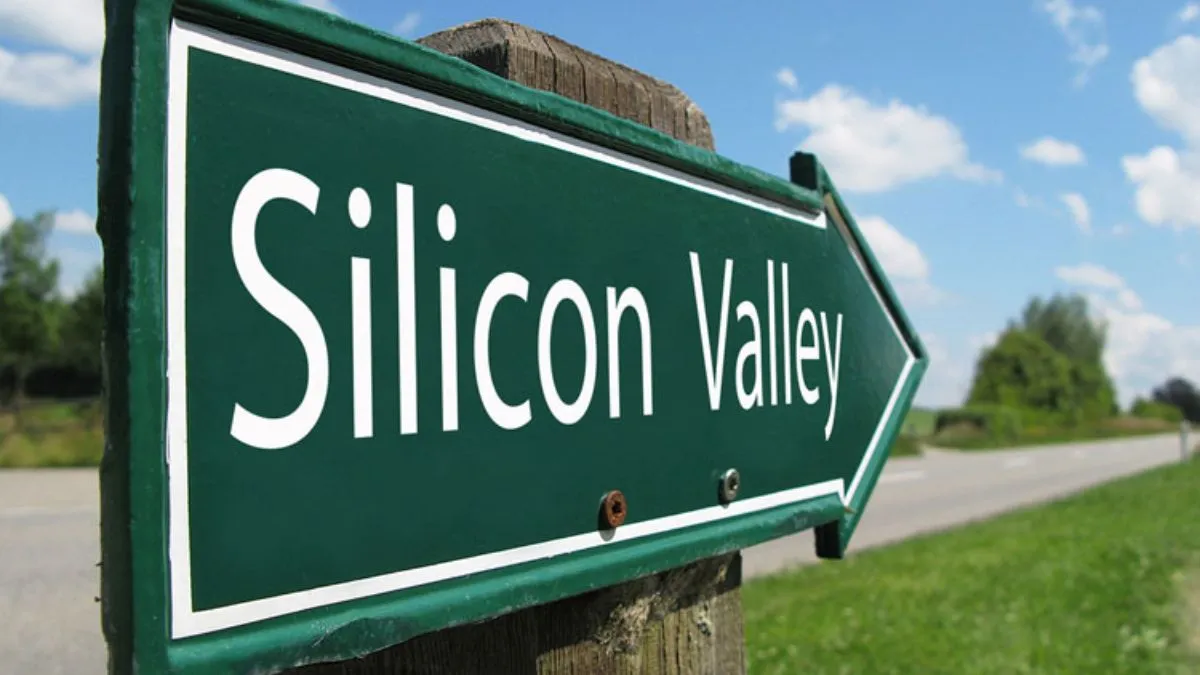
There’s a parcel of land in Northern California at the southern end of the San Francisco Bay that has, for nigh on seventy years, altered the world more profoundly than perhaps any other similar geography in human history. Silicon Valley is not a political border. No official city limits, no mayor, no single address where its identity can be pinned down. It is a region — roughly from San Jose in the south to Palo Alto and Menlo Park in the north — defined not by geography but by culture, by ambitions and by an extraordinary concentration of talent, capital and technological creativity. Silicon Valley is not only the heart of innovation, it is exaggeration. That is a statement borne out by the most remarkable output of technological transformation the modern age has ever seen.
The companies that were born and grew up in this region have fundamentally changed the way human beings communicate, shop, navigate, learn, work and see themselves. Apple, Google, Meta, Intel, Oracle, Netflix, Hewlett-Packard, Cisco, Tesla and a million more grew out of or were created by the unique ecosystem Silicon Valley has built for generations. The smartphones in our pockets, the search engines we query dozens of times before noon, the social networks that maintain relationships across continents—the products and platforms used daily by billions of people—all began with decisions made in garages, university labs, and glass-walled campuses scattered along this narrow corridor of Northern California. To understand how this has happened and why it has endured is to understand something fundamental about the nature of innovation itself.
The Historical Roots of a Technological Revolution
Silicon Valley didn’t appear out of thin air, just because it’s in sunny California. It was the result of a few different forces coming together like history, institutions funding, and individual choices that when you think about them, seem quite surprising in the timing. The story really gets started in the twentieth century with Stanley University which Leland Stanford, who made his fortune through the railroad business, in Palo Alto and which began its foundation work as a university in 1891. For a substantial time Stanford was a major university for teaching engineers and scientists who, upon graduation, typically migrated to the East Coast with their talent since the industrial cities are there. What really helped Silicon Valley to grow was a Stanford administrator who had the courage to challenge what was done. Electrical Engineering Professor Frederick Terman became the school’s provost. He noticed a big waste by Stanford as engineers kept leaving.
As Terman, the growth of the private sector should not happen just by the government and companies or universities, respectively. He argued that such joint efforts through a collaborative and mutually supporting relationship between a university and the private sector can result in much better things than each one can achieve alone without the help of the other. He inspired a generation of his promising students not to flee the region but to remain around and even launch startups. For their startups they got Terman’s mentorship and connections as backing. In fact, by 1951, thanks to his ideas and support, Terman contributed to the Stanford Industrial Park development, the pioneer among such university-related research parks globally.
We can say that one of the main factors of Silicon Valley’s establishment was Stanford Industrial Park. The park, Besides giving the companies very low rent in return for their economic input and intellectual capital, was also the place where the first tenants, one of whom was the famous electronics company Hewlett Packard, were located. After all, the garage where it started out, back in the 1939 when William Hewlett and David Packard, fellow students, started it with the help of some of their university professors, has now been recognized as the official birthplace of Silicon Valley. It was a tiny garage but in it, were the seeds of a dramatic change whose size no one could have even begun to forecast back then.
The Semiconductor Revolution and Where the Name Came From
The name “Silicon Valley” originates from the semiconductor industry that was born there in the 50’s and 60’s. Transistors and integrated circuits are made using this material – silicon – so the region got a piece of the world’s leading technology and a nickname that never dies. William Shockley, co-inventor, Nobel Prize winner, the very reason for this turning point of Silicon Valley, came from his job at Bell Labs in New Jersey to Mountain View, California in 1956, and founded Shockley Semiconductor Laboratory. He was partially motivated by the wish to be close to his sick mother in Palo Alto with his location decision and his place has turned out to be one of the most fortunate geographical coincidences of the whole history of the tech industry.
Shockley was a top-rate scientist, but as a boss he was infamous, so 1957, after a row, eight of the most gifted of his engineers – a group that would later be known in affectionate terms as the “Traitorous Eight” – walked out and startedFairchild Semiconductor with entrepreneurial support from Sherman Fairchild. Fairchild Semiconductor was one of the most influential companies in the history of the field, as it was the first company in the world to market silicon-based integrated circuits and the company that molded a whole new generation of engineers executives who would go on to create other companies in the valley. In the list of those eight “traitors” there were Robert Noyce and Gordon Moore who left Fairchild two years later together to start Intel, the microprocessor company that ultimately ran the computers that powered the personal computer revolution.
The genealogy from Shockley to Fairchild to Intel together with all the branches and offshoots that come from it, is a very popular depiction of the valley and has been called the valley’s original family tree at that. This has helped in the creation of the valley’s culture of spin-off startups and the culture of spin-off startups that it nurtures has been growing ever since.
The Growth of Venture Capital and the Funding Ecosystem
Technology alone does not make an innovation hub. Equally critical is capital, intelligently structured and deployed with a risk tolerance that traditional finance rarely shows. Silicon Valley’s evolution from a collection of hopeful technology companies into a self-perpetuating ecosystem of innovation is inseparable from the rise of the venture capital industry that grew up around it. Kleiner Perkins was founded in 1972, and Sequoia Capital was founded in 1972, and this ushered in a new era of professional investors who specialize in finding, funding, and supporting early-stage technology companies in exchange for equity stakes.
Venture capital gave valley entrepreneurs more than money. It offered expertise, networks, credibility and a framework for scaling promising ideas into viable businesses. On Sand Hill Road, the Menlo Park thoroughfare that became the symbolic address of the VC industry, venture capitalists developed evaluation methodologies, term sheet conventions, and portfolio management practices that would define how startup investment was conducted for the next half century. They also took on massive risk, knowing that the vast majority of their investments would yield little or nothing, but believing that the rare breakout successes would more than make up for it. And that willingness to lose in order to win big sometimes is what differentiates the financial culture of Silicon Valley, and why ambitious, offbeat ideas get funded there that might never get funded elsewhere.
Stanford and Berkeley: The Engines of the Academy
Any discussion of Silicon Valley’s power of innovation is incomplete without a serious look at the universities that have continuously supplied it with talent, ideas and intellectual energy. Stanford and the University of California at Berkeley are the two great academic pillars of the valley, and their influence on its development is far beyond the famous people who have passed through their programs. They are permanent institutional mechanisms that convert the curiosity and scientific inquiry into the applied knowledge that is necessary for technological innovation.
Stanford’s connections to Silicon Valley are likely the most talked-about—and the most personal. You could even argue it is the single most entrepreneurially productive university in the world, with its culture of entrepreneurship, programs like the Stanford Technology Ventures Program, prolific faculty research and alumni network – home to the founders of Google, Yahoo, Hewlett-Packard, Netflix, Instagram and hundreds of other companies. The university’s technology licensing office has played a key role, helping to commercialize research that otherwise might have remained in the academic journals. Stanford faculty and students have launched companies that now represent a large share of the world’s GDP — a return on institutional investment that few in the history of higher education can match.
Stylistically different, Berkeley’s contribution has been no less substantial. The university’s long history of fundamental research in computer science, engineering, physics and the life sciences has yielded breakthroughs and graduates that have defined the valley in countless ways. Most of the processors in the world’s smartphones are related to the RISC computer architecture that Berkeley developed in the 1980s. Its bioscience programs have been part of the biotech ecosystem that has grown alongside the original semiconductor and software industries. Together Stanford and Berkeley feed Silicon Valley a steady stream of the world’s most talented, technically sophisticated graduates — the human raw material from which innovation is built.
The Culture That Makes Silicon Valley Unique
Silicon Valley is a place to discover a culture that is in ways immediately obvious and yet somehow difficult to define exactly unlike almost any other business culture on the planet. It is a place where the currency of social conversation is ideas, not who you know, not what title is on your business card, not the prestige of the institution you work for, but what you are building and why it matters. The egalitarianism is there, if not perfect. A first-year engineer with a compelling idea can find herself talking to a seasoned venture capitalist or a celebrated founder with a directness and informality that would be unthinkable in most other business cultures.
Failure has a special place of honor in Silicon Valley’s culture-mythology. In most professional circles globally, a failed business is a stigma that clings to an entrepreneur for years, closing doors and prompting hushed whispers of doubt. In Silicon Valley, a failed start-up is often reframed as evidence of ambition, a willingness to take risks, and the sort of experiential learning that no business school can provide. Investors sometimes like to back founders who have failed at least once, on the assumption that lessons learned from a startup’s demise are worth more than any formal education in how to build a solid company. This cultural shift in the perception of failure – from a source of shame to a badge of honor – eliminates a fear that could otherwise dissuade many talented people from undertaking bold and uncertain projects, and is one of the region’s most powerful and unique competitive advantages.
The garage: metaphor and reality
Few images are more entrenched in Silicon Valley mythology than the garage. Hewlett and Packard built their first audio oscillator in a garage in Palo Alto. Steve Jobs and Steve Wozniak built the first Apple computers in a garage in Los Altos. Larry Page and Sergey Brin operated early Google from a Menlo Park garage rented from a friend. These stories are so oft-told that they threaten to become cliché—but the cliché endures because it points to something really important about how innovation happens in the valley.
The garage is a sign of the irremediable human dimension of technological creation. It’s the time before the money, before the campus, before the billions in market cap, when a handful of people believe in an idea and work without certainty of success, with limited resources, and with an urgency born of the belief that what they are building matters. It is in the garage where the culture of Silicon Valley is most honest – unvarnished by corporate polish, carefully crafted press releases and investor presentations, it is just people solving problems that have never been solved before. Maybe the most encouraging thing about Silicon Valley’s history is that so many world-transforming companies started out in such ordinary seeming circumstances.
Big Tech and the Valley’s Expanding Influence
By the 1990s, and into the first decade of the twenty-first century, Silicon Valley had created a new class of companies that were so large, so profitable, and so deeply embedded into the fabric of daily life that they had stopped being just technology businesses in any conventional sense. Apple and Google, and then Facebook and others, became more like civilizational infrastructure – platforms and devices on which huge parts of global economic and social activity depended. They were on an Unprecented scale. Their reach was worldwide. And their headquarters, vast campuses of architectural ambition and employee-centric design, became landmarks as recognizable in their own way as any city’s most famous buildings.
Apple headquarters, Apple Park, is in Cupertino. Designed by architect Norman Foster, the massive circular building is set on a site two miles around, surrounded by thousands of trees. Google’s Mountain View Googleplex sprawls over a campus with fitness centers, volleyball courts, colorful bicycles to get between buildings and, of course, cafeterias. These campuses are not just workplaces. They are statements of a philosophy about how environment and creativity relate — the belief that beautiful, stimulating, human-centered spaces foster better thinking and more innovative outputs. They are, in a very literal sense, proof of the extraordinary wealth that Silicon Valley’s innovations have generated and of the confidence with which the companies that represent that success project their identity onto the physical landscape.
Diversity, Inclusion and the Valley’s Progress in Motion
Silicon Valley’s track record on diversity and inclusion is in many ways one of its most important and frankly disturbing narratives. A region that celebrates disruption and upends conventional thinking has been surprisingly slow to upend the demographic makeup of its own workforce and leadership. The technology industry’s workforce has been overwhelmingly male, overwhelmingly white and Asian, and sourced overwhelmingly from a small group of elite universities for decades. Women, Black professionals, and Latino professionals have been systematically underrepresented at every level in the industry—from entry-level engineering to the boardrooms of its most powerful companies.
This gap is not only a matter of social justice, although it is certainly that. It is a massive waste of potential in a region whose only competitive advantage is its ability to attract and deploy the best talent in the world. By definition, an innovation ecosystem that systematically excludes large swaths of the available talent pool is operating below its potential. The valley’s reckoning with this reality has been slow, often performative and regularly set back by high-profile episodes of harassment, discrimination and institutional failure that have made headlines and reinforced the concerns of those who remain skeptical that meaningful change is coming. The work to create a truly inclusive Silicon Valley is not finished. And the long-term creative vitality of the region may depend on how seriously and urgently that work is pursued.
The Worldwide Ripple Effect
Silicon Valley’s influence doesn’t end at Northern California’s borders, or even at America’s. The innovations hatched in this region have swept across the world at the speed of the internet they helped create, changing economies, industries and societies in ways that run from the obviously positive to the genuinely troubling. Smartphones linked billions of people in the developing world to information, financial services and economic opportunity that brick-and-mortar infrastructure had never provided. E-commerce platforms have created new markets and new ways of doing business in places that traditional retail never reached. Cloud computing has made computing resources that were once available only to the biggest corporations, available to small businesses in every country.
The valley has also produced an entire generation of regional innovation ecosystems worldwide. Tel Aviv, Berlin, London, Bangalore, Shenzhen, Singapore, Toronto and dozens of other cities have built their own technology industries in deliberate reference to the Silicon Valley model – university-industry partnerships, venture capital ecosystems, startup cultures and coworking spaces that try to reproduce, in their own contexts, the conditions that made the original so productive. So far, no other has matched it, and perhaps no other ever will, since the valley’s unique combination of history, culture, capital, talent and institutional density took generations to create and can’t be produced overnight. But the aspiration itself is a tribute to how deeply and genuinely Silicon Valley has influenced the world’s thinking about innovation and economic development.
Artificial Intelligence: The Next Frontier
If the 20th century in Silicon Valley was about semiconductors, personal computers and the internet, the 21st is quickly shaping up to be all about artificial intelligence. The valley has placed itself at the heart of what many technologists and economists see as the most consequential technological transition in human history—the development of machines that can perform cognitive tasks once thought to be in the exclusive domain of human intelligence. The region has an amazing concentration of AI research talent, AI-focused startups, and AI investment, but other geographies, particularly China and the United Kingdom, have presented serious competitive challenges.
There’s an AI race underway, and companies like OpenAI, Anthropic and Google DeepMind are leading the charge, with implications that extend far beyond any one product or market. The questions being grappled with in Silicon Valley’s AI labs — how to create systems that are not just capable but safe, how to spread the benefits of AI widely and not just concentrate them in the hands of a few companies and nations, how to manage the disruption that AI-driven automation will cause to labor markets globally — are some of the most important questions facing human civilization today. That these questions are being shaped so significantly, for good or ill, by a community concentrated in a few square miles of Northern California is both a testament to the valley’s enduring centrality and a reminder of the responsibility that comes with that position.
Why Silicon Valley’s story is still being written
The demise of Silicon Valley has been forecast regularly ever since at least the early 1990s, and regularly wrongly. The dot-com bust of 2000 and 2001 erased trillions of dollars in paper wealth and closed thousands of companies, but within a few years the region was not just back on its feet, it was building the next generation of world-changing platforms. The 2008 financial crisis dried up funding and shut down the IPO market, but within eighteen months the valley was once more churning out companies that would be household names in a decade. Concerns about the flight of talent and companies to cheaper places—Texas, Florida, Nevada—began to surface in the early 2020s, and while those trends are real, the core of the innovation ecosystem remains very much rooted in the Bay Area.
What gives Silicon Valley resilience to these repeated shocks is precisely what made it: a culture that prizes innovation as the highest professional accomplishment, an institutional density that uniquely enables the region to support ambitious ideas from conception to scale, and a global gravity for talent that means the world’s smartest and most driven technologists continue to gravitate here in disproportionate numbers. The valley will change, it is changing already, but the forces that gave it birth are not merely historical artifacts. These are the living conditions that with every new generation of builders, founders and dreamers who arrive convinced that here, in this unlikely stretch of California sunshine, the future is still being made, continue to renew the ecosystem.
Digital entrepreneur and content expert I help businesses with AI, SEO and the latest tech trends. I started Silicon Valley Weekly to make complex tech concepts easy to understand and use for business growth. I know a lot about systems and help startups, entrepreneurs and brands navigate the fast-changing world of tech and online marketing.
I build strategies that use data, search optimization, content marketing and AI tools to get visibility, engagement and revenue. I love finding ways for businesses to grow increasing their presence and turning new ideas into successful businesses. My goal is to connect the technology, with practical business use so brands can succeed online.




Pingback: Gyro Ball Review