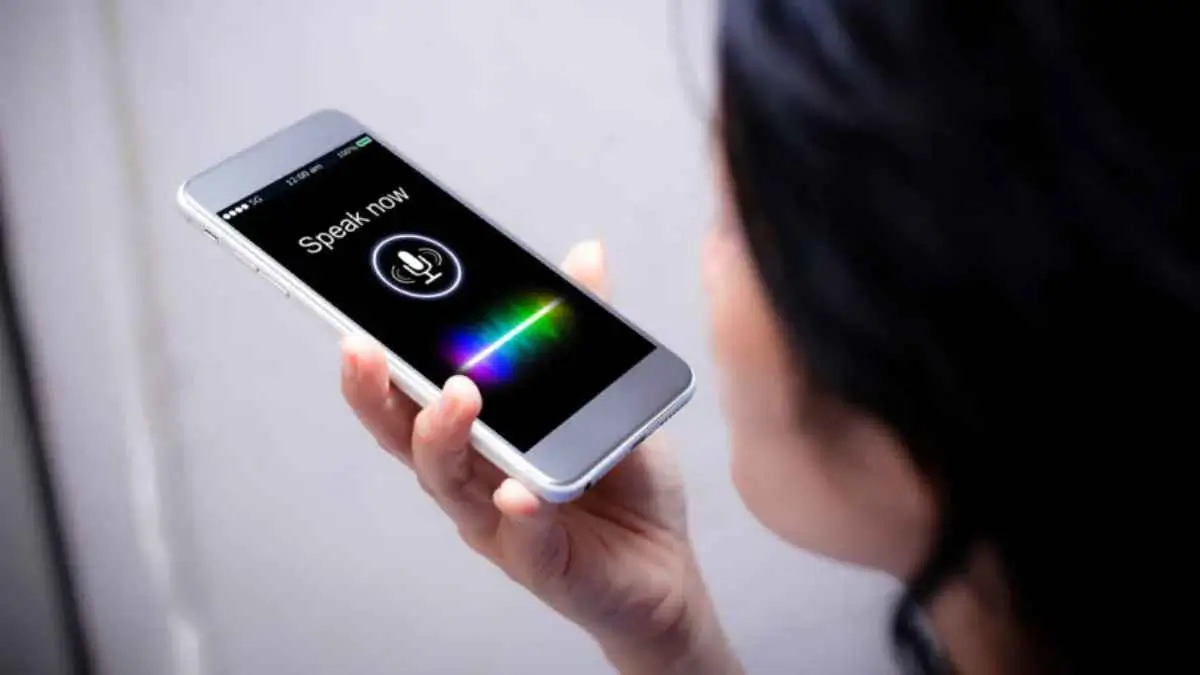
Voice assistants have been around for a decade, and for the most part they’ve been all over the place and not quite useful enough. Timers set by Amazon’s Alexa. Google Assistant answered trivia questions Siri got jokes at its own expense. The technology worked, mostly, but it worked in a narrow band — fixed commands, predictable queries, and a consistent inability to deal with anything that required real judgment or context. Then large language models came along and the companies behind each major voice assistant quietly admitted the same thing: what they’d built needed replacing.
That reckoning is now underway, and it’s changing voice technology faster than the initial launches did.
Ten Years Of Useful, But Limited
Apple introduced Siri in 2011, the first time a mainstream consumer device had a standard feature of voice interaction. Amazon launched the Echo with Alexa in 2014, creating a whole new product category, the smart speaker, and normalizing the notion of a dedicated, always-on device in the home. Google came in 2016 with Google Assistant , while Microsoft had Cortana on Windows and mobile.
All of these systems had similar architectures, a wake word would trigger a recording, the recording would be sent to the cloud for processing, the intent would be parsed, and a pre-mapped response would be returned. It worked and it often looked impressive at liftoff. But the basic limitation was that each capability had to be programd in detail. A voice assistant could only do what engineers expected users to ask for. If a request went outside that map, the response was a non-answer “I’m not sure I understand” or a web search redirect.
That limitation did not deter adoption. Smart speakers were part of everyday life. Voice became the default interface in cars and wearables. But the technology plateaued and users learned, often subconsciously, to limit their requests to what they knew the system could do.
The Inflection Point Of The LLM
Large language models came along and changed the foundational constraint. Instead of linking intents to canned responses, LLM-powered systems can generate contextual, open-ended responses based on natural conversation. The gap between what a user can ask and what a voice assistant can respond to is drastically narrowed.
All the major platforms have gone this way, but on different timelines. In early 2024 Google started deprecating Google Assistant on Android, moving users to Gemini — its LLM based product — as the default assistant experience. In early 2025, Amazon announced Alexa+, a reimagined version of Alexa that incorporates large language model capabilities into the core of the assistant. Apple Intelligence, announced at Apple’s 2024 Worldwide Developers Conference, is a framework for a more intelligent Siri that understands personal context across apps and even multi-step tasks, instead of single commands.
You might be interested in:
- Meta Project Phoenix Headset Leak Reveals Slim New Design
- Redmi Note 17 Pro 5G: Everything You Need to Know
- iPhone Duo Review: Features, Performance, and User Experience
In 2024, OpenAI’s ChatGPT launched a voice mode, showing what an interaction with a true conversational AI could be like – less latency, more natural pacing, the ability to interrupt mid-sentence. It set the standard for expectations for every other voice product.
Where Voice Is Growing
The smart speaker is no longer the sole lens to understand voice assistant adoption. The edges are where the real growth is taking place.
Voice is a serious safety and functionality priority in automotive technology. Both carmakers and navigation platforms have incorporated assistant powers into dashboards, because drivers need to get information and controls without using their hands or eyes. Today, voice layer quality is a competitive differentiator in vehicle software.
Voice is also making inroads in another area: healthcare. Voice AI is targeting clinical documentation, one of the most time-consuming and burnout-inducing parts of a doctor’s workload, with several enterprise software companies developing ambient voice tools that automatically convert a patient-provider conversation into medical notes. The application requires a degree of context-awareness and domain specificity that previous voice systems could not consistently provide.
Accessibility is still one of the strongest cases for voice as an interface. For users with limited mobility, visual impairments or other conditions that make touchscreen interaction challenging, a capable voice assistant is not a convenience feature – it’s a primary way to use technology.
The In Terface Change And Its Effects
What makes this iteration different from previous waves of voice assistant hype is that the shift to an interface is happening at an infrastructure level, not just at a feature level. Developers are now creating apps and workflows that treat voice as a first-class input — an equal alternative, not a supplement to a keyboard or touchscreen.
This puts a design pressure on it that’s never been there before. Designing for voice interaction is a fundamentally different mindset than designing a well designed screen interface. There are no scrolling menus, no gesture buttons, no visual hierarchy to direct attention. All of that weight has to be carried by the system through language alone — i.e. the product becomes the underlying model’s ability to understand ambiguity and maintain conversational context.
It remains to be seen whether Amazon, Google and Apple’s voice assistants can reliably meet that standard at scale in the real world, with accents, ambient noise and more complex requests.
Conclusion
Voice assistants are not a maturing category that’s slowly adding polish. They are being rebuilt on a different technological foundation, and the applications coming out of that transition — in healthcare, automotive software, accessibility, and everyday computing — matter more than yet another generation of smart speakers. The question is no longer whether voice can work. The question is, are the rebuilt systems sufficiently capable, sufficiently trustworthy to be the first interface people actually reach for?

Digital entrepreneur and content expert I help businesses with AI, SEO and the latest tech trends. I started Silicon Valley Weekly to make complex tech concepts easy to understand and use for business growth. I know a lot about systems and help startups, entrepreneurs and brands navigate the fast-changing world of tech and online marketing.
I build strategies that use data, search optimization, content marketing and AI tools to get visibility, engagement and revenue. I love finding ways for businesses to grow increasing their presence and turning new ideas into successful businesses. My goal is to connect the technology, with practical business use so brands can succeed online.