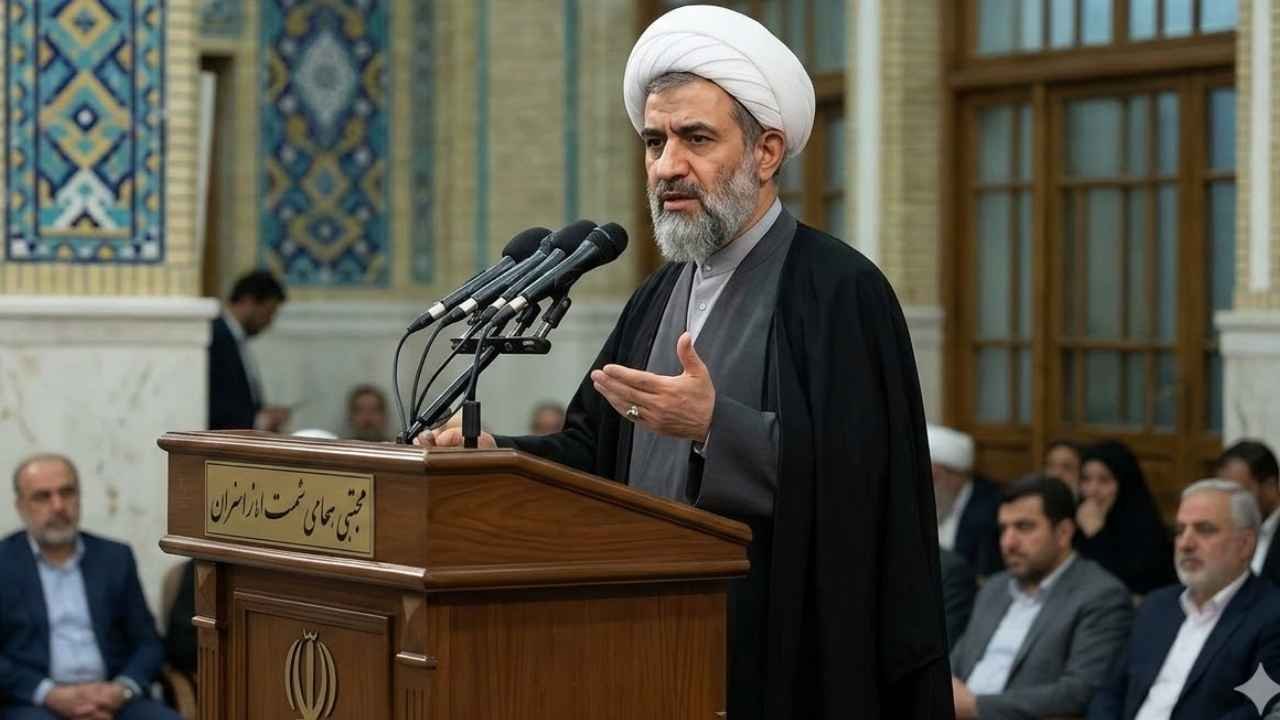
Mojtaba Khamenei is Iran’s new supreme leader, and he is a major and unprecedented change in the leadership of the Islamic Republic. Mojtaba was quickly named the third supreme leader since the 1979 Islamic Revolution after the U.S. and Israel killed his father, Ayatollah Ali Khamenei, in airstrikes that started a larger regional war. The Assembly of Experts, the group of clerics that chooses the supreme leader, announced his choice on March 8, 2026, in the middle of a war. This move shows that hardline rule will continue and brings a person who was once in the shadows into the spotlight during one of Iran’s most important crises.
Mojtaba Khamenei – Profile Summary
Mojtaba Khamenei, son of the late Ayatollah Ali Khamenei, was appointed as Iran’s 3rd Supreme Leader on 8 March 2026. He is a 56-year-old cleric known for his behind-the-scenes influence, close ties to Iran’s security apparatus, and reputation as a “gatekeeper” in the Islamic Republic’s power structure.
| Attribute | Details |
|---|---|
| Full Name | Mojtaba Hosseini Khamenei |
| Date of Birth | 8 September 1969 (Age 56) |
| Place of Birth | Mashhad, Iran |
| Parents | Father: Ayatollah Ali Khamenei (Supreme Leader until 2026); Mother: Mansoureh Khojasteh Bagherzadeh |
| Spouse | Zahra Haddad-Adel (m. 1999; died 2026) |
| Children | 3 |
| Education | Qom Seminary (Shiite religious studies) |
| Political Affiliation | Front of Islamic Revolution Stability (patron) |
| Religious Title | Ayatollah (recognized in 2022) |
| Military Service | Islamic Revolutionary Guard Corps (1987–1988, Ground Forces); Basij (2009–2026) |
| Career Roles | Deputy Chief of Staff to the Supreme Leader for Political & Security Affairs (2008–2026); Longtime advisor and gatekeeper in his father’s office |
| Supreme Leadership | Assumed office as 3rd Supreme Leader of Iran on 8 March 2026, succeeding his father |
| Known For | Low-profile cleric, behind-the-scenes influence, strong ties to IRGC and Basij, sanctioned by the US in 2019 for political interference |
Key Insights
- Behind-the-scenes power: Mojtaba was widely seen as the “shadow power” in Iran, controlling access to his father and influencing political decisions without holding elected office.
- Controversial succession: His appointment as Supreme Leader is historic and controversial, signaling continuity of hardline conservative leadership amid Iran’s ongoing conflict with the US and Israel.
- Security ties: He has deep connections with Iran’s Revolutionary Guard and Basij forces, strengthening his grip on the country’s military-political establishment.
Life and Background in the Beginning
Mojtaba Hosseini Khamenei was born on September 8, 1969, in Mashhad, a major religious center in northeastern Iran. He is the second of Ali Khamenei’s six children. He went to the Alavi School in Tehran and then studied theology in Qom, which is the center of Shia scholarship. He grew up in a family that was very involved in the revolutionary elite. He studied under well-known clerics and became a mid-level cleric, but some reports have called him an ayatollah when he became one. Mojtaba served in the military during the Iran-Iraq War in the 1980s, which is different from a lot of people in Iran’s political class. This gave him early experience with military and security issues. His low public profile has been a defining feature; he has rarely been seen in the media, given no speeches or interviews, and there are only a few photos of him.
Rise Behind the Scenes
For many years, Mojtaba was a powerful behind-the-scenes figure in the Office of the Supreme Leader. He was his father’s gatekeeper, advisor, and power broker. He built up a lot of connections, especially with the Islamic Revolutionary Guard Corps (IRGC). Analysts say he played a big role in strengthening hardline control by backing Mahmoud Ahmadinejad’s 2005 and disputed 2009 presidential campaigns, which put down reformist groups like the Green Movement. His connections to the IRGC made him an important player in security and intelligence operations, and some people say he was more hardline than his father. There have been rumors about his plans to take over for more than 20 years, but he never held a formal government position. He stayed out of the public eye, which fueled rumors and criticism from those who opposed the idea of dynastic rule.
Mojtaba Khamenei’s net worth is estimated in the billions of dollars, with reports highlighting assets spread across Europe, the Middle East, and North America, including luxury properties in London, Dubai, and Frankfurt, as well as Swiss bank accounts and offshore holdings.
Mojtaba Khamenei – Wealth Overview
| Category | Details |
|---|---|
| Estimated Net Worth | Billions of USD (exact figure undisclosed) |
| Key Assets | Properties in London, Dubai, Frankfurt, and Tehran |
| Financial Holdings | Swiss bank accounts; offshore companies managing real estate in Europe, Gulf, and North America |
| Inherited Wealth | His father, Ayatollah Ali Khamenei, controlled assets worth ~$95 billion through Setad (Execution of Imam Khomeini’s Order), much of which is believed to remain under Mojtaba’s influence |
| Lifestyle Indicators | Ownership of luxury mansions abroad; discreet but powerful financial networks |
| Controversies | Sanctioned by the US in 2019 for political interference; wealth often criticized as opaque and tied to Iran’s hidden economic empire |
Key Insights
- Opaque Wealth Structure: Mojtaba’s fortune is not publicly declared but is tied to shell companies and offshore accounts, making transparency difficult.
- Global Reach: His holdings span Europe (London, Frankfurt), the Middle East (Dubai, Tehran), and North America, suggesting a diversified portfolio.
- Inherited Power & Assets: Much of his financial influence stems from his father’s control of Setad, a vast economic empire built on confiscated properties and investments.
- Political Implications: His immense wealth strengthens his position as Supreme Leader, giving him leverage over Iran’s military, clerical, and economic institutions.
Risks & Controversies
- Sanctions: Western governments, especially the US, have targeted Mojtaba and his networks, limiting his ability to move assets freely.
- Public Criticism: His wealth contrasts sharply with Iran’s struggling economy, fueling domestic resentment.
- Secrecy: The lack of transparency around his holdings makes it difficult to assess the true scale of his fortune.
Appointment During a Crisis
When U.S. and Israeli forces attacked Tehran and killed high-ranking officials, Ali Khamenei died. This left a leadership gap at a very important time. The Guardian Council oversaw the Assembly of Experts, which was made up of 88 clerics. They met because the IRGC put pressure on them and chose Mojtaba by a large majority. The decision was reported by state media, such as IRIB, Fars, Tasnim, and ISNA, who said it would help keep the Islamic Republic’s “sacred system” stable. This passing of power from father to son is the first hereditary change in the highest leadership since 1979. It has sparked debates about the constitution, but it was necessary because of the war. In Tehran, supporters gathered to show their support by holding up pictures and celebrating the choice as a way to stand up to aggressors.

Policies and Style of Leadership
At 56, Mojtaba becomes the supreme leader and has a lot of power, including control over the military, the courts, and important government agencies. People expect him to stick to his father’s hardline policies, which include strong support for the “Axis of Resistance,” opposition to Western influence, and putting ideological purity ahead of reform. His close ties to the IRGC suggest that the military will have more power in government, which could lead to stronger responses to the ongoing war. Different countries have different reactions. For example, U.S. President Donald Trump called him “unacceptable,” which could mean more pressure, while Israel and other regional enemies see him as a valid target. His appointment sends a message of regime strength at home, but critics say it makes authoritarianism stronger during tough economic times and public discontent.
Problems Ahead
Mojtaba has a lot of work to do to get Iran through its worst crisis since the revolution. The war has damaged oil facilities, caused a lot of damage, and sent energy prices around the world through the roof. He needs to bring together divided elites, keep the military going, and deal with dissent within the country while showing strength to the outside world. His lack of public experience and untested leadership in open forums could be problems, but his hidden influence could help him move things around behind the scenes. Mojtaba Khamenei’s time in office will determine whether the Islamic Republic survives or breaks apart under pressures that have never been seen before, both from outside and inside the country.

Digital entrepreneur and content expert I help businesses with AI, SEO and the latest tech trends. I started Silicon Valley Weekly to make complex tech concepts easy to understand and use for business growth. I know a lot about systems and help startups, entrepreneurs and brands navigate the fast-changing world of tech and online marketing.
I build strategies that use data, search optimization, content marketing and AI tools to get visibility, engagement and revenue. I love finding ways for businesses to grow increasing their presence and turning new ideas into successful businesses. My goal is to connect the technology, with practical business use so brands can succeed online.