

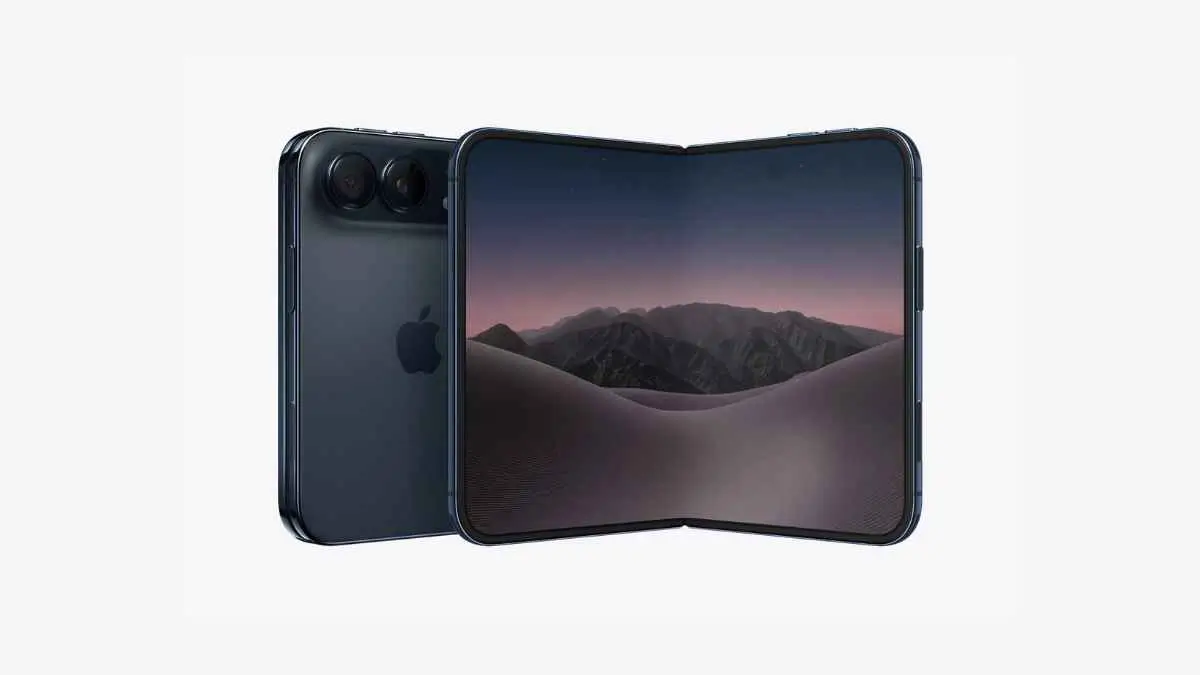
Apple’s first foldable smartphone, the iPhone Duo, finally debut with the company’s September 2026 event and felt immediately like one of the most elegant takes on the category so far. Starting at $1,999 for the 256GB configuration, and going to $3,199 for 2TB, the Duo is a high-end device designed for those wanting to spend more money for flexibility instead of simply replacing their previous flagship with a new larger one. Pre-orders begin October 16, with devices arriving starting October 23 in over 70 countries. Early impressions from reviews describe a device that “feels no less sleek, no less durable, and no less integrated with iOS”, even if some tradeoffs are apparent.
In the hand the iPhone Duo feels premium thanks to its titanium chassis and its flawlessly engineered hinge. The closed device measures roughly 11.3mm in thickness and weighs 254 grams, which is noticeably thicker and heavier than recent thin iPhones or Samsung’s Galaxy Z Fold 8 foldable. But unfolded it rapidly felt wafer thin at 5.2mm and yielded a 7.6-inch Super Retina XDR display when openthe latter a detail constantly noted by reviewers, who often said it feels like a pocket-sized iPad mini. The outer 5.
4-inch screen provided a natively more classic smartphone view and displayed the same aspect ratio as the outer panel, resulting in fluid content scaling that didn’t awkwardly crop or pan. Results from many testers noted the near-invisible crease over the inner screen and that the nano-texture matte finish dulled off reflections, giving it a more comfortable read-style look and feel that more resembled a luxury e-reader than glossy smartphone.
The hinge received high marks for smooth operation and its magnetic closure, instilling confidence that previous foldable failures didn’t. An IP68 rating gave more faith that dust and water resistance had been built into the package than several Android competitors. Software integration becomes where Apple’s virtues become most evident.
iOS has been entirely modified to take advantage of the duo-screens, allowing seamless movement between the external and internal displays, side-by-side multitasking, and multiple viewing angles ranging from laptop-style typing positions to media viewing angles supports by propped-up display. Gesture navigation, app docking, and continuity features appear refined to the extend that several reviewers feel Android foldables have yet to feel.
Recommended for you:
The lack of Face ID is immediately felt, as the Duo uses a side button Touch ID sensor that works whether the unit is open or closed. Battery life claims are assertive, thanks to dual-battery architecture and the high efficiency A20 Pro chip: up to 44 hours of video playback on the external screen, and 31 hours on the internal one (with fast-charging to 50percent in about 20 minutes). Performancewill be richly high, though the extent that sustained thermal behavior under harsh workloads may require more extensive real-world testing.
The photography system is capable, but definitely not the flagship combination currently available from Apple. It’s equipped with a dual 48-megapixel camera arraya primary sensor with f/1.6 aperture that and supplies optical-quality 2x zoom through crop, and a 48-megapixel ultrawidelacking a dedicated telephoto lens or the variable aperture present on the concurrent iPhone 18 Pro models.
Selfie cameras poke out from both panels, including an under-display unit on the inner screen. Reviewers find that photos and videos stay sharp and well-rounded for everyday use, and the foldable construction opens up some unique framing and view modes that smartphone slabs simply can’t provide. Still, those trade-offs compared with the Pro models are significant at this outlay.
Initial internal storage begins at an underwhelming 256GB, and only Star White and Night Sky colorways are available. All in all, early feeling are that the iPhone Duo is a solid first gen foldable one that comes out swinging in the design vs. durability, software polish, and use case camp, not the form factor or camera camp. It doesn’t read much like a prototype more like a finished product that a lot of people could actually get by with as their daily driver, and in the process perhaps eliminate the need for a tablet for some.
The price tag and additional size and weight will prevent everyone from being interested in the Duo, and there are still many long term questions to be addressed around things like hinge life in the real world and battery performance, but for those who have been patiently waiting for Apple to step into the foldable space, the Apple iphone Duo seems to deliver a relatively refined, highly capable first impression that raises the bar for the genre. Once units are out to reviewers for long term testing in early October, we will have a more complete conclusion, but for now it looks promising.

Digital entrepreneur and content expert I help businesses with AI, SEO and the latest tech trends. I started Silicon Valley Weekly to make complex tech concepts easy to understand and use for business growth. I know a lot about systems and help startups, entrepreneurs and brands navigate the fast-changing world of tech and online marketing.
I build strategies that use data, search optimization, content marketing and AI tools to get visibility, engagement and revenue. I love finding ways for businesses to grow increasing their presence and turning new ideas into successful businesses. My goal is to connect the technology, with practical business use so brands can succeed online.

Pingback: Buy Instagram Followers