In early 2026, the world of AI-powered video creation changed a lot. What started out as an exciting battle between OpenAI’s groundbreaking Sora and Google’s Gemini, which aims to be able to do many things at once, has taken an unexpected turn. OpenAI’s choice to end its consumer Sora app and video projects in March 2026 has made Google’s Veo 3.1 the clear leader in making text-to-video and image-to-video accessible. Veo 3.1 is deeply integrated into Gemini.
This article looks at the history, features, pros and cons, and current state of both systems. It also looks at how the “battle” has turned into Google’s clear lead in practical video AI tools.
The Rise of Sora: OpenAI’s Early Power
In February 2024, OpenAI first teased Sora with mind-blowing demos of photorealistic videos made from simple text prompts. The model was very good at figuring out complicated scenes, realistic physics, and motion that made sense over short clips. Sora became available to the public as a standalone app and integrated feature by the end of 2024. It could support resolutions up to 1080p and clips of 10 to 20 seconds (longer for Pro users). Later versions, like Sora 2, added features like synchronized audio, voice synthesis, and lip-syncing.
People liked Sora because it looked like a movie, with smooth camera movements, hyperreal motion, and a creative touch that made it perfect for viral shorts, storytelling experiments, and meme-style content. Extensions made it easy to keep watching videos, and an editor feature came out in early 2026. However, access was still limited to ChatGPT Plus/Pro subscribers, and there were sometimes performance issues when the system was under heavy load.
Sora’s strength was that it could convincingly simulate “worlds,” handle complicated actions, and keep the story going in one shot. Early benchmarks often gave it an edge in raw creativity and moments when the hero defied the laws of physics.
Google’s Answer: Veo Gives Gemini’s Video Goals Power
Google got into the game in a more planned way. Under DeepMind, its video generation model, Veo, steadily improved, reaching Veo 3 and the improved Veo 3.1 by early 2026. Veo is built right into the Gemini ecosystem and can be accessed through the Gemini app, Google AI Pro/Ultra plans, and tools like Google Vids and Flow. It focuses on integration, control, and scalability.
Veo 3.1 makes high-quality 8-second clips at resolutions up to 4K (with 1080p for longer outputs), supports vertical video for social media, and can make audio on its own, including music, dialogue, and environmental sounds. Users can upload more than one reference image (“Ingredients to Video”) to have more control over characters, objects, and styles. This solves problems like characters moving across scenes. With tools like Whisk Animate (which turns images into videos) and Flow (a complete AI filmmaking suite), you can turn short clips into full stories.
Google’s method makes use of its huge infrastructure to speed up rendering and make sure that prompts are followed more closely, especially when they involve complicated, detailed instructions about lighting, camera angles, and real-world physics. Free users can only make a few generations (like 10 a month), but Pro and Ultra tiers let them make hundreds or thousands of videos every month, which makes it much easier for regular creators to use.
Quality, features, and performance in a head-to-head comparison
In direct comparisons done in 2025 and early 2026, the results were different for each use case. Sora often stood out for its smoother, more “magical” single-shot creativity and better handling of complicated motion in isolated scenes. Reviewers said that it was better at hyperrealism for some physics simulations and that the audio sync was interesting.
But Veo 3.1 often won for how real it looked, how consistent it was over time, and how useful it was for professionals. It was great at keeping the identity of characters and objects across multiple clips, following prompts exactly (especially when Gemini’s strong language understanding helped), and giving the user a lot of creative control. Generation times were often faster—sometimes up to 40% faster for the same tasks—and the outputs felt more “ad-ready” because there were fewer artifacts.
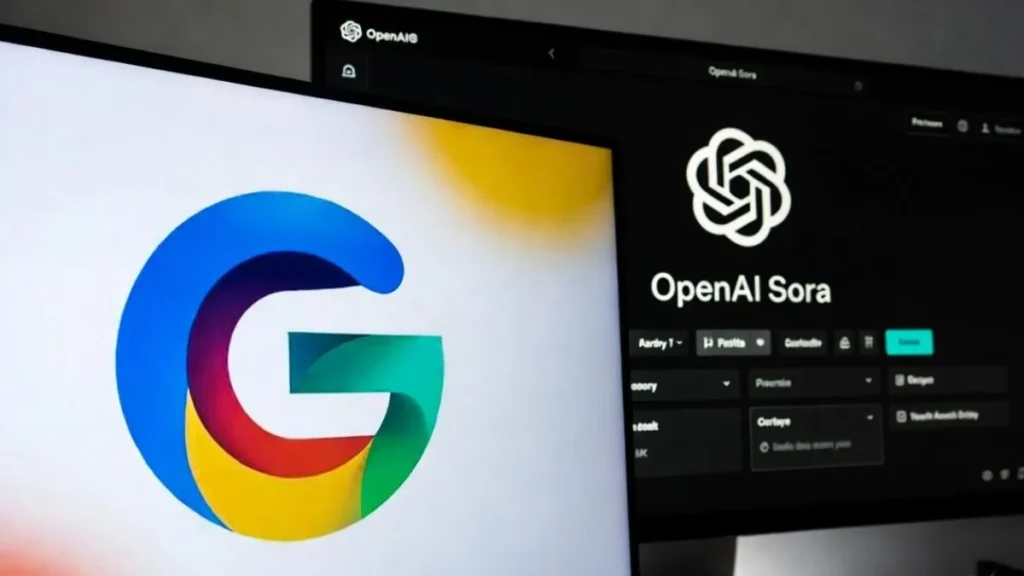
Some of the main differences are:
Duration and Extension: Sora supported longer base clips with extensions. Veo starts with shorter clips (8 seconds at high quality) but uses Flow and extension tools to make longer, more consistent stories.
Audio: Both got better at native sound, but Veo 3.1’s integration with Lyria music models and dialogue felt smoother in ecosystem tools.
Control and Consistency: Veo’s support for reference images and its filmmaking suite made it better for narrative or branded content.
Accessibility: Google gave free and limited access to more people and higher quotas to paid users. Before it shut down, Sora was still more premium-gated.
A lot of testers thought Veo 3.1 was the more reliable “workhorse” for things like advertising, social content, or short films. Sora, on the other hand, was great for experimental, wow-factor clips.
The Turning Point: Sora’s Closing and Market Change
OpenAI said in March 2026 that it would stop making the Sora consumer app and other video projects. This would happen in late March to April, depending on the part (with API wind-down later). Many users and creators were surprised by the move, which happened just a few months after updates to Sora 2 and a partnership with Disney.
OpenAI said that it was changing its strategy to focus more on business, productivity, and core AI research, such as world simulation for robotics. The social/video app for consumers no longer fit with the company’s goals, especially with an IPO on the horizon. There were deadlines for preserving user-generated content, but the standalone experience was effectively over.
This left a gap that Google quickly filled. The announcements stressed that Gemini would keep investing in Veo, with free tiers for casual users and options for businesses of all sizes. Google Vids and Flow made Gemini/Veo look like a one-stop shop for creative work by combining video with pictures, music, and editing. Market share data from early 2026 showed that Veo 3.1 was the clear winner, taking over 96% of some video generation workflows on aggregator platforms.
Today’s strengths and weaknesses
Benefits of Google Gemini and Veo 3.1:
- Deep ecosystem integration (Gemini prompts, Google Photos remix, and vertical output that works with YouTube).
- Strong consistency for telling stories in multiple shots.
- Access and speed that can be scaled.
- Flow and other tools for professional workflows.
Some of the limitations are that you sometimes need more specific prompts (which Gemini can help with) and that some photo-to-video features are only available in certain areas.
The Legacy of OpenAI Sora:
- Created hyperreal, creative videos from text.
- Great for single scenes that are dynamic and full of physics.
- New features like self-insertion or style presets.
Users will have to move because it is shutting down. The research behind it may affect future OpenAI tools, but people can no longer make videos.
Both systems raised bigger issues about deepfakes, copyright, and creative displacement, and protections grew along with their abilities.
The Future of Making Videos with AI
The “battle” between Gemini and Sora shows that the field is getting more mature and that accessibility, integration, and reliability are often more important than raw demo quality. Google’s continued support, which is helped by its search, cloud, and hardware advantages, makes Gemini/Veo the best choice for most creators in 2026. OpenAI’s change of direction suggests that video may become less of a consumer feature and more of a business or specialized feature.
As models get better at making longer, higher-fidelity outputs with real-time elements, they will likely become more similar to editing suites, 3D world-building, and multimodal agents. Gemini users now have access to a strong, ever-changing platform that turned a competitive showdown into useful leadership.
The tools have made it easier than ever for everyone to make videos, whether they are short social clips, animated stories, or professional prototypes. Who is the real winner? Creators can now spend less time worrying about technical problems and more time using their imaginations. However, they should always be aware of how to use their creations responsibly in an age when it is getting harder to tell what is real and what is generated.
Frequently Asked Questions (FAQs)
1. What happened to OpenAI Sora?
OpenAI said in March 2026 that it would shut down its Sora consumer app. The app would close on April 26, 2026, and the API would follow in September. The company stopped making videos for consumers on their own and instead focused on other things, like making simulations of the world for robots. Because of this, Sora is no longer available to new users.
2. Which is better for AI video generation in 2026: Google Gemini or Sora?
Google Gemini with Veo 3.1 is the clear winner in comparisons of Gemini vs. Sora video generation after Sora’s shutdown. Veo 3.1 has better consistency, native audio (including dialogue and sound effects), reference image control, and is easier to use thanks to the Gemini app and Google AI plans. Sora used to be great at making creative single-shot movies, but Gemini now gives most creators more reliable and useful results.
3. What are the main features of Google Gemini’s Veo 3.1 video generation?
Veo 3.1 in Gemini can make 4K videos with native audio that last up to 8 seconds. It also supports vertical (9:16) format for social media and lets you use multiple reference images to keep characters and styles the same. It also has tools for video extensions, portrait and landscape modes, and strong prompt adherence, which makes it great for short films, ads, and stories.
4. Can I still use OpenAI Sora after the shutdown?
No. The Sora app that worked on its own and allowed people to use it ended in April 2026. Users who already had videos were told to export them before the deadline. OpenAI may still be doing some research on Sora video generation, but it is no longer available to the public. Most creators have moved to Google Gemini Veo 3.1 because it is the closest and often better option.
5. Is Google Gemini Veo 3.1 free or paid?
Google Gemini lets you make a limited number of free videos each month. To get higher quotas and all of Veo 3.1’s features (including 4K and advanced features), you need a Google AI Pro or Ultra plan. Compared to Sora’s old premium-only model, this one is easier to get and cheaper to use on a regular basis.

Digital entrepreneur and content expert I help businesses with AI, SEO and the latest tech trends. I started Silicon Valley Weekly to make complex tech concepts easy to understand and use for business growth. I know a lot about systems and help startups, entrepreneurs and brands navigate the fast-changing world of tech and online marketing.
I build strategies that use data, search optimization, content marketing and AI tools to get visibility, engagement and revenue. I love finding ways for businesses to grow increasing their presence and turning new ideas into successful businesses. My goal is to connect the technology, with practical business use so brands can succeed online.