A Different Kind of Morning
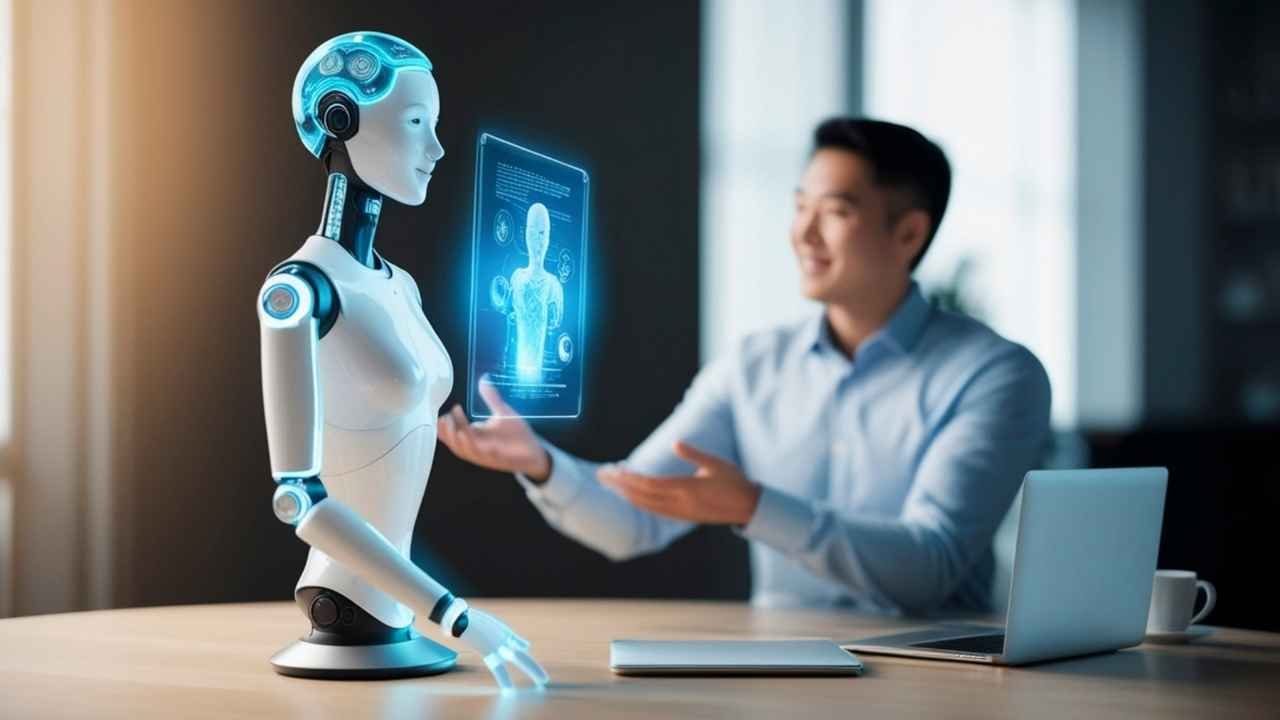
For billions of people around the world, the day no longer starts with a simple alarm. AI-powered personal assistants are as essential to the morning as coffee by 2026. Quietly working away on smartphones, smart speakers and wearables, these systems combine personalised briefings from calendars, health metrics, local news and weather data, to paint a coherent picture of the day ahead before most people have left their beds. The change has been subtle but profound. Intelligence is no longer something you go looking for, it comes to you.
The AI companions of today differ from digital assistants a decade ago in that they can actually be aware of context. They know not only what you asked last week but how your preferences have changed, what stresses you out and, with your consent, they collaborate with your doctor, your employer, and your household appliances to rub the friction out of everyday existence.
Reimagining Healthcare At the Point of Need
The AI revolution in medicine has arguably been more personal than anywhere. On imaging tasks such as identifying early-stage cancers, retinal disease and cardiac anomalies, diagnostic models are now regularly outperforming specialist physicians. More importantly, these tools are now in the patients’ pockets, not locked in the hospital radiology suites. A routine skin scan can be done at home with a smartphone camera and an AI dermatology app that flags suspicious lesions and books a follow-up appointment in the same breath.
Management of chronic disease has been equally upended. Now diabetics are using continuous glucose monitors coupled with AI models that offer real-time insulin recommendations, reducing dangerous episodes with an accuracy better than manual tracking. Mental health apps have also come a long way: AI therapist friends, with strict ethical guardrails, offer support between sessions for anxiety and depression, reaching beyond what human clinicians can do on their own.
The Classroom Without Walls:
Education in 2026 is fragmented, in the best way possible. The rigid sameness of the traditional classroom – one teacher, one speed, one curriculum – is yielding to AI tutoring systems that adapt in real time to each learner’s strengths, gaps, and preferred cognitive style. Rural Madhya Pradesh and inner city São Paulo students now receive personalised instruction that used to be possible only through elite private tutoring.
The teachers haven’t been replaced, they’ve been supercharged. As AI automates the labour-intensive work of marking formative assessments, generating differentiated resources and tracking individual progress, educators are liberated to focus on mentorship, critical discussion and the profoundly human work of inspiring curiosity. Schools that have incorporated AI-augmented teaching are seeing quantifiable improvements in attainment and pupil wellbeing, indicating that the fear of dehumanised learning was more or less unfounded.
Work Changed Collaboration Between Humans and Machines
The workplace of 2026 is one of radical renegotiation. Software engineers collaborate with AI coding agents that write, test, and document code at lightning speed; lawyers employ AI research assistants that synthesize case law from different jurisdictions in minutes; architects prompt generative design tools that propose dozens of structurally sound building options before a human ever picks up a pencil. AI is the most productive junior colleague anyone has ever hired in knowledge-work sectors.
But the transition hasn’t been easy. Whole categories of routine clerical work, data entry and basic analysis have shrunk dramatically. Governments and corporations are in an urgent, ongoing negotiation over retraining, income support, and the social contract of employment. The most bullish economists cite historical precedent – the mechanisation of agriculture, the advent of computing – and say new kinds of jobs always appear. Critics argue, not without reason, that the rate of change allows less time for natural adaptation this time.
The Intelligent Home and the Smart City
Urban infrastructure is getting more and more reactive. Today’s traffic management systems in major cities use real-time AI to dynamically re-route vehicles, reduce idling and cut carbon emissions like static signal timings could never match. Public transit networks predict demand surges and position capacity in front of the herd. Energy grids are already sophisticated enough to match the supply of renewables with household demand, which has sped up the clean-energy transition in a meaningful way.
AI orchestration is now the invisible household worker inside the home. Smart thermostats, appliances and security systems share data via local home-intelligence hubs, learning the rhythms of occupants and optimising energy use without constant human input. These systems are particularly important for elderly and disabled residents: AI-assisted living technology has allowed millions more people to remain in their own homes, independent and dignified, longer than previous generations could have hoped.
Generative AI and the Creative Life
The debate over artificial intelligence and human creativity has moved on from the panic of the early days to something more subtle. Tools to generate images, music and writing are now embedded in the workflows of artists, designers, film makers and musicians — not as replacements but as an exceptionally responsive creative medium. AI might be used by a novelist to stress-test plot logic or generate atmospheric descriptions; a film composer might iterate on harmonic ideas at a pace previously impossible. AI extends its reach, but the creative act is still clearly human.
New legal and ethical regimes, still imperfect, have begun to grapple with questions of authorship, royalties, and the training data behind these systems. “The cultural conversation is vibrant and unsettled, a society that is really wrestling with what it means to make something when an A.I. can make something like it, too.
Managing the Risks: Privacy, Bias and Accountability
The AI transformation of everyday life is promising, but there are real and documented risks. Algorithmic bias, where systems trained on historically biased information may reproduce and sometimes even amplify existing inequalities, is a persistent problem in hiring, lending and criminal justice contexts. Regulators in Europe, India and the United States have passed AI accountability legislation, but enforcement lags behind deployment, and the asymmetry between the technical sophistication of AI developers and the institutions designed to oversee them is still troubling.
Perhaps the most intimate concern is privacy. The volume of personal data that AI systems need to work well creates surveillance risks that are not always transparent to users. The best of these deployments process sensitive data on the device, so it is less exposed, but the industry standard is still dependent on the cloud and by extension data-hungry. The standard that advocates say should be the case, and which relatively few systems currently meet, is informed consent—real, understandable and revocable.
Looking Ahead: Intelligence as a Public Good
The big question of the age of AI is not whether artificial intelligence will continue to change our everyday lives—it will—but whether that change will be shared equitably. The danger isn’t the science fiction scenario of machines revolting; it’s the far more banal threat of a world divided between those who can leverage AI’s productivity gains and those who can’t afford the devices, the connectivity or the education to join in.
The most promising developments of 2026 are ones that see intelligence as infrastructure: open models for the public good, government investment in AI literacy, and international collaboration on safety standards that do not advance any one nation’s competitive interests. If there is one lesson to be learned from the history of transformative technologies, it is that the final value of such technologies is not determined by the ingenuity of their inventors but by the wisdom and fairness of the societies that will decide how to deploy them. The technology is really available for the first time in history. The question, as always, is if we are.

Digital entrepreneur and content expert I help businesses with AI, SEO and the latest tech trends. I started Silicon Valley Weekly to make complex tech concepts easy to understand and use for business growth. I know a lot about systems and help startups, entrepreneurs and brands navigate the fast-changing world of tech and online marketing.
I build strategies that use data, search optimization, content marketing and AI tools to get visibility, engagement and revenue. I love finding ways for businesses to grow increasing their presence and turning new ideas into successful businesses. My goal is to connect the technology, with practical business use so brands can succeed online.