Tools available to education have continuously shaped how things are taught and how education in general, evolves. The printing press allowed a much wider group of people to have access to books. The internet opened the way for students to study beyond the four walls of the classroom. And now, artificial intelligence is accomplishing quite an amazing task, perhaps one that is most personal and groundbreaking compared to those two revolutions – it is becoming capable of learning the needs of different students. The students are different from the rest, for their classroom grade standardized test scores or anything, why in the learning is actually the specific student that is learning with specific confusion or curiosity, which is, in fact the case for all of us, human beings.
The End of One-Size-Fits-All Learning
Mass education was based on an inevitable tradeoff for over a hundred years: teach to the average. Considering a class with thirty students and only one teacher, there wasn’t much of change. Some students were too slow and eventually gave up whereas others moved too fast and disengaged. The entire curriculum was aimed neither at an individual learner but at the hypothetical average learner. Through AI, we are seeing the breaking apart of that tradeoff. Currently, adaptive learning systems record a student’s interaction with the content at various levels, like where the student’s attention lags or what the student avoids doing at first. They also detect certain concepts which the student may be having recurring misconceptions or errors for. Upon gathering that data, the system is able to dynamically adjust the content’s difficulty, pacing, and method of delivery. A student who is having difficulty with fractions gets sufficient support from concepts before moving on to algebra. Then again, a student who is very fast with grammar receives more demanding writing exercises. Eventually, the path of learning reflects as much a learner of each as that learner.
AI Tutors That Never Run Out of Patience
In terms of AI-assisted teaching, one of the most remarkable developments would be the appearance of AI tutors capable of having serious pedagogic conversations. An educational AI is a system that goes beyond finding information like a search engine it is a tool that works with you, asks you deeper questions, points out when your reasoning goes wrong, suggests other explanations if one doesn’t work out, and finally it’s supportive to you, the student, while matching your level of emotions. It happens that you can still reach one and it will be just like a regular student, 11 o’clock at night if you get into panic before the exam but no human tutoring help is around for instance. It will even get the idea that you’re still struggling when you repeat the same concept for the sixth time to see if they can still understand. For students in communities that have been neglected and have never got private tutoring, this type of on-demand, individual academic help is a huge shift towards more equality.
Transforming the Role of the Teacher
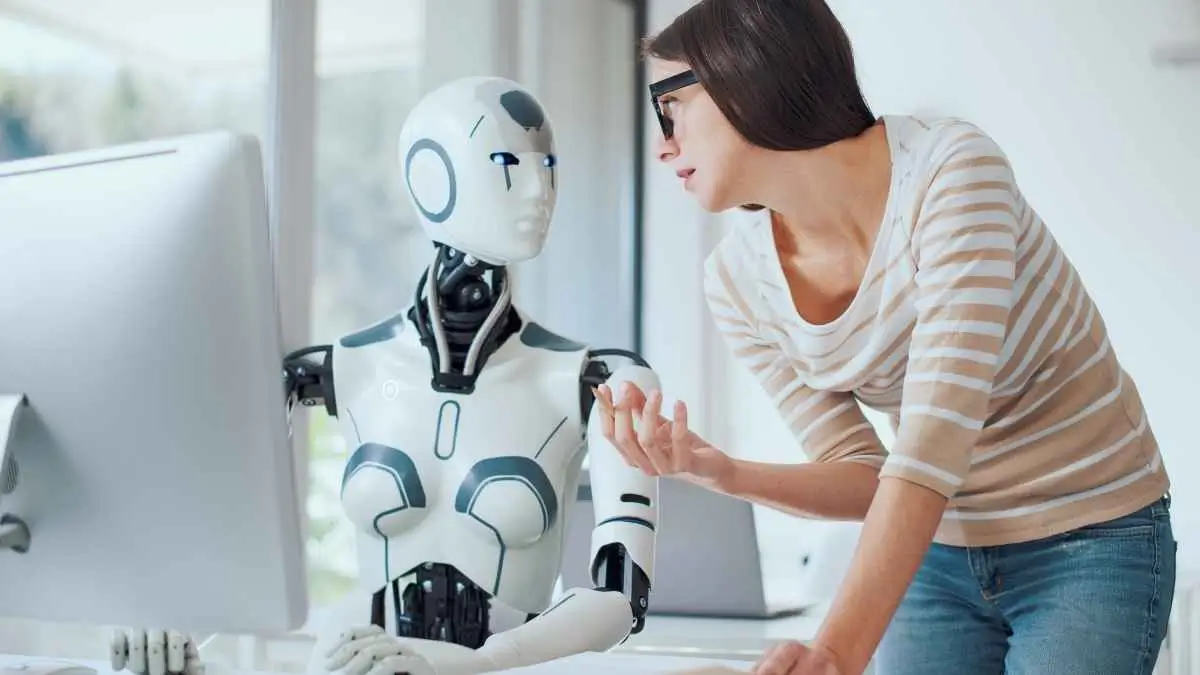
To say that AI will replace teachers is to misread the nature and the potential of this technology. That is more the case that it is actually transforming how much time teachers spend doing different things. Let me explain it this way: if AI takes care of the routine and tedious aspects of the educational processes, such as practicing multiplication facts, identifying syntactic errors, producing exercises, or correcting tests that have objective answers, then teachers would be able to concentrate on those aspects of learning that an algorithm cannot handle at all. They could create debate situations, demonstrate open-mindedness, connect with students’ problems both academically and emotionally, and develop artistic projects that necessitate authentic human judgment. Then AI acts as the scaffolding, and a teacher is responsible for the development and design of an experience made possible by this scaffolding. Many teachers who have started using AI technology in their classes tell stories of not a lower level of involvement but a deeper level of involvement.
Reimagining Assessment
One of the most contentious aspects of education has been traditional assessment, a feature that critics say only measures test-taking ability as much as a student’s deeper comprehension of the subject. AI is allowing us to change our mindset of how assessment of learning should be done completely. Instead of relying only on end-of-term examinations, AI-powered systems could monitor student development constantly and, over time, generate a Really more detailed and reliable account of a student’s learning progress. With natural language processing, essays can receive a grade not only based on the content but also based on the quality of the argument as the writer presents it. The students can show their learning outcomes through a series of practical problems that simulate real-life situations as well as they show their theoretical understanding through the written exams. There has been interest in portfolio assessment combined with AI evaluation as some institutions are conducting trials. With the changes brought about through technology, the future of assessment may be Much more fair, not only for the reliability but also as regard the human side of it.
Accessibility and Inclusion
Language learning is a domain that has been drastically transformed by AI with other fields. A major breakthrough for such learning is the development of computer programs through deep neural networks that are now able not only in language translation but also in simulating real-life conversations between native and learner in dozens of languages. By using such platforms, learners can have the kind of immersive experience that was once either a face-to-face conversation with a human or going on an expensive study abroad program. Feedback about accent and manner of speaking has gotten super-detailed. Learners get corrections of grammatical mistakes while they chat without the need to read a long list of rules first. The role of computer-assisted translation programs has changed the nature of class interaction for learners in bilingual classrooms and for those whose native language is not English, it has opened up the opportunity to understand the lessons in their first language and, at the same time, to get better in the other. Never before has the distance between classroom language acquisition and practical language use been so rapidly reduced.
The Cheating Paradox
Any comprehensive conversation about AI in education has to acknowledge the really tough tensions it has generated. One might ask, how can a technology tool help students learn? Yet in the wrong hands, these very same tools can end up doing student homework for them. A generative AI can write articles, math problems and code in styles and at a level so difficult that the possibility of their not being human seems genuinely difficult to detect. There are educational institutions facing very deep questions where there appear to be no easy answers: How does one plan assessments which still make sense about the level of human input required when one is aware that AI can finish them completely? When does it become academic dishonesty to make use of the assistance of AI? Some educators have decided to prohibit the use of AI tools completely, a policy that many people claim is both not enforceable and counterproductive. Others have been developing methods of assessment that clearly depend on human presence – for instance, personal reflections, in-class oral presentations and several revision stages done under supervision – as a means of eliminating the usefulness of AI assistance rather than prohibiting it altogether.
Preparing Students for an AI-Integrated World
We can argue in the first place that the education system altogether must be concerned with a responsible and conscious use of the AI by the students since they are the ones that are going to enter a new job market where knowledge in Artificial Intelligence is no longer an exception, but rather, a given. Apart from the students’ ability to write prompts in a skillful way, critically assess the outputs, identify AI bias and limitations, knowing to which degree human input is still a valid source of information besides machine-generated suggestion, they can expect to be able to generate a substantial return in both economic and social terms from these skills. It has happened that quite a few progressive school systems have introduced AI literacy programs which they have included alongside reading and math in the core competencies that their teaching aims to develop in the students rather than viewing AI as a technical elective.
Equity and the Digital Divide
In spite of its potential in education, the use of AI could also aggravate present-day inequalities instead of helping to eliminate them, as this danger deserves close examination. High-end AI-assisted learning kits necessitate stable internet, updated gadgets, and sufficient technical infrastructure to run them – all of which are not equally shared throughout the different schools. Wealthy suburban schools, with their financial prowess, may leap to the top through a rapid shift to digital learning and thereby add yet another layer to the preexisting advantage that their pupils possess. Huileless schools in less economically developed areas risk to be further left in the wake. Only thoughtful policy decisions, like fair supply of digital gadgets, provision of internet connectivity to less deprived regions, and keeping open doors for all to AI’s benefits, would be able to mitigate and contain such a scenario. Technology itself is impersonal – it is people that, in their use and allocation of the technologies and with the priorities that they have, decide how that technology turns out.
The Future Classroom
The physical appearance of the future’s classroom is difficult to envision but we may guess it will change in some ways and remain pretty much the same in others. The classroom of the future may still be a physical space where students get together, argue, and test their ideas on each other which is impossible without their physical presence and common attention. Though, what is happening there will probably undergo changes due to the integration of AI, not only in the content of the lesson but also in the way lessons are delivered. AI can help a teacher do the role of teaching and individual student’s needs separately at a much higher level than the best human teacher could, even given the most extensive classroom. The information on student performance will be available to the teachers continuously at every moment, Because of this, if a student gets frustrated or even fails on the way, the teacher will be able to catch it early and take action before the situation becomes irreversible. Ai-powered design tools will empower students to create things that they could barely imagine, with the help of AI.
The teachers will be freed from doing the routine jobs which they would have to do manually in the present and This way freed to focus on the work which is purely human and which cannot be replaced, i.e. teaching and motivating younger generations. The real promise in the use of ai in education is that it does not only perform certain activities by itself but also enhances the ability of humans to accomplish them better. So, the learning process of every child will become much more personal, sensitive, and lively as he/she becomes aware of his/her strengths and limitations, thanks to AI. We do not see AI replacing human teachers. Rather we see AI as a tool in the teacher’s hands to increase teaching effectiveness.

Digital entrepreneur and content expert I help businesses with AI, SEO and the latest tech trends. I started Silicon Valley Weekly to make complex tech concepts easy to understand and use for business growth. I know a lot about systems and help startups, entrepreneurs and brands navigate the fast-changing world of tech and online marketing.
I build strategies that use data, search optimization, content marketing and AI tools to get visibility, engagement and revenue. I love finding ways for businesses to grow increasing their presence and turning new ideas into successful businesses. My goal is to connect the technology, with practical business use so brands can succeed online.