
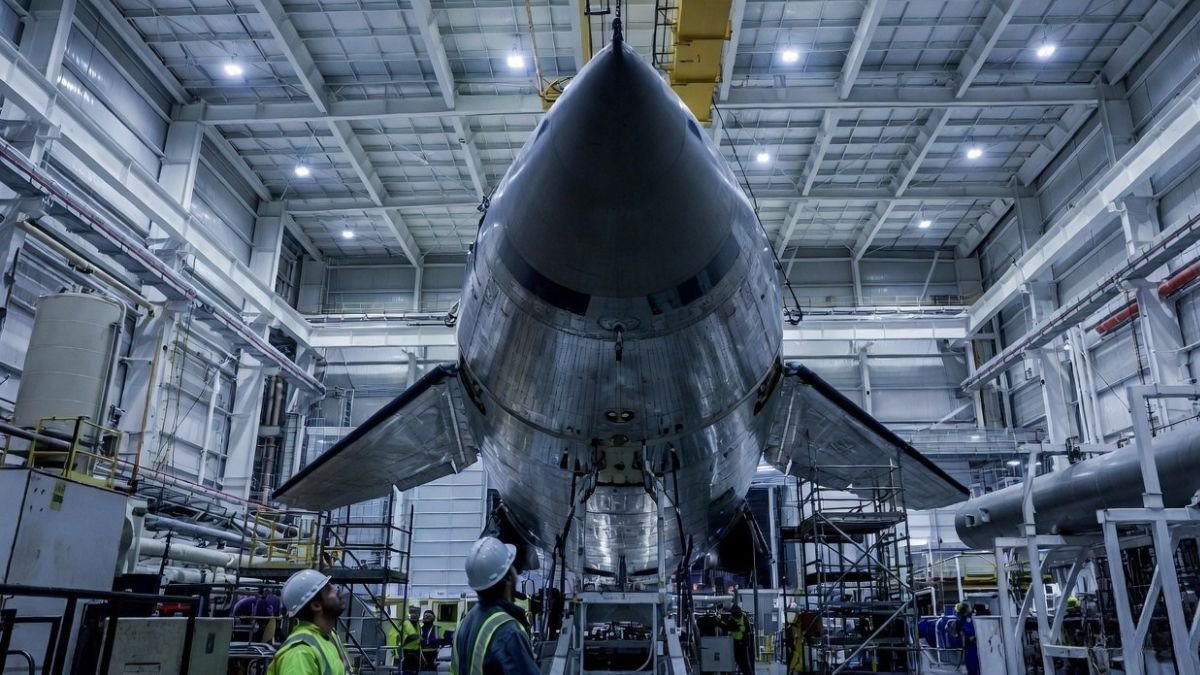
On April 7, 2026, Hermeus, a defense aviation startup that makes high-Mach and hypersonic unmanned aircraft, said it had closed a $350 million Series C funding round. This funding brings the company’s post-money value to $1 billion, which means it is now a unicorn. The round includes $200 million in equity and $150 million in debt, which brings Hermeus’ total capital raised to more than $500 million.
Khosla Ventures led the equity part, and returning investors like Canaan Partners, Founders Fund, RTX Ventures, Bling Capital, and In-Q-Tel (the CIA’s venture arm) also took part. New investors also came on board, including Socium Ventures, Destiny Tech100, the Georgia Tech Foundation, 137 Ventures, and GSBackers. Silicon Valley Bank (a part of First Citizens Bank), Pinegrove Venture Partners, Hercules Capital, and Trinity Capital were some of the institutions that helped with debt financing.
As Hermeus moves from early prototyping to scaling up production and getting its platforms ready for U.S. national security use, this large amount of money comes in.
Hermeus was started in 2018 by AJ Piplica and a group of engineers who had worked for SpaceX, Blue Origin, and NASA. The company’s goal is to make the fastest unmanned aircraft in the world. The company is working on high-speed platforms that can be used again and again and can fly at speeds of Mach 5 and higher. Its mission is to give the American warfighter “asymmetric capabilities” by cutting response times in defense situations by a large amount.
Hermeus is also moving its headquarters from Atlanta to El Segundo, California, which is close to Los Angeles International Airport. This will help the company meet the needs of its growing aerospace operations and talent pool. The business now has almost 300 employees and plans to hire more with the new money.
Quarterhorse is Hermeus’ main testing program. It is a series of iterative unmanned aircraft that are meant to make technologies safer for faster speeds. Quarterhorse Mk 1 made its first flight at Edwards Air Force Base in May 2025, proving that it could take off and land at high speeds. The bigger Quarterhorse Mk 2.1, which is the size of an F-16 and has a Pratt & Whitney F100 engine, made its first flight at Spaceport America in New Mexico in late February 2026. This was the second successful first flight for the company in nine months.
Read: The Golden Arches Effect: How McDonald’s Conquered the World
The Mk 2 series is moving toward supersonic flight, and there are plans for several planes to gradually improve their performance. These steps are leading up to ramjet-powered flight and, eventually, hypersonic flight. The U.S. Department of Defense has helped the company by giving it contracts with the Defense Innovation Unit and having the Air Force help collect data for future uses.
Hermeus is working on Darkhorse, a reusable, multi-mission hypersonic uncrewed aerial system (UAS) that will be used for defense and national security missions in the future. Darkhorse is powered by the company’s Chimera turbine-based combined cycle engine, which is based on an F100 core. It aims to provide hypersonic performance that is survivable and responsive, which conventional aircraft cannot match. The new money will help increase production, build several vehicles at once, and speed up the process of turning prototypes into working systems.
“Speed is life for us,” said CEO AJ Piplica, who stressed how important it is. With this new money, we can build more than one plane at a time and improve our manufacturing capabilities. This speeds up our progress toward ramjet-powered flight.
The funding round shows that more investors are interested in defense technology, especially hypersonic systems, as the U.S. Department of Defense focuses more on dealing with advanced threats. Hermeus’ method of quickly building prototypes by flying multiple demonstrators in a row is unusual in an industry where development cycles are usually long. The company is setting itself up to provide scalable solutions for intelligence, surveillance, reconnaissance, and strike missions by focusing on unmanned, high-Mach platforms that can take off from regular runways.
With this money, Hermeus is in a great position to push the limits of aerospace innovation and help make national security stronger in the future.

Digital entrepreneur and content expert I help businesses with AI, SEO and the latest tech trends. I started Silicon Valley Weekly to make complex tech concepts easy to understand and use for business growth. I know a lot about systems and help startups, entrepreneurs and brands navigate the fast-changing world of tech and online marketing.
I build strategies that use data, search optimization, content marketing and AI tools to get visibility, engagement and revenue. I love finding ways for businesses to grow increasing their presence and turning new ideas into successful businesses. My goal is to connect the technology, with practical business use so brands can succeed online.