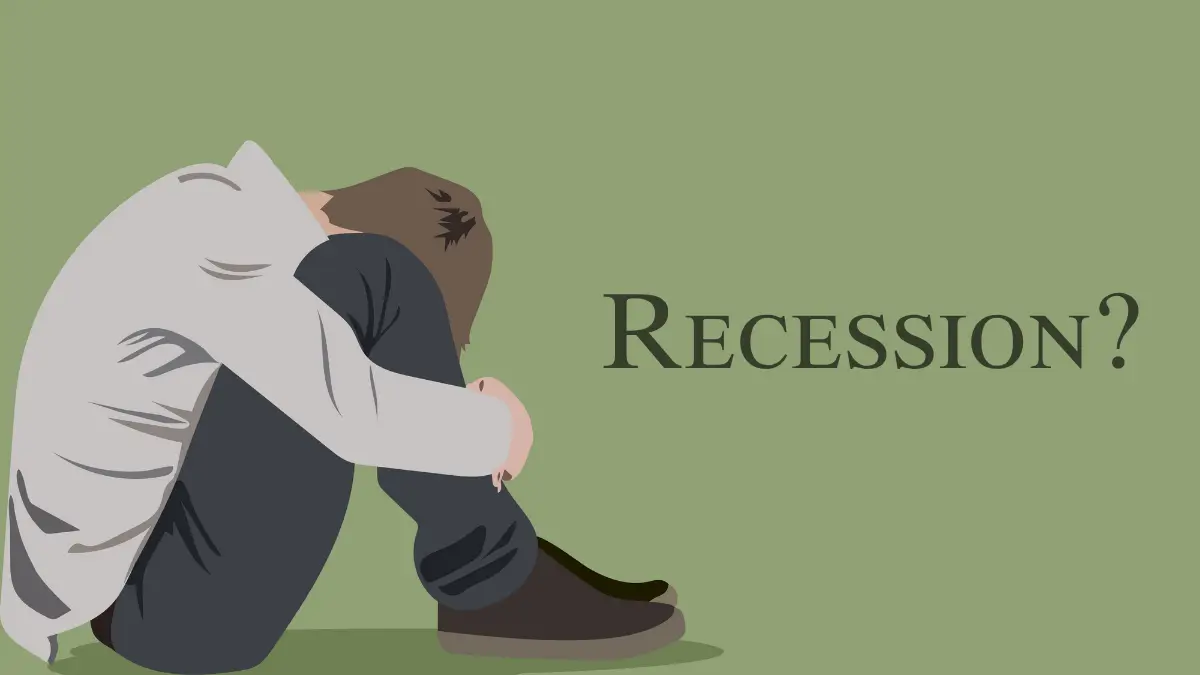
There’s a strange weather pattern in the modern boardroom. Storm warning, no sirens, but all of the attendees have checked the weather forecast and brought an umbrella. Growth plans are “under review.” Business investment is “paused, not cancelled.” Investment plans are “being sequenced.” These are the delicate euphemisms of an economy that hasn’t been brought down yet, but prepares for it, as if it already has.
This is the essence of business worry: the fear of a decline is able to cause most of the harm in advance.
The Anatomy of Anticipation
A recession, by the standard traditional measure, is detected two quarters after it has taken hold, with confirmation from two negative GDP figures months in the past. Fear is immediate. It does not depend on experts. An entrepreneur seeing a flat yield curve, a CFO following changes in sentiment among buyers, a purchasing manager aware of a supplier flinching at the prospect of a longer paymen t – each independently responds with a cost-minimising institutional rationality.
The conventional term among economists for this sort of situation is a “self-fulfilling prophecy.” Among executives, the term is “prudence.” Both groups are right, which is part of the problem.
Lesson learned: individually rational caution can be collectively destabilising if everyone does it at once.
The Fear Behind the Spreadsheet
The spreadsheet is an untruth about accuracy shrouding the uncertainty. From scenario analysis, stress testing to sensitivity tables, fear translates to decimal points. However, not even in the roughest budget committee hearings can numbers ever really be the issue at stake. There is an underlying question being asked here – what if we were wrong?
Risk, according to your traditional textbooks, is quantifiable. Uncertainty, on the other hand, isn’t. This distinction made nearly a century ago by economist Frank Knight appears to matter even more today. The difference, which was established almost a hundred years ago by economist Frank Knight, is as relevant now as ever. Companies can quantify the risk involved in late delivery of goods. They cannot quantify the risk of a geopolitical shock, an abrupt policy change or a credit crunch, the source of which has not yet been identified. Leaders, faced with something that cannot be measured, resort to what man has always resorted to: safety.
Where the Anxiety Shows Up First
Fear of recession does not often come screaming like doomsday. It finds ways to seep through like this:
– Froze hiring. There is no recruitment, while current employees are subtly requested to take up the slack.
– Deferment of investment. Upgrades in technology and equipment and product development fall to the bottom of the to-do list.
– Hoard cash. Cash flow is the new thing to be proud of, while growth takes second place to survivability.
– Spend thriftily. Households downscale, defer major purchases and save, thus contributing even more to the demand shortfall dreaded by businesses.
– Restrict lending. Banks, worried about non-payment, tighten their criteria, making access to financing even more expensive for those who most need it.
Each of these actions may make perfect sense on its own. Combined, they create a vicious circle hard to break.
The Small Business Squeeze
Big companies know how to cope with uncertainty; they have treasury departments, diversification, and capital markets access. Small and medium companies have nothing like that. For them, a drop in orders for three months is not just another figure; it is a life-and-death situation. Late payments from a client may result in unpaid salaries. Increased interest rates may wipe out margins.
You Might Be Interested In:
- How Cloud Computing Drives Digital Transformation and Business Growth
- 10 Key Benefits of Leadership Coaching for Professional and Business Growth
- How Effective Marketing Strategies Drive Business Growth
The point is that small businesses provide a lot of employment in every country, India being no exception. So when they flinch, people’s lives are endangered.
The Hidden Cost of Waiting
The most cruel thing about uncertainty is that procrastination comes with no cost. A business that chooses to delay the strategic investment by waiting “for things to become clear” loses to its competitors ready to act. There is a lesson in history, which says that businesses, investing even during tough times in people, technology, and customers, are going to be in a much better position when the recovery takes place.
It is not an attempt to encourage rashness. It is an appeal to differentiate protective prudence from paralyzing prudence.
The Psychology of Leadership
Probably the most undervalued factor in any recession period is the temperamental element. The mood of the organization is defined by the leader. If the leader is panicky, everyone in his organization will act out of defense mechanisms. But a steady and realistic leader allows the employees to think freely.
This does not mean optimism; it means discipline.
Conclusion: Living With the Unknown
Business uncertainty is not an unusual problem to solve but rather something that must always be managed. The fear of recession will strike again and again and again with fresh catalysts and old symptoms. The distinguishing factor between those firms that can withstand such circumstances and those that cannot has nothing to do with foresight; rather, it is preparation, adaptability, and fortitude.
This impending economic descent will not be the first test of these qualities, but the silent steps made now, long before a storm, will be what sets organizations apart from the rest of the herd when the climate does change.
The question is not if there will be uncertainty, but will your firm have the strength to face it.
Digital entrepreneur and content expert I help businesses with AI, SEO and the latest tech trends. I started Silicon Valley Weekly to make complex tech concepts easy to understand and use for business growth. I know a lot about systems and help startups, entrepreneurs and brands navigate the fast-changing world of tech and online marketing.
I build strategies that use data, search optimization, content marketing and AI tools to get visibility, engagement and revenue. I love finding ways for businesses to grow increasing their presence and turning new ideas into successful businesses. My goal is to connect the technology, with practical business use so brands can succeed online.