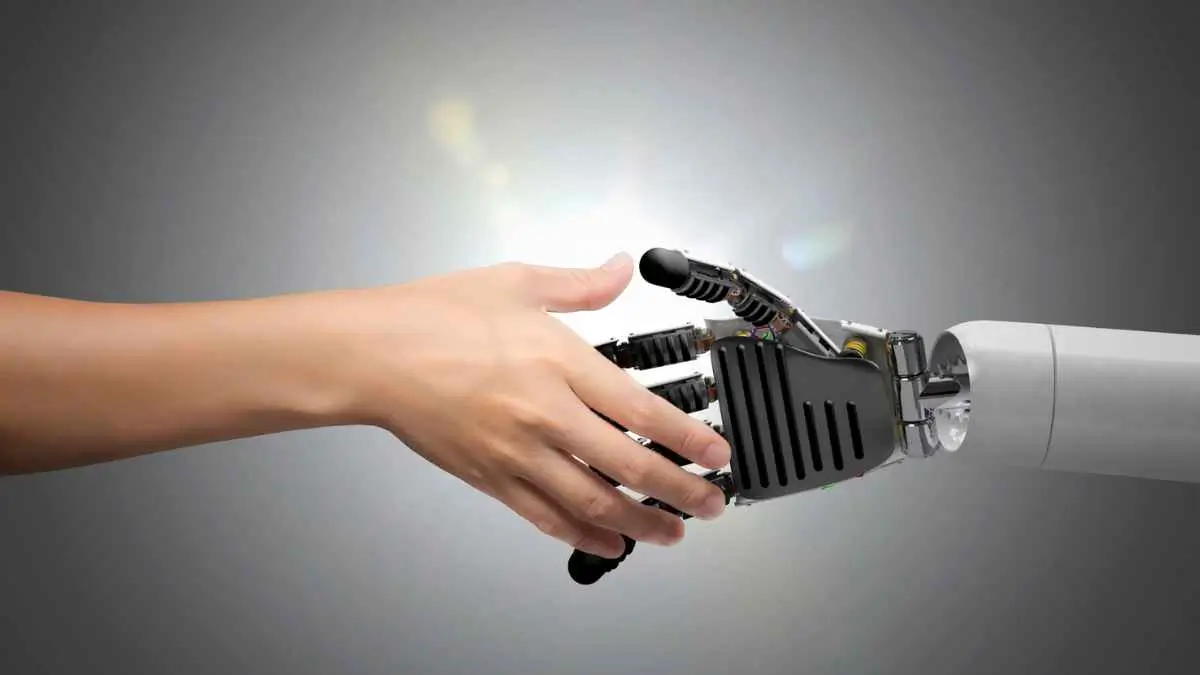
Never before in the entire history of life on Earth has a single species had the ability to consciously steer the course of its own evolution. The human species, which has been shaped by billions of years of slow, aimless natural selection, now has the means to alter the genetic code, to enhance the capabilities of the human brain, and to hardly distinguish biological life from engineered systems. This combination of artificial intelligence biotechnology neuroscience, and nanotechnology is not only changing the way we live but also challenging our very understanding of what it means to be human. Technology and human evolution are intertwined, and the fusion of these two aspects is no longer science fiction. It is a reality that is continuously unfolding, and its impact will be so profound that it will not only define this century but also every century thereafter.
The End of Evolution as We Knew It
Natural selection operates over thousands to millions of years. The characteristics that enhance survival and reproductive success are gradually passed on and become more common in the population over generations, while those that are less beneficial eventually disappear. This mechanism has shaped every aspect of the human form and brain, including the layout of our eyes and the development of our social behaviors. Still, natural selection, despite its might, is also highly indifferent. It doesn’t aim to maximize happiness health intelligence, or longevity, only reproduction. Besides, it can’t influence traits that appear after reproduction, which explains the persistence of aging and age-related diseases.
At present, science is unsettling the basis of this ancient system. Genetic modification technologies like CRISPR-Cas9 have made it possible to modify DNA sequences accurately and efficiently, almost unbelievably so compared to just a generation ago. Human progress can now be consciously directed for the first time, as identifying and fixing harmful genes, enhancing certain biological traits, and even designing features for future generations become possible. Is this liberation from our biological fate or the opening of a huge ethical nightmare – or maybe both? This is one of the major questions facing humanity today.
Biotechnology and the Re-Engineering of Human Biology
Biotechnology has already changed medicine, agriculture and materials science, and it is now leading us towards far more drastic changes than anything we have experienced so far. Gene therapy, which was purely a theoretical possibility some time ago, is now being used clinically for more and more inherited diseases. Scientists have recently made significant progress in fixing defects in genes that lead to diseases like sickle cell disease, certain types of blindness and various blood disorders. They achieve this by delivering the correct gene into the cells of the patients – something that would have been only a dream 20 years ago.
If we look at a far future, consequences will be vast. Germline editing, modifying an embryo’s genes, not just those of a living person, and changes that will be inherited by all descendants, is the raising of extraordinary possibilities and serious moral concerns. The prospect of a world where hereditary diseases are eradicated before they manifest is quite appealing. Like that, the notion of parents being able to choose for features like disease resistance, intellectual capacity or physical power is equally attractive. This mix of possibilities and the concerns of fairness, consent, and the distinction between enhancement and therapy will continue to shape the policy and ethical issues for the next few decades. What is clear is that the genetic future of humans will increasingly be shaped by intentional decisions rather than by mere random mutations.
Artificial Intelligence as an Extension of Human Mind
While biotechnology represents the transformation of the human body, artificial intelligence symbolizes the progress of the human mind at a speed far beyond what biology can achieve. Our brain for all its marvels, has not undergone any significant changes in its basic structure for thousands of years. AI is improving at a timescale of months and years, and its features are evolving so that is increasingly mimicking human abilities – and in some areas even surpassing them. The extent to which human evolution will have an impact in the future will largely be determined by how human intelligence and artificial intelligence interact with each other.
Actually, the relationship goes beyond mere competition. For a lot of applications, the most effective combinations are not humans being replaced by AI, but humans being supported by AI, humans providing creativity judgment emotional intelligence, and contextual wisdom, while AI systems carry out analytical tasks, pattern recognition, and information processing on a superhuman scale. Professionals equipped with AI are not being sidelined but are actually becoming incredibly powerful. Researchers utilizing AI to navigate through a vast array of scientific literature, uncovering insights that would have gone unnoticed without the help of the machine, and generating new ideas can now achieve what a human might have achieved in several years in just 12 months. So, AI is functioning like a cognitive prosthetic for those who have embraced it early on, and the synergy between human and machine will become more and more intimate as AI systems grow in complexity and capability.
The Brain-Computer Interface Revolution
One of the furthest and most dramatic aspects of the co-evolution of technology and humans is the development of direct connection channels between the human brain and digital devices. The brain-computer interface (BCI), an experimental branch of neuroscience from its very inception, is now at the edge of large-scale practical production, stimulated by companies and research institutions with continuously bolder aims. Current devices, for example, have been proven to enable disabled individuals to operate robotic limbs and computer cursors simply by using their mental powers, authentic miracles for those with severe motor handicaps.
The vision for decades later is not limited to healing purposes. Scientists see brain-computer interface as a human tool to view digital data directly, to exchange thoughts without language delay and mistakes, and to combine biological brain functions with computational devices in such a way as to enormously amplify human senses and memory. A human being equipped with a fully developed brain-computer interface would not consider technology merely as an external instrument; rather, they would see it as a part of their very own cognitive structure. Yes, writing has enhanced human memory, and mathematics has enhanced human reasoning. In the centuries to come philosophers scientists and lawmakers will be arguing fiercely whether this is simply a natural continuation of human evolution or the time when humankind ceases to be fully human.
Nanotechnology and the Future Body
Nanotechnology which lies at the interface of extremely small and highly influential is stealthily planting the seeds of changing human health and longevity in ways that are probably not evident if viewed from the present time perspective. Molecular scale machines -molecules sized devices- might eventually operate in the human body to not only deliver drugs in specific locations and kill cancer cells but also to continuously measure health and carry out biological repairs in real time. More of the grander scale implementations are still research or early development Though the direction of this discipline points to a time when internal medicine is more about nanoscale engineering than systemic pharmacology. The effects of nanotechnology on human aging are most remarkable. At the level of physiology, aging is basically a series of cellular damages that have accumulated one after another- dysfunctional proteins, oxidized molecules, genetic mutations, degradation of mitochondria, and finally, the body’s own repair mechanisms become less effective slowly.
Incorporating nanotechnology with genomics and regenerative medicine enables interventions in these cellular processes. One can repair the damages as they are made, rather than waiting for the damages to lead to disease symptoms. If all goes well, this will not only add years to life but also quality years to life – prolonging the stage during which the body functions biologically at its best well beyond what is naturally expected from human evolution.
The Ethics of Human Augmentation
With every major scientific breakthrough in human biology, a new set of ethical dilemmas emerge that require as much thoughtful deliberation as the scientific discoveries themselves. The idea of human enhancement, using technology not only for the restoration of functions lost due to diseases or injuries but also for the augmentation of capacities beyond the normal human range, is capable of posing the most fundamental questions in moral philosophy. To what extent do societies have the obligation to make sure that the benefits of enhancements are equitably shared and not only the privilege of the wealthy? If some people have access to mental or physical enhancements while others do not, are the existing inequalities deepened, or are completely new divisions created? In a world where it becomes possible to buy or program human capability, what will happen to society, to the standard of competition, to the notion of achievement?
These are practical issues. Regulations, cultural norms, and institutional systems that societies put up surrounding enhancement technologies in the coming decades will be the deciding factors in whether these developments are used to serve the entire human population or end up as instruments of a new kind of segregation. When looking at the history of technologies that have had the power to transform our lives, one finds both warnings and grounds for cautious hope. Once luxury items, things like the Internet, smartphones, and vaccines have become widely available, though never completely. It is up to this generation to set the institutional bases that will give the greatest chances to a similar opening up for technologies that work on human biology itself.
The Mortality Question and Longevity Science
Arguably, nothing has stirred as much fascination, the same time, philosophical anxiety, as the scientific exploration of radical life extension. For the longest time, humans have regarded aging and death as inevitable parts of our biological existence. But, this perception is radically changing among researchers who no longer view aging as something natural to be resigned to but rather as a disease to be treated or, at the most optimistic, a problem to be solved. Longevity research, once considered a niche area in the biomedical field, is now among its most highly funded segments with a lot of money invested in various methods like the use of senolytics – drugs that eliminate aging-promoting damaged cells, to caloric restriction, epigenetic reprogramming, and stem cell therapies.
It is still very much uncertain whether any of these will lead to slight extensions of human lifespan in good health or more radical changes in human lifespan. Yet, what is more certain is that we have to start the discussion of the implications of Much longer human life – for individual psychology, social institutions that are based on life stages, intergenerational relationships, planetary resources – alongside the science, not after it. A society that obtains the capability of dramatically extended lifespans without having pondered over the social structures necessary to support those lifespans will be in a great confusion without a guide.
The Emergence of Transhumanism and Post-Human Futures
Transhumanism (the view that humans are not a closed species or fixed point but a point of departure and the use of technology to augment human biological and cognitive capacities is not a threat to human dignity but a natural continuation of the most basic human impulse to improve and transcend limitations) is the intellectual and cultural movement by which all these changes are supported. The same spirit that caused the rise of language agriculture medicine, and science also leads to human enhancement. Trying to halt this process by citing “natural humanity” as the reason is both logically from a human nature standpoint and practically from a social point of view, a losing argument, say the transhumanists.
Though, those who stand against transhumanism have some valid and strong arguments. They uphold the worth of biological and cognitive limitations that define human existence, that being mortal allows life to have meaning, that hardships make one grow, and that in creating a post-human future focused on having maximum ability, one might lose partly the freshness of being alive. Some critics are concerned with more down-to-earth realities: the technologies of enhancement may be unevenly distributed which will lead to a divergence between the “enhanced” and the “unenhanced” populations so the current inequalities will look like child play by comparison. These debates go far beyond the ivory tower. They will determine policies, lead to new investments, and help form cultural norms that make some futures “really” and others “imaginary”.
Rethinking Our Relationship with Technology
All these technological trends coming together indicate not only enhanced human tools but also a significant redefinition of how humans could relate to technology. Throughout most of history, technology for man was an external thing, a hammer, a wheel, a machine, a computer. As we see what directions biotechnology AI brain-computer interfaces, and nanotechnology are taking, Clearly tomorrow’s world will feature humans with technologies inside them rather than humans using technologies. In fact, the dividing line between biological and engineered, natural and artificial, is progressively fading away. As a result, this evolution challenges us to rethink some of the fundamental categories that humans use to make sense of themselves. Will the ‘self’ still be considered as located in the brain if it can be externally preserved and digitally accessed?
What would be the meaning of being ‘smart’ if cognitive enhancement Much raised human intelligence and changed the benchmark? How would a human life look if aging could be halted or even reversed? Such questions are not technically solvable and this is something even the most serious thinkers, both intellectually and morally, will have to engage with over the next few decades. Rather than providing the answers, technology actually makes it impossible not to ask the questions.
Conclusion
Technology and human evolution each have their own future but the future of both combined is truly the intersection of many stories –” stories of biology and software; stories of the dream and the fear; stories of the science making the unimaginable, the equally unimaginable creating the amazing responsibility.” Humans have always been defined by their ability to change the world. Still, what is radically new and absolutely unprecedented in the entire history of life on Earth is that humans are now creating the capability to change themselves, to stand in front of the product of evolutionary changes through billions of years and ask if it can be better. The manner in which mankind deals with this question and the path to the answer it chooses will determine not only the future of human species but also the type of species that they end up becoming.

Digital entrepreneur and content expert I help businesses with AI, SEO and the latest tech trends. I started Silicon Valley Weekly to make complex tech concepts easy to understand and use for business growth. I know a lot about systems and help startups, entrepreneurs and brands navigate the fast-changing world of tech and online marketing.
I build strategies that use data, search optimization, content marketing and AI tools to get visibility, engagement and revenue. I love finding ways for businesses to grow increasing their presence and turning new ideas into successful businesses. My goal is to connect the technology, with practical business use so brands can succeed online.