Early Life and Background
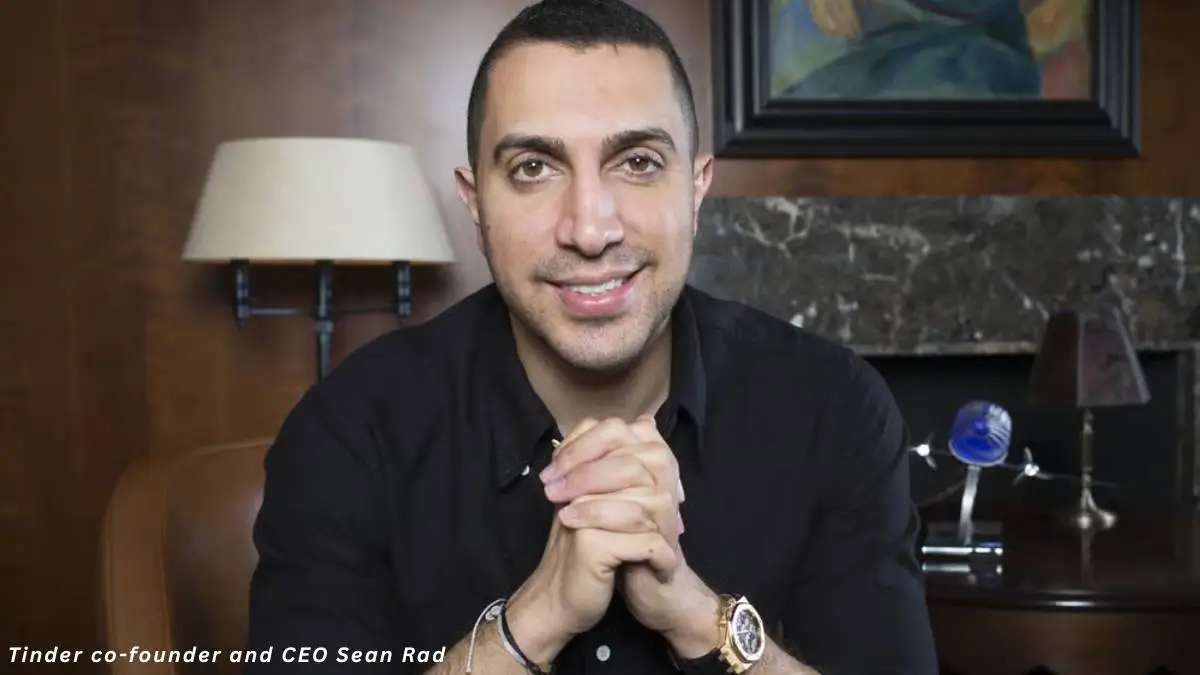
Sean Rad was born and raised in Los Angeles, California, into a family of Iranian-Jewish immigrants who moved to the United States in the 1970s. Growing up in a culturally rich and entrepreneurial household, he was exposed early to the values of independence, ambition, and business-minded thinking. He has a large family with 12 uncles and aunts and 42 first cousins. His family ran an American consumer electronics business founded by Rad’s grandfather, which provided him with a relatively comfortable lifestyle.
During high school, he founded a band and interned for an entertainment manager, before deciding that being an artist wasn’t for him. Rad attended the University of Southern California, where he studied business. While USC provided him with foundational business knowledge, his real education came from hands-on experience in building startups. In 2006, Rad made the bold decision to leave university and pursue entrepreneurship full time.
The First Ventures: Orgoo and Adly
Rad began his internet enterprises in 2004, at 18 years old, when he founded Orgoo, his first startup, designed to streamline all digital forms of communication — email, instant messaging, video chat, and SMS — on a single web-based platform. While the idea was ahead of its time, it did not achieve commercial success, though it gave Rad invaluable lessons in product development and user behavior.
Undeterred, in 2009, Rad founded Adly, the original social media advertising and analytics platform that connected more than 2,500 brands and 5,000 celebrity influencers. Adly proved a far more successful venture and established Rad as a serious player in the technology space. In 2012, Rad sold his stake in Adly and joined Hatch Labs, a New York-based incubator for mobile apps that happened to also have an outpost in Los Angeles.
The Birth of Tinder
In a hackathon conducted by Hatch Labs, Sean Rad, in collaboration with Joe Munoz, built Matchbox, which was along the lines of a flirting app. Matchbox won the hackathon, and the team shifted their attention toward its future development. After three weeks and an investment of $50,000, a polished version of Matchbox was ready for launch. Matchbox was rebranded as Tinder, and the app was launched in 2012.
Rad has said the impetus for Tinder’s creation was his observation that “no matter who you are, you feel more comfortable approaching somebody if you know they want you to approach them.” He believed a “double opt-in” system could be created to potentially alleviate the stress of meeting new people. That instinct proved transformative. Rad launched Tinder in 2012 and, by 2015, Tinder was the top grossing app in 99 countries. By 2017, Tinder became the highest grossing app in Apple’s App Store. Rad holds 15 patents for his work, including the patent for Tinder’s “double opt-in” system, in which users must match before they can exchange messages.
Leading Tinder Through Growth and Controversy
Sean Rad served as Tinder’s CEO on two occasions. He was the company’s initial CEO until March 2015, when he was replaced by former eBay and Microsoft executive Chris Payne. Payne left the company, and Rad simultaneously returned as CEO in August 2015. Rad stepped down as CEO again in December 2016, becoming Tinder’s chairman and ceding the CEO position to former Tinder chairman Greg Blatt.
His tenure was not without turbulence. In 2014, a lawsuit focused on the relationship between former VP of Marketing Whitney Wolfe and Tinder co-founder Justin Mateen, accusing him and the company of sexual harassment and sexism. Mateen had since been suspended from the company. Wolfe accepted a settlement of just over $1 million, Mateen resigned from Tinder, and Rad stepped down as CEO — temporarily, as it turned out.
The Valuation Dispute and Landmark Settlement
After departing Tinder in 2017, Rad found himself embroiled in a major legal battle. Rad, former CMO Justin Mateen, and others argued Match and IAC downplayed the dating app’s growth potential and overestimated costs in 2017, with the alleged goal of watering down stock options awarded to Tinder’s early team. Lawyers for the former Tinder executives said leadership at Match and IAC handed “bogus doom-and-gloom numbers” to two investment banks for an analysis of Tinder’s worth, which pegged Tinder’s valuation at $3 billion.
Former Tinder employees, led by Sean Rad, settled the lawsuit with Match Group. The plaintiffs claimed that the company understated the value of Tinder in 2017 to make their stock options less valuable and appealing. Match agreed to pay $441 million in the settlement.
Philanthropy and Life Beyond Tinder
Rad’s ambitions have never been limited to business alone. Good Today, a nonprofit that offers a simple way for people to support a variety of charity organizations by donating as little as 25 cents a day, announced Rad as a founding board member alongside other notable figures. “Generosity is a learned behavior,” Rad said. “If you think about the importance of waking up every single day, opening that email and learning about another cause, getting out of your own little bubble… very quickly it becomes an addictive habit.”
In 2017, five years after Tinder was launched, Sean co-founded AllVoices, an employee feedback app that allows workers to send anonymous reports directly to company leaders. He has also gone on to build a portfolio as an angel investor, founding ten companies in total and investing in sixteen others, focusing primarily on consumer and enterprise sectors across the United States and United Kingdom.
Legacy
Sean Rad’s career is a testament to the power of pattern recognition and persistence. From a college dropout with a bold idea about messaging, he built an app that fundamentally reshaped human connection in the digital age. Tinder has made more than 20 billion connections, garnered more than 50 million active users across 195 countries. By October 2014, Tinder users completed over one billion swipes per day, producing about twelve million matches per day. Whether through the companies he has founded, the causes he champions, or the culture of connection he helped create, Sean Rad remains one of the most consequential entrepreneurs of his generation.

Digital entrepreneur and content expert I help businesses with AI, SEO and the latest tech trends. I started Silicon Valley Weekly to make complex tech concepts easy to understand and use for business growth. I know a lot about systems and help startups, entrepreneurs and brands navigate the fast-changing world of tech and online marketing.
I build strategies that use data, search optimization, content marketing and AI tools to get visibility, engagement and revenue. I love finding ways for businesses to grow increasing their presence and turning new ideas into successful businesses. My goal is to connect the technology, with practical business use so brands can succeed online.