Where the World Comes to Life
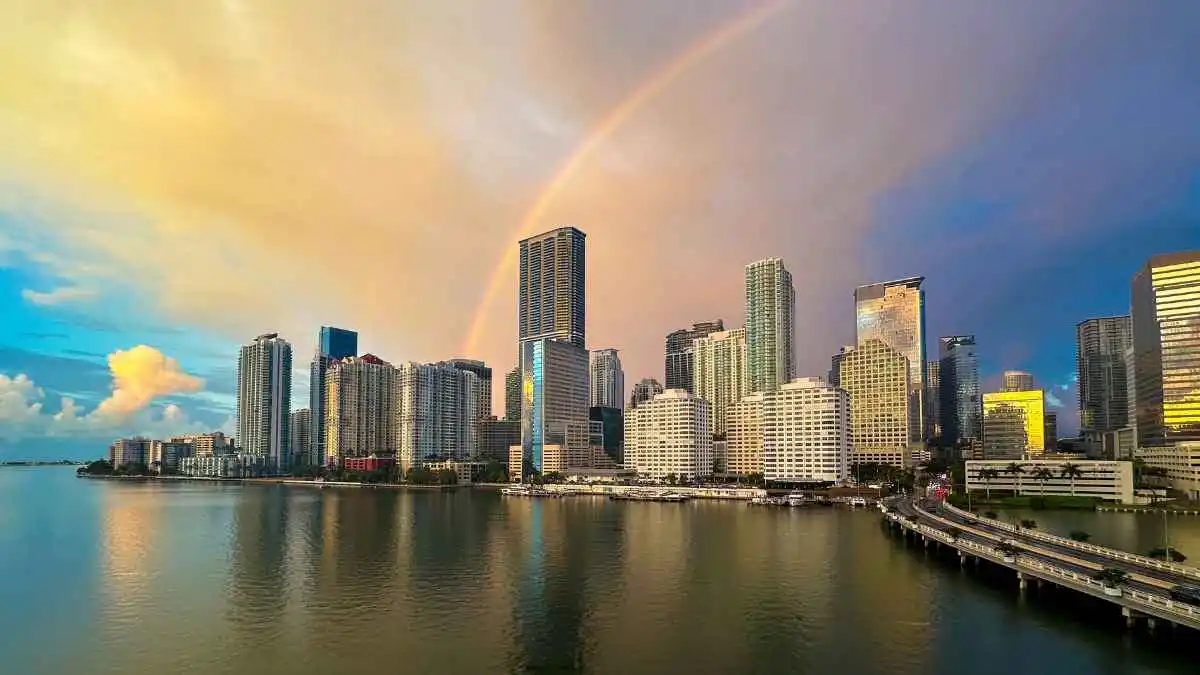
Miami is a kind of city that defies description in simple terms. It is a city with both a beautiful coastline and a busy financial district, with Latin American and art centers at the global level, and a city of both entertainment and a center for genuine intellectual and creative people. It has a geographical location that can hardly allow any other point of comparison as Miami has been the most representative American city to the global scene. Miami, with its vibrant and multilingual atmosphere, has a diversity of culture in its streets – a city of exiled Cubans, Haitian immigrants, Colombian businessmen, Brazilian artists, Caribbean musicians, and also a wave of the newest and the most different people, who come here time and time again, and often end up deciding to stay.
The Art Deco Legacy of South Beach
Any discussion of Miami’s visual character would be meaningless without South Beach, and any mention of South Beach inevitably brings back the discussion of its architecture. The Art Deco Historic District, along Ocean Drive and Collins Avenue, is home to the single biggest collection of Art Deco-style buildings in the world, eight hundred odd, mainly built between 1923 and 1943, the collection forming, in my opinion, one of the most iconic street lines ever in these parts. These were the products of a time when, through the American middle-class tourists, Miami Beach was still a new resort destination, and their architects, through an expression of optimism, gave a visual language that has still maintained its cheerfulness almost a century later.
The district, at night, when neon signs glow against the buildings and crowds pour from restaurants/bars into the sidewalks, is a near cinematic backdrop stage set where hedonism and history live happily ever after with such a natural coexistence that, I guess, only a few decades of experience in that business could have been possible. The Miami Design Preservation League, the local historic preservation organization founded in 1976, saved these historic buildings from the wrecking ball during a time when the artistic importance of this style of architecture was only starting to gain appreciation, and the designation of the district as a National Historic Landmark will serve the architectural character of the region well as the city keeps expanding for one thing and modifying itself on the other.
Wynwood: Where Street Art Became a Movement
If South Beach is the symbol of Miami’s glamorous history, Wynwood is the symbol of its creative present. First, it was a warehouse district with nothing to make it attractive to the tourists, and then with the late 2000s, a combination of bold real estate investment and conscious selection have turned the place into a gathering space not only for Miami locals but travelers as well. Due to that change – Wynwood Walls, an open-air museum with large scale murals which became a favorite destination for the tourists in the US and a reference point of international street art movement.
Artists represented on these walls are from different continents and different generations, and their works encompass from geometric abstraction to photorealist portraiture to politically charged imagery that uses scale and color with the confidence of monumental painting. Besides galleries studios design shops, restaurants, and bars, the development that surrounded the Walls created such a mix of creative professions that a creative community is formed from around the country and internationally which is attracted by such a place. Wynwood still has its way to go in the sense that there’s a feeling that nothing is really settled in fact Wynwood is ever-changing – the walls are being repainted, the business tenants are turning over, and the identity of the area is changing all the time. That sort of change has become a trademark in what makes Wynwood so exciting.
Art Basel and the Global Conversation
Art Basel Miami Beach transforms the city of Miami into the global art capital for that week in December when Art Basel Miami Beach comes to town and lures in the galleries, art collectors curators the artists, and fans from over fifty five countries to have a feast on a week that combines commerce, art criticism, and spectacle. The main fair held at the Miami Beach Convention Center showcases art pieces from all the galleries that are a part of the full spectrum of modern and contemporary arts but also a fair amount of satellite fairs – like Untitled NADA Scope, and Design Miami will be spread along the city and these fairs will have art pieces showcased in different tents, warehouses, and beachfront pavilions. Miami was, until Art Basel, a purely residential city and not yet a serious art scene location so Truth is Art Basel is arguably the one of the single major events that has been a great success in establishing it as a major international cultural destination. Besides, its effect on the art scene has been quite significant: the galleries that were set up purely as temporary stalls during the fair to cater the fair-week traffic are now keeping these shops open year-round! On top of that, the collector/institution crowd who comes here for the fair week is slowly getting so enamored that a good part of them is even thinking about moving permanently to Miami.
The Flavors of a Hundred Homelands
Like that, Miami’s food culture is just as multifaceted as its cultural identity. Little Havana is essentially the heart of the city for food lovers – any proper culinary guidebook would start here. Calle Ocho is lined with restaurants emitting scents of slowly-roasted pork accompanied by black beans and caf Cubano. Those food stalls have been serving the Cuban American community for more than half a century. These dishes are not merely a mix of different types of food or their approximations – they are the real ones brought by Cuban migrs families who did not forget their kitchen in their exile and kept their culinary knowledge alive. Beyond Little Havana, the Miami food scene takes off with different aspects of the Caribbean and Latin American cooking from Haiti, like the tasty griots, to Colombia with the delicious arepas, to Peruvian delicacies like ceviche, to Dominican sancocho, all served together with some of the most imaginative American and European kitchens in the United States. Miami’s best chefs have always been well aware that the Caribbean ingredients and flavor traditions make up a genuine culinary language, and it is mainly there that new Miami’s cooking ideas come to the fore when that language is merged with wider world cooking methods.
A City Always Becoming
Miami still has a way to go before it becomes a proper city. Right now, it`s just one of those cities that keep constructing things, buildings identity community, plus meaning, on a constant basis. The problems it faces are legitimate: higher water levels are gradually eroding its flat landscape (since Miami lies close to the water on both sides), inequality is deeply rooted under that glittering appearance, and an intense development pace keeps putting pressure on cultural environments which were the main reasons of people getting to know the city. Though, the power behind Miami is something very special, the ever-moving sunny multi-lingual and creatively hungry energy, characteristic to places where ambition and change form the common ground – and this quality is unique among American cities. Come for the beaches and the architect style. Leave with the memories of the art, the jazz, the gourmet, and the magnificent human narrative that is still being written in many languages at the same time, every day.