
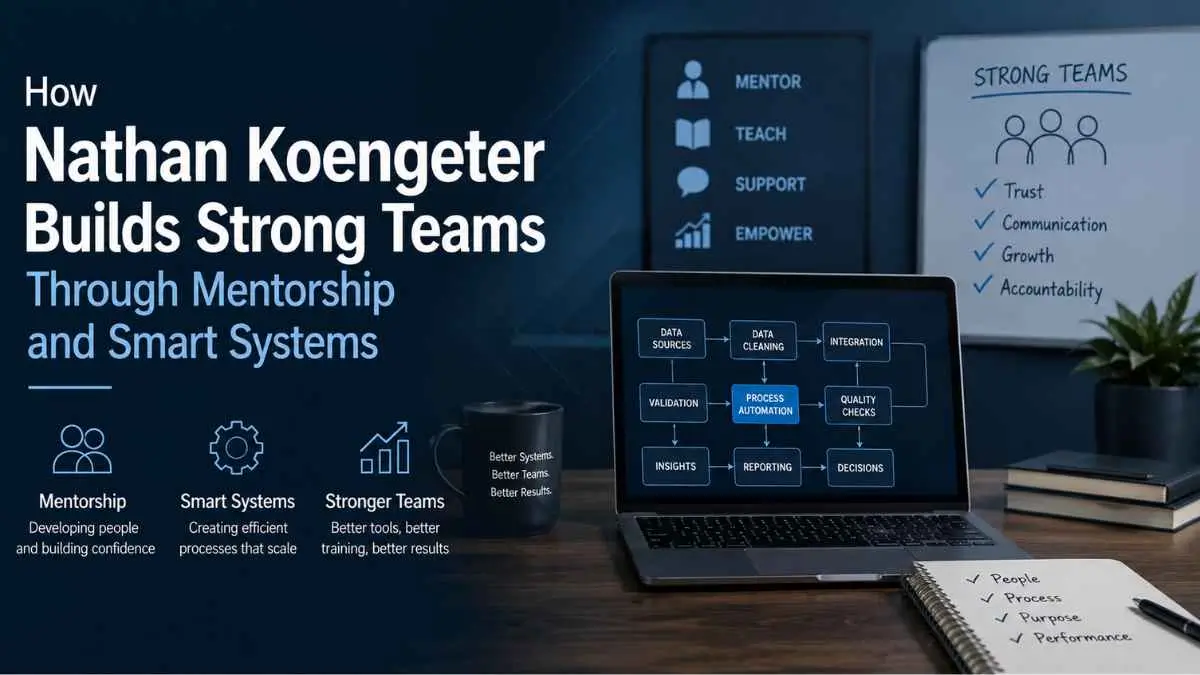
A busy data-integration department, full of capable analysts, all under pressure to deliver clean data on tight timelines. Stand out in a room of talented people, then help make that whole room better. Nathan Koengeter set out to both work smarter and outwork everyone around him, and he kept it up long enough to become the most tenured analyst on his team.
He earned a hand in screening, interviewing, onboarding, and training the very people who would carry the work forward. That arc, from top individual performer to trusted team builder, is the real measure of a professional. Anyone can have a good month. Nathan Koengeter built a reputation over years, and then used it to lift the people beside him.
Choosing To Outwork Everyone
Effort is a choice, and Nathan Koengeter made it deliberately. By his own account, he strived to outwork every other member of his client-services delivery and data-integration department. That is a bold standard to set for yourself, and a harder one to actually meet.
But effort alone was never the whole plan. He paired it with a drive to work smarter, finding better ways to handle repetitive tasks rather than just grinding through them. That combination, harder and smarter at once, is what turns a good employee into an indispensable one.
Earning Tenure Through Consistency
In fast-moving fields, people come and go. Staying, and staying valuable, is an achievement. Nathan Koengeter became the most tenured analyst on his team. That longevity says something that a single project never could. It says he stayed useful as tools changed, clients changed, and demands grew.
Tenure earned through consistent performance carries real weight. It signals reliability, institutional knowledge, and trust built over time. For Nathan Koengeter, that standing became a platform. Once he had proven himself, he was positioned to shape the team itself.
Choosing The Next Generation
One of the clearest signs that an organization trusts you is when it lets you help pick who joins next. Nathan Koengeter reached that level. He became involved in screening and interviewing applicants, a responsibility that goes well beyond individual output. Choosing teammates shapes the future of a department for years.
That role requires judgment about people. You have to spot potential, work ethic, and fit, often in a short conversation. Nathan Koengeter’s experience reading people, sharpened during his field and canvassing work, would have served him well here. Evaluating a candidate is its own kind of qualitative research.
Investing In New Talent
Hiring someone is only the start. The harder, more valuable work is helping them succeed. Nathan Koengeter took that on too. He was involved in onboarding and training new team members, passing along the standards and know-how he had built over years. That is where a strong performer becomes a genuine leader.
Training others is often thankless. It takes time away from your own tasks, and the credit usually goes to the person who improves. People who do it anyway are the ones who make teams better. Nathan Koengeter chose to invest that time. He helped turn new hires into contributors, which multiplies his impact well beyond his own desk.
Why Good Analysts Leave
The demand for skilled data and research professionals keeps climbing. The insights industry alone has grown past $140 billion worldwide, and every corner of it needs capable people. That growth makes talent scarce and turnover costly. Every time a trained analyst leaves, an organization loses knowledge that is expensive to rebuild.
This is why the mentoring side of Nathan Koengeter’s career is so valuable. People who can train and retain talent protect something companies struggle to replace. Nathan Koengeter helped make sure the seats around him were filled well too.
Leading Through Example
There is a difference between authority and leadership. Nathan Koengeter’s story leans heavily on the second. His influence grew out of what he did. He performed, he stayed, and he helped others rise.
People follow that kind of example more willingly than they follow a job title. When the hardest worker in the room is also the one training you, the standard sets itself. Nathan Koengeter modeled the behavior he wanted to see.
Building Systems Not Output
The through-line in Nathan Koengeter’s career is a preference for lasting improvement over quick wins. He automated repetitive work so it would not have to be repeated. He trained clients to send cleaner data so problems would not recur. He onboarded new analysts so the team would stay strong after any single person moved on.
Each of those moves builds a system rather than a one-time result. That is a mature, strategic way to work, and it compounds over time. Nathan Koengeter clearly thinks past the task in front of him. He asks how to make the next task easier for everyone, which is exactly how strong teams are built.
Raising The Whole Standard
One high performer can change the temperature of an entire team. When the bar rises, people tend to rise with it. Nathan Koengeter set that bar through his own output first. By consistently working harder and smarter than expected, he made a strong effort feel normal rather than exceptional.
That kind of influence is subtle but powerful. It just requires showing up and delivering, day after day, where everyone can see it. Once that standard is set, a team polices itself. New members absorb it quickly. Nathan Koengeter helped create a culture where doing the work well was simply the expectation.
Onboarding As Long-Term Investment
Many organizations rush onboarding. They wanted new hires to be productive yesterday, and they cut corners on training. That impatience usually backfires. Nathan Koengeter took the opposite view. He treated onboarding and training as an investment worth making carefully, because a well-trained analyst pays dividends for years.
He had the credibility to do it well. As the most tenured analyst on his team, he carried hard-won knowledge that no manual could fully capture, and he passed it on directly. That patient investment is how institutional knowledge survives turnover. Thanks to people like Nathan Koengeter, a team’s standards do not walk out the door when one person leaves.
Hard Work Made Smart
Plenty of people work hard. Fewer manage to work hard and smart at the same time. Nathan Koengeter aimed for both, and that balance defined his approach. Pure effort has a ceiling. You can only put in so many hours before you burn out or hit the limits of the day.
Nathan Koengeter automated repetitive clean-up so it would not eat his time twice. He improved processes so bottlenecks stopped recurring. That is effort applied with intelligence. It is the difference between running faster on a treadmill and building a better machine. Nathan Koengeter consistently chose to build the better machine, which is why his hard work compounded instead of just exhausting him.
Culture That Outlasts Everything
Individual achievements fade. Culture endures. The most lasting thing a professional can leave behind is a stronger team. Nathan Koengeter’s career points squarely at that legacy. He rose by outworking the room, then turned around and helped raise the people entering it.
The analysts he screened, onboarded, and trained carried a piece of his standards forward. His influence lives on in their work, long after any single deadline is forgotten. In a profession that often celebrates lone talent, Nathan Koengeter stands out for building others up.

Digital entrepreneur and content expert I help businesses with AI, SEO and the latest tech trends. I started Silicon Valley Weekly to make complex tech concepts easy to understand and use for business growth. I know a lot about systems and help startups, entrepreneurs and brands navigate the fast-changing world of tech and online marketing.
I build strategies that use data, search optimization, content marketing and AI tools to get visibility, engagement and revenue. I love finding ways for businesses to grow increasing their presence and turning new ideas into successful businesses. My goal is to connect the technology, with practical business use so brands can succeed online.