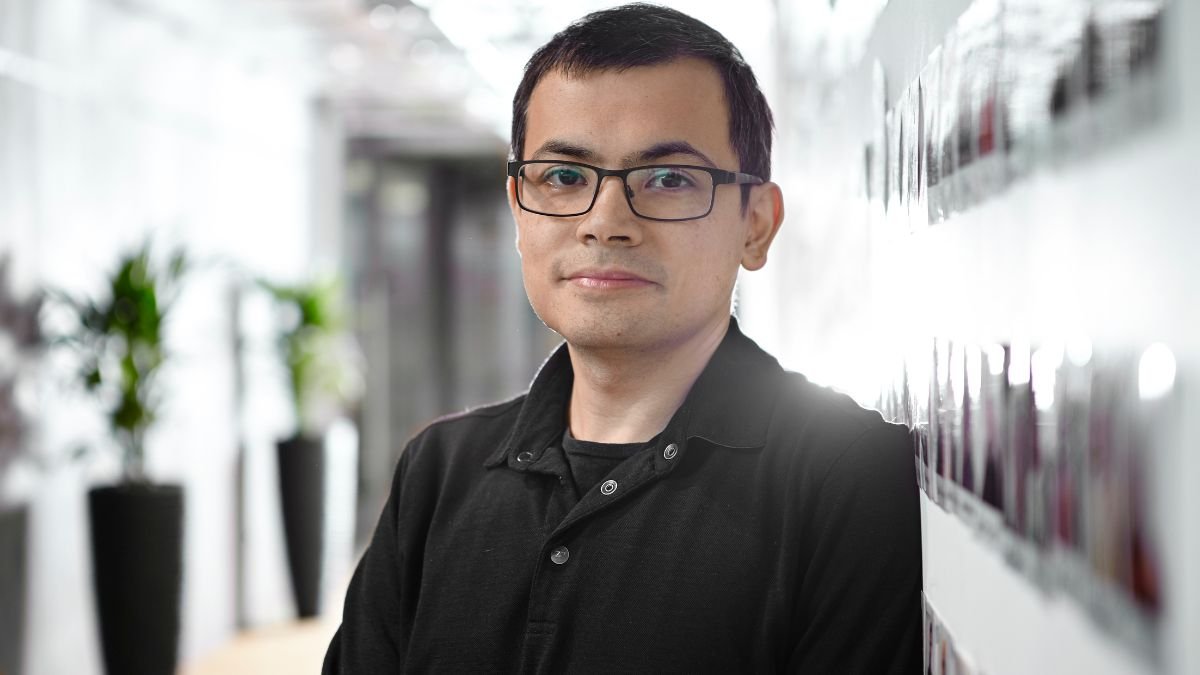
Demis Hassabis was born in North London to a Greek Cypriot father and a Chinese Singaporean mother. From the very beginning, it was clear that he was no ordinary child. A chess prodigy from the age of four, he reached master standard at just 13 with an Elo rating of 2300, captaining many of the England junior chess teams. His passion for strategy and logic extended beyond the chessboard. After buying his first computer — a ZX Spectrum 48K — funded from chess winnings, he taught himself how to program from books, and subsequently wrote his first AI program on a Commodore Amiga to play the reversi board game. These early obsessions — games, computers, and artificial intelligence — would converge decades later into a life’s mission to build machines that could think.
Demis Hassabis Biography
| Category | Details |
|---|---|
| Full Name | Sir Demis Hassabis CBE FRS FREng FRSA |
| Date of Birth | 27 July 1976 |
| Place of Birth | London, England, UK |
| Nationality | British |
| Parents | Costas (Greek Cypriot) and Angela (Chinese Singaporean) |
| Spouse | Dr. Teresa Niccoli (Molecular Biologist) |
| Children | Two sons |
| Education | – Queen Elizabeth’s School, Barnet<br/>- University of Cambridge (Computer Science, MA, 1997)<br/>- University College London (PhD in Cognitive Neuroscience, 2009) |
| Doctoral Advisor | Eleanor Maguire |
| Early Career | – Chess prodigy, master at age 13 (Elo rating 2300)<br/>- Lead developer at Bullfrog Productions (Theme Park, 1994)<br/>- AI programmer at Lionhead Studios (Black & White, 2001)<br/>- Founded Elixir Studios (Republic: The Revolution, Evil Genius) |
| Major Contributions | – Co-founder & CEO of DeepMind (2010–present)<br/>- Co-founder of Isomorphic Labs (2021–present)<br/>- Developed AlphaGo (defeated world champion in Go)<br/>- Created AlphaFold (AI predicting protein structures) |
| Awards & Honors | – Nobel Prize in Chemistry (2024)<br/>- Albert Lasker Award (2023)<br/>- Breakthrough Prize in Life Sciences (2023)<br/>- Canada Gairdner International Award (2023)<br/>- Knighted in 2024<br/>- CBE in 2017<br/>- Fellow of the Royal Society |
| Chess Career | Candidate Master, represented England junior teams, peak rating 2300 (1990) |
| Influence | Listed in Time 100 (2017, 2025); part of “Architects of AI” as Time’s 2025 Person of the Year |
| Current Roles | CEO of DeepMind, CEO of Isomorphic Labs, UK Government AI Adviser |
Teen Genius in the Games Industry
Hassabis completed his A-level and S-level examinations two years early, at the ages of fifteen and sixteen respectively. Rather than heading straight to university, he plunged into the video games industry. He began his professional games career at the age of 16 working at Bullfrog Productions. There, working alongside the legendary designer Peter Molyneux, at 17 he co-created the game Theme Park — a multi-million-selling simulation that became a landmark title of the era.
He left Bullfrog to study at Queens’ College, Cambridge, where he completed the Computer Science Tripos and graduated in 1997 with a double first. Returning to the games world post-graduation, he served as lead AI programmer on Lionhead Studios’ god game Black & White. In 1998, he left Lionhead and founded Elixir Studios, an independent game developer based in London, signing publishing agreements with Eidos Interactive, Vivendi Universal, and Microsoft, and serving as lead designer on the BAFTA-nominated games Republic: The Revolution and Evil Genius. Even in his commercial work, Hassabis was quietly refining his thinking about how intelligence — artificial or otherwise — could be coded, modelled, and understood.
The Neuroscience Detour That Changed Everything
After years of industry success, Hassabis made a surprising pivot. He returned to academia to obtain his PhD in cognitive neuroscience from UCL Queen Square Institute of Neurology in 2009, supervised by Eleanor Maguire, seeking to find inspiration in the human brain for new AI algorithms. The work he produced during this period was remarkable. His very first academic paper, published in PNAS, was a landmark study that showed for the first time that patients with damage to their hippocampus — known to cause amnesia — were also unable to imagine themselves in new experiences, establishing a link between the constructive process of imagination and the reconstructive process of episodic memory. This work was named one of the “Top Ten Scientific Breakthroughs of 2007” by the journal Science.
He continued his research as a visiting scientist at MIT and Harvard, before earning a Henry Wellcome postdoctoral research fellowship to the Gatsby Computational Neuroscience Unit at UCL. These years were not a detour — they were the intellectual foundation on which DeepMind would be built.
Net Worth
- Estimated Net Worth (2026): $285 million
- Primary Sources of Wealth:
- Sale of DeepMind to Google (2014) for ~$500 million
- Ongoing leadership as CEO of DeepMind and Isomorphic Labs
- AI innovations (AlphaGo, AlphaFold) that brought global recognition and awards
- Major Achievement: Nobel Prize in Chemistry (2024) for AlphaFold protein structure prediction
Building DeepMind
In 2010, Hassabis co-founded DeepMind, an AI startup focused on machine learning, in London, alongside Shane Legg and Mustafa Suleyman. The company’s founding philosophy was unusual: it would pursue artificial general intelligence (AGI) using insights drawn directly from neuroscience. Hassabis hired neuroscientists, psychologists, and physicists alongside engineers, explicitly melding disciplines. His knowledge of brain learning informed how AlphaGo’s team trained its neural networks via trial-and-error feedback — reinforcement learning — inspired by how the human brain learns.
In 2014, Google acquired DeepMind for £400 million, while the company largely remained an independent London-based entity. The deal made headlines, but what followed was what truly justified it. In 2016, their AI program AlphaGo beat world champion Lee Sedol in the board game Go— a feat many experts had believed was still decades away. It was a watershed moment for AI, a demonstration that machines could master intuition-driven, creative tasks once thought uniquely human.
You might also love:
- What Makes IMAX Dome Theaters Unique?
- Why Silicon Valley Became the World’s Tech and Innovation Hub
- Andreessen Horowitz Launches $42M College Alternative With No Degree
- When Do You Need an Electrician and How to Choose the Right One
- What Is an AI Agent?
AlphaFold and the Nobel Prize
DeepMind’s most consequential achievement came in the realm of biology. The cornerstone of a new era, according to Hassabis, is the application of AI to biology. AlphaFold, DeepMind’s breakthrough model, solved the 50-year-old “protein folding problem” — predicting the 3D structure of proteins with extraordinary accuracy. By predicting the structure of over 200 million proteins, the system has provided a roadmap for the human body now used by over 3 million researchers.
A share of the 2024 Nobel Prize in Chemistry was awarded to Hassabis, its CEO, and John Jumper, an on-staff scientist, for the creation of AlphaFold. It was a historic moment — a tech entrepreneur and AI researcher receiving science’s highest honour for a computational breakthrough with tangible real-world impact. Hassabis accepted it not just as personal recognition, but as validation of his core belief: that AI, when directed at fundamental scientific problems, can change the world.
Google DeepMind and the Road Ahead
Google DeepMind today brings together two of the world’s leading AI labs — Google Brain and DeepMind — into a single, focused team led by Hassabis as CEO. The merger consolidated enormous research capability under one roof. Hassabis is now applying AlphaFold at Isomorphic Labs, a Google spinoff dedicated to solving disease, and the company is already in preclinical trials for cancer drugs, with hopes to move to clinical trials soon. He believes that by moving drug discovery from wet labs to computer simulation, the process can become “1,000 times more efficient.”
His ambitions extend even further. Speaking to Fortune, Hassabis offered a vision of the future defined by “radical abundance” — a world where AI has bottled the scientific method to solve the planet’s most intractable problems. “In 10 to 15 years’ time, we’ll be in a kind of new golden era of discovery,” he predicted.
A Knighthood and a Legacy Still Being Written
In 2024, Demis Hassabis was knighted for his services to artificial intelligence. Sir Demis now sits at the very summit of the global AI landscape — a Nobel laureate, a knight of the realm, a five-time world board games champion, and the CEO of one of the most important research institutions on the planet. “I identify myself as a scientist first and foremost,” he has said— and that instinct, to pursue truth over profit, discovery over disruption, may be what sets him apart most distinctly from his peers. In an industry often defined by hype, Hassabis remains anchored to something older and deeper: the belief that intelligence, understood properly, can illuminate everything.
Frequently Asked Questions (FAQs)
What is Demis Hassabis?
Sir Demis Hassabis is a British AI researcher, neuroscientist, and entrepreneur. He is best known for being the co-founder and CEO of Google DeepMind. He used to be a chess prodigy, a video game designer, a five-time World Games Champion, and the 2024 Nobel Prize winner in Chemistry.
What is DeepMind and why is it important?
Hassabis started DeepMind, an AI research lab, in London in 2010. Google bought it in 2014. It is widely thought to be one of the best places in the world for AI research. It has made important discoveries like AlphaGo, which was the first AI to beat a world champion at the game of Go, and AlphaFold, which solved the 50-year-old protein folding problem in biology.
What made Demis Hassabis a Nobel Prize winner?
Hassabis and his DeepMind coworker John Jumper won the Nobel Prize in Chemistry in 2024 for making AlphaFold, an AI system that can very accurately predict the 3D structure of proteins. Over 3 million researchers around the world have since used the tool, which is changing biology and drug discovery.
What does Hassabis see as the future of AI?
Hassabis thinks that AI will bring about a new golden age of scientific discovery in the next ten to fifteen years. He imagines a world of “radical abundance” where AI speeds up the scientific method and helps us solve some of the biggest problems we face, like climate change and disease.
What does Hassabis do to make sure AI is safe and ethical?
Hassabis has always said that AI development needs to have strong rules from the start. When Google bought DeepMind, he made it clear that there would be ethical limits as part of the deal. DeepMind has promised in public that it will not make AI for spying, autonomous weapons, or anything else that would violate people’s privacy. It has an internal ethics review committee to make sure these rules are followed.

Digital entrepreneur and content expert I help businesses with AI, SEO and the latest tech trends. I started Silicon Valley Weekly to make complex tech concepts easy to understand and use for business growth. I know a lot about systems and help startups, entrepreneurs and brands navigate the fast-changing world of tech and online marketing.
I build strategies that use data, search optimization, content marketing and AI tools to get visibility, engagement and revenue. I love finding ways for businesses to grow increasing their presence and turning new ideas into successful businesses. My goal is to connect the technology, with practical business use so brands can succeed online.