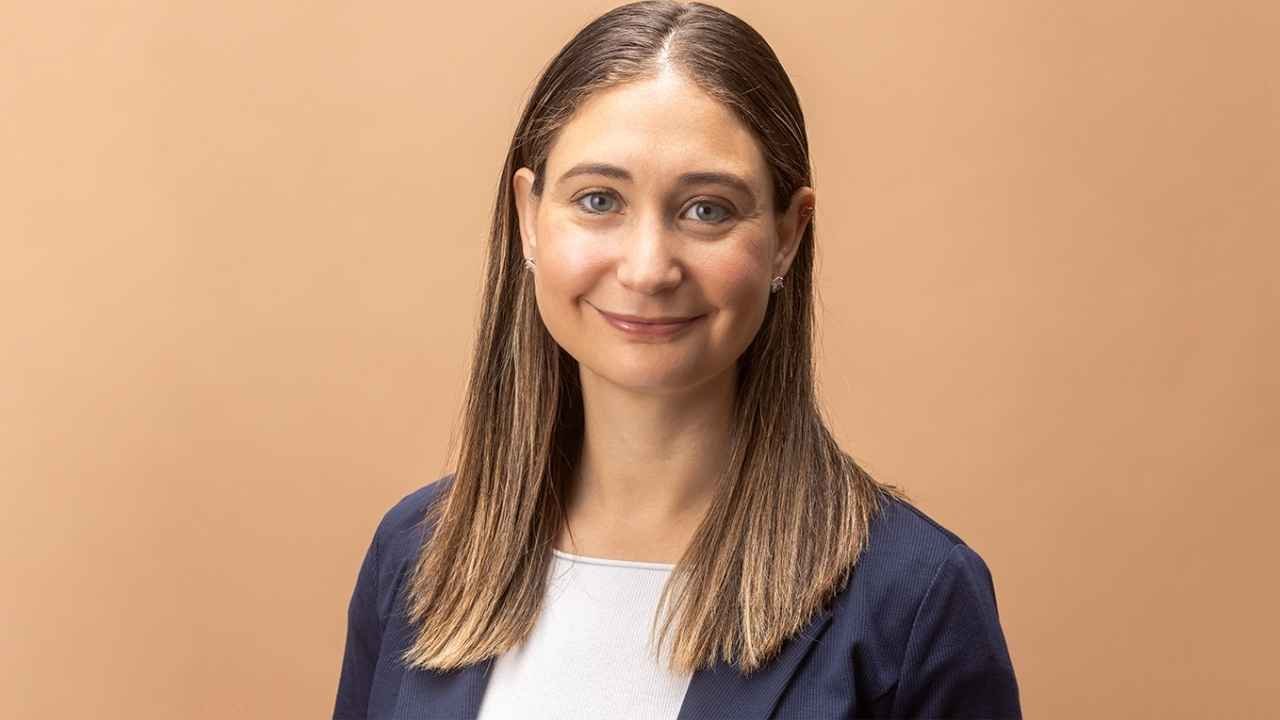
Daniela Amodei is one of the most important people in the field of artificial intelligence, which is changing quickly. She is the President and co-founder of Anthropic, and she has helped the company become a top developer of cutting-edge AI models, especially through its Claude series of large language models. Anthropic is a public benefit corporation that puts AI safety, interpretability, and alignment with human values first. These are important values in an industry that often values speed over caution. The company has grown a lot under her leadership and that of her brother Dario Amodei (the CEO). It is now worth hundreds of billions of dollars and is a major player in the global AI race.
Profile summary of Daniela Amodei
| Attribute | Details |
|---|---|
| Name | Daniela Amodei |
| Born | 1987 (age 38–39) |
| Education | B.A. in English Literature, University of California, Santa Cruz |
| Occupation | Entrepreneur, AI Leader |
| Known For | Co-founder & President of Anthropic; former VP of Safety & Policy at OpenAI |
| Company | Anthropic (founded 2021, valued at ~$380B in 2026) |
| Industry | Artificial Intelligence, Technology |
| Previous Roles | Engineering Manager & VP at OpenAI |
| Awards | Time 100 Most Influential People in AI (2023) |
| Family | Brother: Dario Amodei (CEO of Anthropic); Spouse: Holden Karnofsky (m. 2017); 1 child |
| Parents | Riccardo Amodei (Italian leather craftsman, deceased), Elena Engel (Jewish American, project manager for libraries) |
| Net Worth | Estimated $1.2 billion (2025) |
| Location | San Francisco, California, USA |
Daniela Amodei is recognized as one of the most influential figures in AI, leading Anthropic’s mission to build safe, reliable, and beneficial large-scale AI systems like the Claude language models.
Early Life and Unusual Path
Daniela Amodei was born in San Francisco in 1987. She grew up in a family that valued curiosity about the world. Her brother Dario, who is four years older than she is, studied physics and biophysics at a higher level and eventually got a PhD from Princeton. Daniela chose a different path. She went to the University of California, Santa Cruz, where she graduated summa cum laude with a Bachelor of Arts in English Literature, along with classes in politics and music. She even got a scholarship to play the classical flute. Amodei has said over and over that she has no regrets about her choice to study the humanities, even though it might seem like it would be hard to run a cutting-edge AI company. She says in interviews that skills in ethics, communication, understanding human behavior, and interpretation are becoming more and more important in a world where AI is taking over. This is because technical models are great at STEM tasks but not so good at making nuanced judgments.
This wide range of experiences showed in her early career. After college, Amodei worked on global health issues and in politics. He helped a congressional campaign in Pennsylvania win. She worked for a short time as a communications manager for Matt Cartwright, a U.S. House Representative from Washington, D.C. These experiences helped her improve her skills in policy, risk assessment, and communication within organizations—skills that later turned out to be very useful in tech.
Net Worth
Daniela Amodei’s current net worth is estimated at $7 billion (as of March 2026), according to Forbes’ real-time billionaire tracker. She ranks among the world’s wealthiest individuals, largely due to her role as co-founder and president of Anthropic, which was recently valued at around $380 billion.
Stripe and OpenAI: Moving to Tech
In 2013, Amodei switched to the private sector and became one of the first employees and a founding recruiter for fintech unicorn Stripe. She moved up to jobs in risk management, where she was in charge of underwriting, user policy, and core operations. During this time, she learned how to grow companies quickly while keeping trust, safety, and ethical issues in mind. These would be important in her later work in AI.
She moved to OpenAI in 2018, where she first led teams working on GPT-2. She became Vice President of Safety and Policy (sometimes called VP of Operations) and focused on making sure that powerful models were used in a responsible way. While she was at OpenAI, her brother was also there as a key researcher on GPT models. But in late 2020, both siblings and several coworkers left because they didn’t agree on the organization’s direction, especially how to balance quick progress with safety.
Founding Anthropic: A Promise to Use AI Responsibly
Daniela and Dario Amodei started Anthropic in 2021 with five other people who used to work at OpenAI. The company was set up as a public benefit corporation on purpose so that long-term benefits to society would be part of its charter. Daniela became President and was in charge of the company’s day-to-day operations, go-to-market strategy, policy engagement, organizational development, and teams working on AI safety and model alignment. Dario’s main interests were technical vision, research, and strategy.
The Claude family of models, which is Anthropic’s main product, stresses being “helpful, honest, and harmless.” The company was the first to use methods like constitutional AI, which makes sure that models follow clear rules to cut down on harmful outputs. Amodei has been in charge of turning Dario’s technical vision into real-world rules for how things should work, making sure that safety is a top priority. By 2026, Anthropic had raised a lot of money, gotten reports that its value was over $350–380 billion, and hired more people and built more infrastructure, including new offices in downtown San Francisco.
Leadership Philosophy and Thoughts on the Future of AI
Amodei often talks about the human aspects that stay the same as AI gets better. In interviews with ABC News and Fortune in 2026, she stressed that as AI takes on more technical tasks, traits that are unique to humans, such as compassion, kindness, curiosity, high emotional intelligence, and moral reasoning, become more important. She supports teaching the humanities, saying that it will be “more important than ever” because AI makes it even more important for people to be able to understand context, navigate values, and communicate clearly.
She has also talked about how AI could affect society, like how it could take jobs away from people (especially entry-level white-collar jobs) and how it could be dangerous for kids if they use it too much. Anthropic’s method is different from that of its faster-moving competitors because it puts responsible scaling and enterprise-focused deployment first. Amodei has said that 2025 will be a “proof of concept” year for AI agents and 2026 will be a year when they have an effect on the real world. However, he has been careful about using them for military or surveillance purposes, as seen in reports of tensions with the Pentagon.
Influence and Legacy
Daniela Amodei is now a well-known voice for ethical AI development at the age of 39 in 2026. She is on lists like TIME’s 100 Most Influential People, and she shows how people from non-traditional backgrounds can become great leaders. Her marriage to Holden Karnofsky, a well-known AI safety expert, connects her even more to the larger communities of effective altruism and safety.
Amodei is still working for AI that helps people without putting their safety at risk through Anthropic. Her path from being a literature major to being the president of AI shows that different points of view are important for shaping the future of technology. As AI gets better, leaders like her remind us that progress should be based on human values. This way, new ideas can help people instead of hurting them.
FAQs
Who is Daniela Amodei?
Daniela Amodei is an American businesswoman and the President and co-founder of Anthropic, the AI safety and research company that makes the Claude family of large language models. She started Anthropic in 2021 with her brother Dario Amodei (the CEO) and a few other former OpenAI coworkers. The company’s main goals are to develop AI in a responsible way, make it safe, and make sure it aligns with human values.
How old is Daniela?
She was born in 1987, so she is now 38 or 39 years old.
What kind of school did she go to?
Amodei got a Bachelor of Arts in English Literature from the University of California, Santa Cruz, where she also studied politics and music. She got scholarships to play the classical flute and has never regretted her humanities-focused education. She says it gives people important skills like interpreting, ethics, and understanding how people act in a world driven by AI.
What did she do for a living before Anthropic?
She worked in global health and politics after college. She was a communications manager for U.S. Representative Matt Cartwright and then joined Stripe in 2013 as one of the first employees and a founding recruiter. Later on, she was in charge of operations, user policy, and risk management at Stripe. She joined OpenAI in 2018, where she led teams during the development of GPT-2. She then became Vice President of Safety and Policy before leaving in late 2020.
What made her leave OpenAI to start Anthropic?
She left with her brother Dario and others because they didn’t agree on the direction of OpenAI, especially how to balance the need for quick progress with safety and alignment concerns. Anthropic started as a public benefit corporation to put long-term benefits for society, AI interpretability, and responsible growth ahead of speed that isn’t controlled.
What does she do at Anthropic?
As President, she is in charge of the company’s day-to-day operations, go-to-market strategy, policy engagement, organizational development, AI safety teams, and model alignment efforts. She takes the company’s technical vision and turns it into rules that people can follow. Dario, on the other hand, is more focused on research and strategy.
What are some of her main thoughts on AI?
Amodei says that AI is great at technical and STEM tasks, so uniquely human traits like compassion, emotional intelligence, ethical reasoning, curiosity, and skills in the humanities become even more important. She has talked about the dangers of AI, like how it could take away jobs (especially entry-level white-collar jobs) and hurt kids if it isn’t controlled. She says that we should understand AI “under the surface,” use it responsibly, and be careful when it comes to military uses. Anthropic believes in “doing more with less,” which means that they focus on getting the most out of each compute dollar instead of brute-force scaling.
What recent events have happened with her or Anthropic (as of early 2026)?
Anthropic has grown a lot, serving over 300,000 business customers and seeing strong revenue growth (mostly from businesses). Amodei has talked about the growing importance of the humanities, the real-world effects of AI agents, and the company’s disciplined approach in interviews with ABC News, Fortune, and CNBC. There have been disagreements with competitors like OpenAI over issues like safety, military partnerships, and ethics.
Is she married or does she have family in AI?
Holden Karnofsky, a well-known figure in AI safety and effective altruism, is her husband. He is also the co-founder of Open Philanthropy. Dario, her brother, is the CEO of Anthropic, so they are a sibling leadership team in the field.
Has she gotten any awards or honors that stand out?
She has been on important lists, like TIME 100 in AI, and is known for her work in shaping the development of ethical AI. Because of her unusual background, people have talked about different ways to lead cutting-edge AI companies.

Digital entrepreneur and content expert I help businesses with AI, SEO and the latest tech trends. I started Silicon Valley Weekly to make complex tech concepts easy to understand and use for business growth. I know a lot about systems and help startups, entrepreneurs and brands navigate the fast-changing world of tech and online marketing.
I build strategies that use data, search optimization, content marketing and AI tools to get visibility, engagement and revenue. I love finding ways for businesses to grow increasing their presence and turning new ideas into successful businesses. My goal is to connect the technology, with practical business use so brands can succeed online.