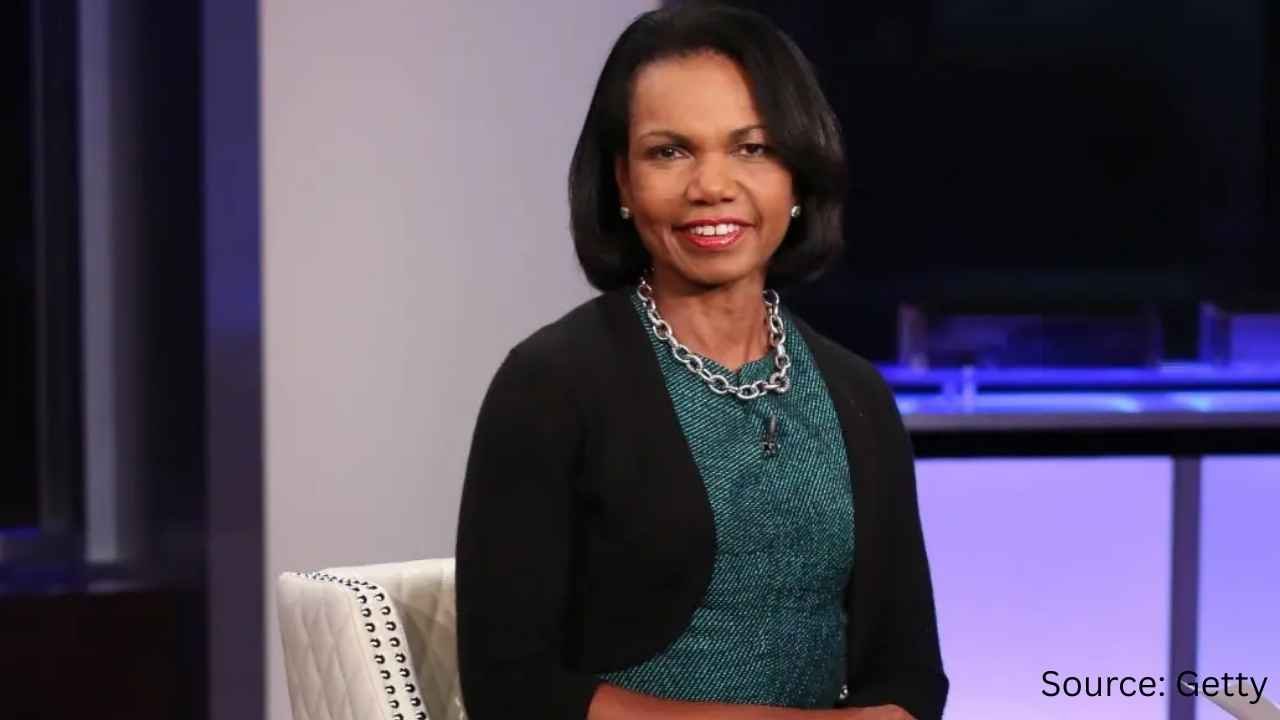
Condoleezza Rice was born on November 14, 1954, in Birmingham, Alabama. At the time, the South was very racially segregated. Her worldview and strength were shaped by growing up in a city that was deeply affected by the civil rights movement. Her parents, who were both teachers, taught her the importance of discipline, faith, and doing well in school. Her unusual first name, which comes from the Italian musical term “con dolcezza,” which means “with sweetness,” showed how much her family loved music and culture.
From a young age, Rice was very talented. She wanted to be a concert pianist at first and went to the University of Denver when she was 15. But after taking a class on international politics, she changed her mind and decided to study political science. She got her bachelor’s degree in political science and then went on to get her master’s degree from the University of Notre Dame. She went on to get her Ph.D. in political science from the University of Denver, where she focused on Soviet and Eastern European studies. This would later become the focus of her professional life.
Condoleezza Rice – Biography Table
| Attribute | Details |
|---|---|
| Full Name | Condoleezza Rice |
| Date of Birth | November 14, 1954 |
| Place of Birth | Birmingham, Alabama, U.S. |
| Education | – B.A. in Political Science, University of Denver (1974) – M.A., University of Notre Dame (1975) – Ph.D. in Political Science, University of Denver (1981) |
| Academic Career | – Provost of Stanford University (1993–1999) – Professor of Political Science at Stanford |
| Government Roles | – National Security Advisor (2001–2005) – U.S. Secretary of State (2005–2009) |
| Historic Achievements | – First African American woman to serve as U.S. Secretary of State – First woman and first African American to serve as Provost of Stanford University |
| Current Role | Director of the Hoover Institution at Stanford University (since 2020) |
| Notable Contributions | – Key figure in U.S. foreign policy during George W. Bush’s presidency – Advocated for democracy promotion and counterterrorism strategies |
| Publications | Author of several books on foreign policy, diplomacy, and her personal memoirs |
| Age (2026) | 71 years |
Stanford: A Rise in Academic Career
Rice started her career in academia as a professor at Stanford University. Her knowledge of Soviet affairs and international security policy quickly made her well-known in both academic and policy circles. People knew her for her sharp mind, clear way of speaking, and strong understanding of how to plan for global events.
In 1993, Rice became Stanford University’s Provost, making her the first African American and the first woman to hold the job. As provost, it was her job to keep an eye on the university’s budget and academic programs. Her leadership style was a mix of being decisive and planning ahead, which made her reputation as a good administrator even better.
Her time at Stanford not only improved her academic credentials, but it also made her a respected voice in discussions about foreign policy.
Getting into National Politics
Rice got involved in national politics when President George H. W. Bush was in office. She was the Director of Soviet and East European Affairs on the National Security Council. During this time, she was very important in giving advice on U.S. policy as the Cold War came to an end and the Soviet Union broke up.
Her knowledge of Soviet affairs was very helpful during this time of change in world politics. She worked closely with high-ranking officials to deal with the difficulties of U.S.-Soviet relations and the reunification of Germany.
After spending a few years back in school, Rice came back into the public eye during George W. Bush’s 2000 presidential campaign, where she worked as his foreign policy advisor.
Condoleezza Rice’s financial profile is a bit nuanced. Here’s a structured snapshot:
Condoleezza Rice – Net Worth (2026)
| Source of Wealth | Details |
|---|---|
| Estimated Net Worth | At least $2 million (based on SEC filings and stock holdings) |
| Corporate Roles | – Director at Dropbox Inc (owns ~56,407 shares, worth over $1M) – Director at C3.ai Inc (owns ~74,974 shares, worth ~$951K) |
| Academic Role | Director of the Hoover Institution at Stanford University (since 2020) |
| Other Income | Public speaking, book royalties, consulting engagements |
| Conflicting Reports | Some outlets have claimed she is among the “highest-paid politicians” with earnings of ~$75M in 2026, but this report has been flagged as false |
Key Takeaway
Her verified net worth is around $2 million, primarily tied to stock holdings and her academic/board positions. Claims of tens of millions are not supported by credible financial filings.
National Security Advisor from 2001 to 2005
After George W. Bush was elected in 2000, Rice became the National Security Advisor in 2001. She was the first African American woman to get this important job. The terrorist attacks of September 11, 2001, which were some of the most important events in modern American history, happened while she was in office.
After 9/11, Rice was a key figure in shaping U.S. foreign policy. She played a big role in making the Bush administration’s strategy for fighting terrorism and the larger “War on Terror.” This included sending troops to Afghanistan and then to Iraq.
Her time as National Security Advisor was both important and controversial. Supporters praised her for her strategic leadership during a national crisis, while critics questioned the administration’s intelligence assessments and decisions leading up to the Iraq War.
Here’s a structured overview of Condoleezza Rice’s most notable achievements:
Condoleezza Rice – Key Achievements
| Category | Achievement |
|---|---|
| Government Leadership | – 66th U.S. Secretary of State (2005–2009) under President George W. Bush – 19th U.S. National Security Advisor (2001–2005) |
| Historic Firsts | – First African American woman to serve as U.S. Secretary of State – First woman to serve as National Security Advisor – First African American and first woman Provost of Stanford University |
| Academic Contributions | – Provost of Stanford University (1993–1999) – Professor of Political Science at Stanford – Director of the Hoover Institution (since 2020) |
| Foreign Policy Impact | – Played a central role in shaping U.S. foreign policy post-9/11 – Advocated for democracy promotion and counterterrorism strategies – Key figure in U.S. relations with Russia, the Middle East, and Europe |
| Recognition & Influence | – Ranked among the most powerful women in the world during her tenure – Frequently listed in “Most Influential People” rankings |
| Publications | – Authored books including No Higher Honor: A Memoir of My Years in Washington and Extraordinary, Ordinary People (her autobiography) |
Condoleezza Rice’s career is remarkable not only for her government service but also for breaking barriers in academia and diplomacy.
Secretary of State from 2005 to 2009
In 2005, Rice took over as U.S. Secretary of State from Colin Powell. She was the second woman and the first African American woman to hold this position. She was the country’s top diplomat, and her job was to push for democratic changes and make alliances stronger.
Rice pushed for what she called “transformational diplomacy,” which meant using America’s diplomatic power to push for political and economic changes around the world. She traveled a lot and met with leaders from Europe, the Middle East, Asia, and Africa.
While she was in office, she worked on things like North Korea’s nuclear program, peace talks in the Middle East, and fixing diplomatic ties that had been damaged by the Iraq War. Even though her policies were very similar to those of the Bush administration, she wanted to put more emphasis on diplomacy along with military action.
Political Philosophy and Style of Leadership
People often say that Condoleezza Rice is practical, disciplined, and strategic. Her political beliefs are a mix of conservative ideas and a strong belief that the United States should lead the world. She has always said that spreading democratic values around the world makes the world safer and more stable for the United States.
People know Rice for being calm and smart. Even during heated political debates, she kept her cool and spoke clearly. Her background as a scholar affected how she thought about making policy.
Even though she is connected to the Republican Party, she has sometimes taken moderate stances on social issues, focusing on civic duty, immigration reform, and education reform.
After the Government Career
Rice went back to Stanford University in 2009 after leaving public office. There, she taught political science and public policy. She still teaches, writes, and talks about world events in public.
Rice has been on the boards of many businesses and nonprofits, where she has shared her knowledge of governance and international strategy. She has also written books with other people about her personal journey and foreign policy, which give readers a look at what it’s like to work at the highest levels of government.
She has also stayed involved in bipartisan efforts to improve education and help young people grow. Her dedication to expanding educational opportunities shows how much she has always believed in the power of education to change lives.
Personal Interests and How Others See You
Condoleezza Rice is a talented pianist who has played with famous musicians outside of politics. Her love of classical music is still a big part of who she is. She also loves sports, especially American football, and has shown a lot of interest in sports management and leadership.
Rice’s public image is complex; she is seen as a pioneer who broke down racial and gender barriers in American politics. She has inspired many young leaders because she is one of the most well-known African American women in government.
People are also talking about her legacy because of her ties to the Iraq War and other foreign policy decisions that weren’t very popular. Still, it’s clear that she had a big impact on American foreign policy in the early 21st century.
Historical and Legacy Importance
Condoleezza Rice’s career shows how far she has come, from Birmingham, where she was segregated, to the top of the American government. Her life story is full of examples of hard work, intelligence, and helping others.
She was the National Security Advisor and Secretary of State during a key time in U.S. history. She helped shape how the U.S. responded to terrorism, nuclear proliferation, and changing geopolitical alliances. Her effect on American diplomacy and security policy is still important, even if people praise or criticize her.
Historians are still figuring out what her legacy will be as they look at the long-term effects of the policies she helped create. But she will always be remembered as a trailblazing African American woman who held important leadership positions around the world.
Conclusion
Condoleezza Rice is one of the most important American policymakers of her time. Her career shows how scholarship and statecraft can work together, from academia to the White House and back to the university. Her story is about how she was ambitious, strong, and determined even when things were hard and there were chances to do well.
Rice is still shaping conversations about democracy, security, and America’s place in the world through her leadership, advocacy, and ongoing public engagement.
Frequently Asked Questions
1. Who is Condoleezza Rice?
Condoleezza Rice is an American political scientist, diplomat, and professor who served as the U.S. National Security Advisor (2001–2005) and U.S. Secretary of State (2005–2009) under President George W. Bush. She was the first African American woman to serve as Secretary of State.
2. When and where was she born?
She was born on November 14, 1954, in Birmingham, Alabama, United States, during the era of racial segregation in the American South.
3. What is her educational background?
Rice earned her bachelor’s degree in political science from the University of Denver, her master’s degree from the University of Notre Dame, and her Ph.D. in political science from the University of Denver, specializing in Soviet and Eastern European studies.
4. What role did she play after the 9/11 attacks?
As National Security Advisor at the time of the September 11, 2001 attacks, Rice played a central role in shaping the U.S. response, including strategies related to counterterrorism and the War on Terror.
5. What is “transformational diplomacy”?
“Transformational diplomacy” was a term Rice used during her tenure as Secretary of State. It referred to a strategy focused on promoting democracy and political reform around the world to enhance global stability and U.S. security.
6. Was Condoleezza Rice involved in the Iraq War decision?
Yes. As National Security Advisor and later Secretary of State, she was part of the Bush administration’s leadership during the Iraq War. Her role in the decision-making process has been both supported and criticized by different political groups.
7. What did she do before entering high-level politics?
Before serving in the White House, Rice was a professor of political science at Stanford University. She later became the university’s provost—the first woman and first African American to hold that position.
8. What did she do after leaving government office?
After leaving office in 2009, Rice returned to Stanford University as a professor. She has also served on corporate boards, written books, and remained active in public policy discussions.
9. Is Condoleezza Rice involved in sports?
Yes. She is a known sports enthusiast, especially of American football. She has served on sports-related committees and has been involved in leadership roles connected to football organizations.
10. Is she a musician?
Yes. Rice is a classically trained pianist. She once considered a career in music before switching to political science and has performed publicly on several occasions.
11. Has she ever run for president?
No, Condoleezza Rice has never run for president, although her name has occasionally been mentioned in political discussions as a potential candidate.
12. What is her historical significance?
Rice is historically significant as the first African American woman to serve as U.S. Secretary of State and one of the most influential policymakers of the early 21st century. Her leadership during a pivotal period in American history has made her a prominent figure in global politics.