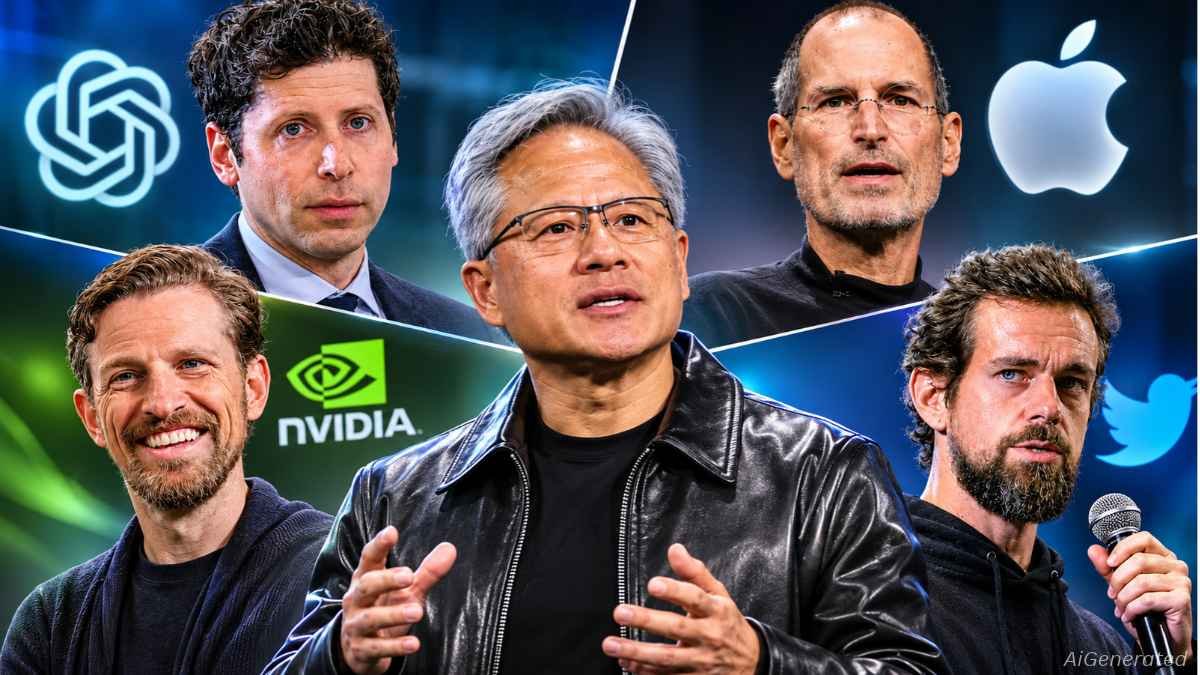
While corporate leadership rarely goes smoothly, even top founders and CEOs can be ousted. However, some executives have found themselves making a comeback. The recent situation with Nvidia CEO Jensen Huang and the calls for him to return have thrown the idea of the ‘comeback CEO’ (or ‘boomerang CEO’) into the spotlight. There are many examples of CEOs who have made a comeback, having been ousted from their position, stepping down or pursuing new opportunities. From major tech companies to global consumer brands.
This demonstrates that just because a CEO is ousted it does not always mean they lose all influence. Often there will be situations where circumstances change within the business, staff loyalty, investor pressure and poor succession planning can provide an opportunity to make a comeback.
Jensen Huang and the Growing Conversation Around Nvidia
All eyes are now on Nvidia’s management after news that Jensen Huang may be leaving the company but could make a return. Supporters and fans of the company are now wondering if there will be a change in this area in the future.
Huang’s link to the company is an important factor here. He was a co-founder of the company and has been very influential in making it a leader within graphics and artificial intelligence computing.
Whether he returns will depend on many factors such as how confident the board will be, corporate governance and whether shareholders support him. This shows us the complex relationship between having a founder and the company’s decision. It will inevitably make people think of other executives who have faced huge changes in their careers.
Steve Jobs: The Most Celebrated Comeback in Corporate History
The most iconic case of this is Steve Jobs. In 1985, Jobs left Apple due to a conflict with then CEO John Sculley. However, he formed his own company called NeXT which specialised in developing sophisticated computer systems. In 1997, Apple bought NeXT and Jobs returned to the company. Initially he was appointed as the Interim CEO. During his second time at Apple he completely transformed the company with innovative products such as the iMac, iPod and iPhone. His return showed how a founding vision with increased strategic discipline can transform an entire industry.
Sam Altman: OpenAI Reversed Its Decision Within Days
Sam Altman is one of the greatest leaders to experience such reversal in leadership in the technological world today. Altman was removed from the CEO role in OpenAI in November 2023 for reasons of poor communication with board members. It led to a state of confusion, and the employees were very reluctant to accept the situation and even threatened to leave the organisation. Altman was also offered the leadership position in the research advanced AI team by Microsoft. But after negotiations, the situation was reversed. A few days later, it was announced that Altman had been reinstated to the CEO position together with the formation of a new board.
Jack Dorsey: Twitter’s Co-Founder Returned to Leadership
Jack Dorsey is another good example of a founder returning to their position. In 2008, Jack Dorsey was removed from his role as CEO of Twitter with Evan Williams taking over as CEO. This was due to issues with his management style and questions around his operational focus. However, Jack was still involved in the company and was made interim CEO in July 2015. Within a few months in October 2015, he became permanent CEO. He remained as CEO of Twitter until 2021 when he stepped down and put Parag Agrawal in his place. The journey that Jack Dorsey took shows that having an early setback as a founder doesn’t mean you will lose any long term influence on the company.
What Makes a Corporate Comeback Possible?
Although they have different experiences, there are some common themes to why these leaders have been successful in returning to executive positions. These include:
– Founders often have strong relationships with their employees, investors and businesses. Former founders will therefore have a lot of influence.
– Shareholders can have an influence on the board when current leadership is not performing to the level they expect.
– If the new leadership is not performing well it can be encouraging for organisations to return to former leadership.
– Returning leaders will know more about the company culture, products and long term challenges than an external candidate.
A leader with an established track record can become very valuable in uncertain times.
The Final Word: Can Jensen Huang Join the Comeback Club?
Although Jensen Huang’s situation is a key example of good corporate governance, the Reuters article published on the 16th November shows that the Nvidia board are not looking to bring him back in, despite rumours that he has been discussing returning with his associates. This highlights that just because you have public backing for a founder, it doesn’t mean the board will want them back.
Whilst stories such as Steve Jobs, Sam Altman and Jack Dorsey show that it is possible to make a comeback in a company, it is rarely guaranteed. To successfully return to a company you need to regain trust and have a good reason for coming back. You need to be confident that those making decisions about the future of the organisation will have confidence in you.

Digital entrepreneur and content expert I help businesses with AI, SEO and the latest tech trends. I started Silicon Valley Weekly to make complex tech concepts easy to understand and use for business growth. I know a lot about systems and help startups, entrepreneurs and brands navigate the fast-changing world of tech and online marketing.
I build strategies that use data, search optimization, content marketing and AI tools to get visibility, engagement and revenue. I love finding ways for businesses to grow increasing their presence and turning new ideas into successful businesses. My goal is to connect the technology, with practical business use so brands can succeed online.