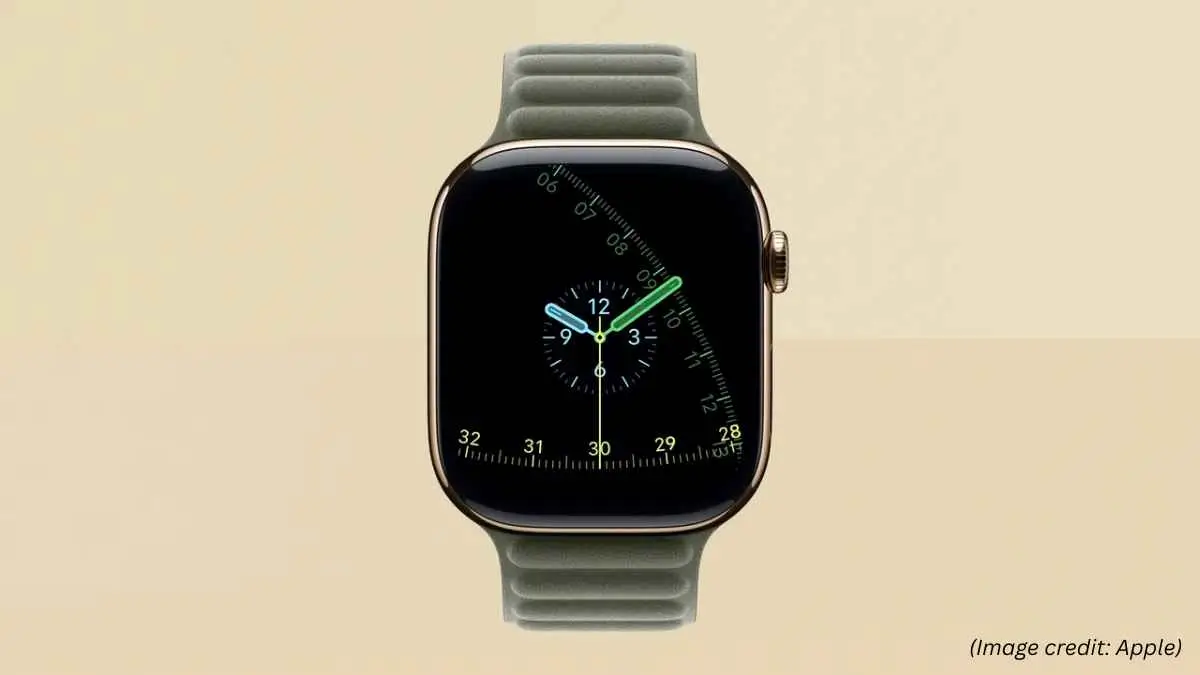
Apple Watch Series 12 Release date: September 18, 2026 Price at launch: $399 Design: Classic shape The story of the Apple Watch Series 12 this year is really a story of what Apple has done to the data on your wrist. The shape of the watch is the same as it’s always been.
Design that tries not to be different
You’d never know if you passed someone wearing a Series 12 on the street. The case shape, Digital Crown and side button are the same as the Series 11. Both the aluminum and titanium models measure the same at a slim 9.7mm thin, with only the returning ceramic option slightly thicker at 9.85mm — a difference that’s not noticeable on the wrist.
The big materials news is the ceramic option, the first time Apple has offered the finish since the Series 5 era, available in Pearl White and Nite Blue, aimed squarely at customers wanting their watch to read more as jewelry than gadget. The aluminum lineup includes black, space gray, light gold and dark bronze in its slate of colors.
The most significant structural upgrade to the aluminum models is Ceramic Shield 2 on the display glass, which Apple says is much tougher than the Ion-X glass it replaces. Water resistance remains at 50 meters with IP6X dust protection—more than enough for swimming, showers and the outdoors, but deep-diving ratings are reserved for the Apple Watch Ultra 4. The build quality is what you’d expect from an Apple Watch at this point: solid, comfortable and well finished.
The Display Stands Its Ground
The screen hasn’t changed either, which is fine, it didn’t need to. The 46mm model’s display reaches 2,000 nits in bright sunlight and drops to a single nit at its lowest — ranging from outdoor legibility to nighttime discretion. There’s no new panel tech in this generation, and there’s no real difference in what you see from the Series 11. Well that’s been a non-issue for a few generations of users now, and that’s true for here.
The S11 Chip: The Heart of Everything
The S11 is the first major chip refresh since the S9 and its main job is to enable the denser health sensing platform without compromising battery life. Apple claims that it has a faster CPU, GPU and Neural Engine, along with a dedicated always-on processor that performs ongoing background tasks – such as monitoring heart rate every five seconds – without adding that workload to the main system.
The Series 12 feels responsive and fluid in general use, and the jump is most obvious coming from a Series 9 or earlier. The new listening features in the Series 12 depend on a new hardware-isolated Secure Exclave to perform on-device audio processing, which is Apple’s architectural response to privacy concerns for an always-listening wearable.
Health Sensing: It’s the Entire Point of This Watch
This is where the Series 12 justifies its existence as a separate product. The back of the watch has been redesigned with a second-generation electrical heart sensor, repositioned photodiodes in a ring configuration, larger green LEDs to improve the quality of the optical signal, and a larger electrode area for the ECG readings. The end result is continuous heart-rate monitoring every five seconds throughout the day — a dramatic increase in resolution over the periodic sampling previous models relied on when the wearer was stationary.
Heart rate variability tracking has been split into two distinct metrics: Recovery HRV tracks short-term signals that can be linked to stress and fatigue, and Overall HRV that provides a longer-term view of cardiovascular trends. In addition to better daytime vitals classifications, a Series 12 owner has a meaningfully richer data picture than any previous Apple Watch.
The headline feature is the new Readiness score — a 0-to-10 daily readiness score that takes into account sleep quality, overnight vitals, activity load, and both heart rate and HRV data to tell you how ready your body is to perform. It runs from Recover at the bottom to Go For It at the top across four tiers, and unlike rivals it updates all day as new data flows in, rather than setting a verdict in the morning.
The larger competitive point is that Apple is providing Readiness scores and trend data for free, without a subscription, which puts some serious pressure on the Oura Ring and Whoop, both of which are charging ongoing fees for similar recovery insights. New users should expect a calibration window, as the score won’t make sense until after a baseline period of about seven nites of sleep has been recorded.
Battery: The Eternal Problem
The 24-hour battery rating remains the same as the Series 11 – a testament to the efficiency of the S11 chip and a source of ongoing frustration. The chip is doing a lot more work all the time, and Apple has not gone backward with the battery life. “That is really impressive from an engineering point of view. But it doesn’t change the fact that the Apple Watch is still a daily-charge device in a category where multi-day endurance has become increasingly commonplace.
The one practical bright spot is fast charging. A 15-minute charge will now get you up to 12 hours of use, and just five minutes will power you through a full nite of sleep tracking. If you’re the type to sleep in your watch and top it up with short windows in the morning and evening, this is a real quality of life upgrade. The outdoor workout stamina has also been extended to 10 hours, which is a nice step up for the long distance runner or hiker.
Software: watchOS 27 and Audio Intelligence Question
Series 12 ships with watchOS 27, which re-arranges the app experience around Siri-suggested apps and brings new one-handed gestures for Smart Stack widget navigation and alert dismissal without having to reach for the Digital Crown. The refinements are incremental, but sensible.
Larger, more controversial additions are to Audio Intelligence. Always-listening features enable everything from Live Rewind, which offers a short text summary of audio from the last 15 seconds, to Sound Recognition, which can notify wearers of certain sounds, like sirens, doorbells, or alarms. Apple has been mindful in its privacy architecture — audio is handled solely within the Secure Enclave, never accessed by apps or the OS, and is immediately deleted. All features are opt-in. It’s a better engineering design that most rivals have been able to implement, but whether the technical protections are enough to comfort wearers in always-listening hardware is something that people will differ on.
The redesigned Health app, featuring Apple Intelligence-powered Insights, a Longevity tab, and a Health Age metric, is in beta and expected to be released later this year, alongside an optional flat-fee Quest Diagnostics lab panel that covers more than 50 biomarkers. If and when they do come, these additions would make the Apple Watch ecosystem a much more complete health platform.
Decision
The Apple Watch Series 12 is the most capable health wearable Apple has ever made and the addition of the Readiness score, without the need for a subscription, gives it a real case against dedicated recovery trackers. The combined changes — denser health sensing, new chip, faster charging and the full watchOS 27 feature set — are enough to justify the price for anyone upgrading from a Series 9 or older.
For Series 10 or 11 owners, it’s a tougher call: the sensing improvements are real, but the design is the same, the battery rating is the same, and this is an incremental step, not a generational one. The Apple Watch Series 12 doesn’t reinvent the smartwatch. It gets a lot more serious about the one thing Apple has always said was its reason for existing.

Digital entrepreneur and content expert I help businesses with AI, SEO and the latest tech trends. I started Silicon Valley Weekly to make complex tech concepts easy to understand and use for business growth. I know a lot about systems and help startups, entrepreneurs and brands navigate the fast-changing world of tech and online marketing.
I build strategies that use data, search optimization, content marketing and AI tools to get visibility, engagement and revenue. I love finding ways for businesses to grow increasing their presence and turning new ideas into successful businesses. My goal is to connect the technology, with practical business use so brands can succeed online.