Being sure of yourself is the key in Street Fighter and the new movie makes it clear how difficult it is to transfer that to the big screen.
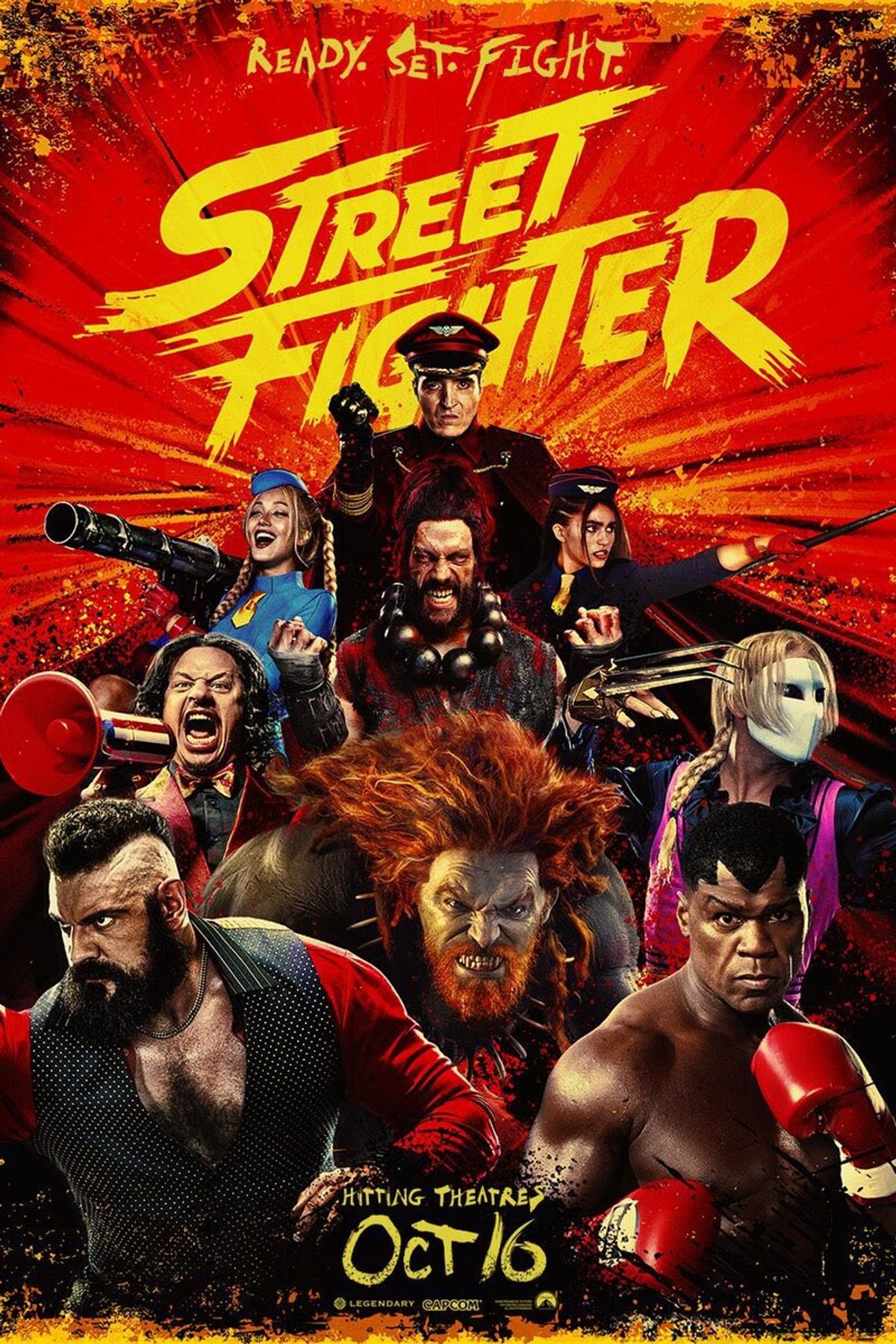
Street Fighter from 2026, directed by Kitao Sakurai and lasting for two hours, is the third live-action movie in the franchise by Capcom. Two previous movies can hardly be considered something impressive. The 1994 movie starring Jean-Claude Van Damme and the 2009 film with Chun-Li are not really successful and anyone who expected the third one to be better will need to lower his expectations. It is not, though it fails in an instructive manner.
Start with the numbers, since those are the least complicated pieces. The film debuted at $31 million at home, captured the number one slot, and earned another $20.1 million internationally to earn a $50.1 million global debut. This was the best domestic opening ever for a film in this franchise, even if the bar was quite low. In fact, it outperformed the domestic openings of both previous live action films combined. This is not a great start for a co-production by Legendary and Capcom at $82 million, with Paramount simply handling distribution. Estimates put the break-even at about $205 million worldwide, and that means the film needs to run well for it to pay off. Even a $51 million opening will not ensure that. Comparisons to Mortal Kombat II, which ended up with $129.5 million worldwide, are already being made.
There is also the issue of the reviews. The movie received a 42% rating on Rotten Tomatoes by critics and 72% by regular audiences. This is the true story here. There is an established pattern in game-to-movie adaptations where critics react to the movie as a movie and fans to how much it reminds them of the game. One of the things some of the not-so-favorable reviews mentioned was the disjointed plot and poor dialogue. The other camp was more positive about certain casting choices.
This conflict should not be overlooked since it is the core of the film. Fighting movie cannot be characterized by its storyline, which exists in a novel. Fighting movie has its roster, some rules, and atmosphere: tournament, competitions, and connection of the special move. The premise about Chun-Li inviting Ryu and Ken to participate in the World Warrior Tournament is acceptable. It provides some plot and structure, explaining why characters take part in the tournament. However, it is just a premise and not the story. And two hours seem to be too much if there is no need in the scenes between battles.
One of the aspects that needs some attention is the movie’s cast because it tells something about the ambitions of this work. In particular, this film brings together actors with traditional qualifications for the role of a lead actor like Noah Centineo and Andrew Koji, wrestlers such as Roman Reigns and Cody Rhodes, the rapper and producer 50 Cent, and Jason Momoa, who was also one of the producers of this movie. All of the above-mentioned people are chosen quite purposefully to create spectacular elements. It is a film which strives to become an event more than a work of art. However, there is also the fact that this film relies on casting rather than on a decent screenplay.
What lessons should the studio learn from this experience? The sequel issue will ultimately come down to two contradictory factors. First, there is the issue of the audience. Fans came to see the movie, and a debut weekend like this can certainly not be overlooked. Second, there is the matter of the budget, which demands high performance from the movie over time. Should the movie succeed, then a sequel might make sense. However, if it performs poorly, it means that games attract only one-time attendance.
In my opinion, the film’s strongest case for a sequel is actually its most cautionary one. It shows that the franchise has staying power even if it fails to meet the standard of quality that could sustain such interest indefinitely. Sequelizing a film based on this formula would mean betting on consumers’ continuing desire to receive acknowledgement. This approach seems to become riskier each time in history.
The most successful movie adaptations are not those which merely translate the video game into cinematic terms. Instead, the film must find the element of the game that it cannot deliver, the point of view, the reason why we should care who wins. Street Fighter knows the moves. It still needs to find the reason to fight.