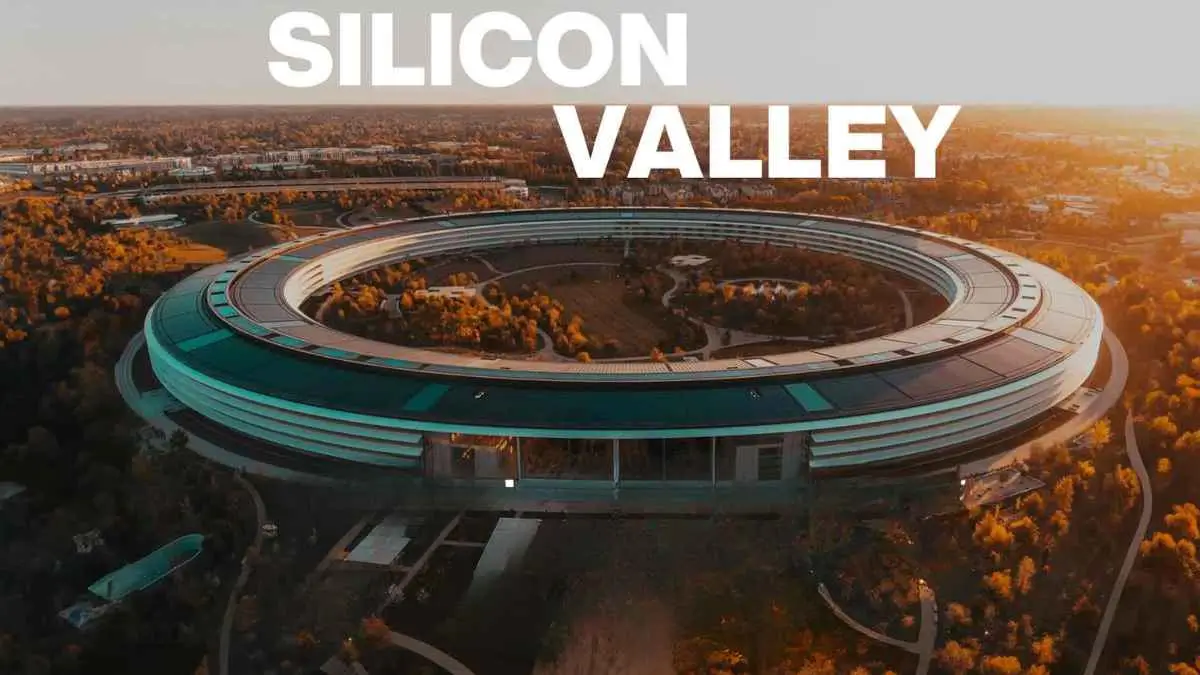

Around the world, regional technology hubs are studying the theories on how to use the “Silicon Valley ecosystem” to improve their capacity for semiconductors and computing. The original Northern California system involving concentration of qualified personnel, financing based on risk-taking, collaboration of industry with universities, as well as unreserved acceptance of failure in ideas while securing the rights for intellectual property is still an example to follow. However, simply copying it is not working properly. Only selective adaptation of the elements of the Silicon Valley ecosystem with local advantages can lead to successful results in development of semiconductors.
The Enduring Elements of the Framework
The early accomplishments of Silicon Valley all belonged to the deliberate model of the industrial park developed by Stanford University, the federal spending on research, and the readiness of engineers to leave traditional companies in order to found new ones. In order to achieve this, a modular specialization has emerged, characterized by activities of fabless companies, and pure-play foundry operations, and developed venture capital markets and rapid knowledge spillovers.
Governments have sought to recreate this combination by establishing science parks, offering tax incentives, forming research organizations, and distributing talent visas. The Global Innovation Hubs Index and its analogues still place San Francisco’s and San Jose area’s business models at the forefront, while also demonstrating the rising competition in the form of Guangdong-Hong Kong-Macao Greater Bay Area, Singapore, Seoul, and Beijing.
The most valuable fact is not the moniker or property development itself but rather the insistence on the co-location strategy in regard to research, design, suppliers, and customers; the existence of skilled mobile labor force; and the establishment of the so-called anchor that provides its products, knowledge, and know-how to smaller enterprises. Without the above-mentioned components, science parks will eventually become
Semiconductors as the Ultimate Stress Test
The production and design of semiconductors show the limitations of ease of imitation. Cutting-edge fabrication entails investment of tens of billions of dollars, the requirement of specialized gases and chemical substances, provides secure power and water supply, as well as requires deep expertise of process engineers. For example, Hsinchu Science Park in Taiwan, which was started deliberately modeling itself on Stanford Research Park in 1980, was able to succeeded due to licensing technology by the governmental institute of research ITRI, spin off of companies (the most renowned ones being TSMC) and being situated next to significant universities.
India has clearly viewed Hsinchu as an example in developing its Dholera special investment region and associated Gujarat clusters. Officials and planners are examining its water recycling, power reliability, and talent production process while collaborating with Taiwanese companies such as Powerchip to establish a major semiconductor factory.
Although the goal seems realistic, India still needs time to build the required supporting social infrastructure, such as housing, schools, and the basic services needed to sustain the work of engineers. Singapore provides another interesting lesson; it has managed to transform itself into a high-density location for foreign wafer manufacturing and chip making companies of different caliber, producing one-tenth of the chips and almost half of semiconductor tools thanks to stable policies, special parks, and targeted R&D without trying to replicate TSMC in its geographic region.
Related:
- Character. Ai: Silicon Valley AI Startup Files for Bankruptcy
- How Silicon Valley Is Shaping the Future of Digital Transformation
- Lisa Su: The AMD CEO Shaping Silicon Valley’s AI and Semiconductor Future
- Why Silicon Valley Became the World’s Tech and Innovation Hub
On the contrary, Shenzhen and the Greater Bay Area represent a different case. Initially emerged as a manufacturing and special-economic zone, the region has become a joint hardware ecosystem focused on fast iterations and collaboration rather than formalized rules that are prevalent in the Silicon Valley.
IT Ecosystems and Softer Spillovers
Expanding in the field of information technology requires less capital and is thus easier to initiate. This is evident in Bengaluru, which has transformed from the global outsourcing sector driven by cheap labor into the center of innovative product development in the spheres of software, fintech, and AI, backed by a pool of engineering talent, growing local investments, and international venture capital funds.
The cities of Singapore and Seoul managed to rise in the list of tech cities due to stable regulations, high quality of life for modern workers, and strong partnership programs between research centers, and multinational corporations as well as startups. To promote innovation, East Asian countries have also set up special infrastructural programs designed to cluster development initiatives into Silicon Valley based innovation centers and to share technology and create partnerships afterward.
Though softer versions of innovation centers apply the same principles of talent and capital positioning, they can develop faster now that cloud technology and collaborative work has eliminated the necessity to put every team into one expensive valley.
Adaptation Beats Imitation
The hubs that have lasted the longest have hybridized. Hsinchu employed a combination of deliberate state incubation programs and private entrepreneurship to arrive at its model. Shenzhen exploited large scale manufacturing and willingness to experiment in a different institutional context. Singapore has optimized its function as a reliable high quality link in global supply chains rather than as a full-scale innovator. Similar failures in other countries—namely, various low quality and poorly managed tech parks—are usually caused by either the lack of dominant players or weak talent retention or mistaken idea that tax incentives guarantee culture establishment.
Many political struggles intensify the situation. Efforts to diversify chip supply chains and American export limitations and declared investments in Asia, North America, and parts of the Middle East create room for establishing new and flourishing regional hubs. At the same time, such collaborative facilities as Applied Materials’ R&D center worth billions of dollars in Silicon Valley itself may serve as an example of the fact that the original hub continues to evolves in the wake of foreign cooperation with leading companies like TSMC, Intel, etc.
Networked Hubs Rather Than Singular Valleys
The practical future, according to the author, will be made up of regional centers that specialize in different kinds of manufacturing, which will be linked through capital, workforce, and logistics. The growth of the semiconductor industry will advantage those countries that can develop proper infrastructure for the production and manufacturing of chips, and the development of IT will work in favor of those countries that can attract good software and AI experts within a good living environment. For success, policymakers must view the Valley model not as a recipe but as its components.
Therefore, the impact of the ongoing development of Silicon Valley models can be attributed more to the fact of selective adaptation rather than to copying per se. In cases when the adaptation is successful, the local hubs secure stable positions in the semiconductor and IT supply chains that set the foundations of the global digital network. In cases when it fails, the label remains just a marketing term.

Digital entrepreneur and content expert I help businesses with AI, SEO and the latest tech trends. I started Silicon Valley Weekly to make complex tech concepts easy to understand and use for business growth. I know a lot about systems and help startups, entrepreneurs and brands navigate the fast-changing world of tech and online marketing.
I build strategies that use data, search optimization, content marketing and AI tools to get visibility, engagement and revenue. I love finding ways for businesses to grow increasing their presence and turning new ideas into successful businesses. My goal is to connect the technology, with practical business use so brands can succeed online.