Quick Answer:
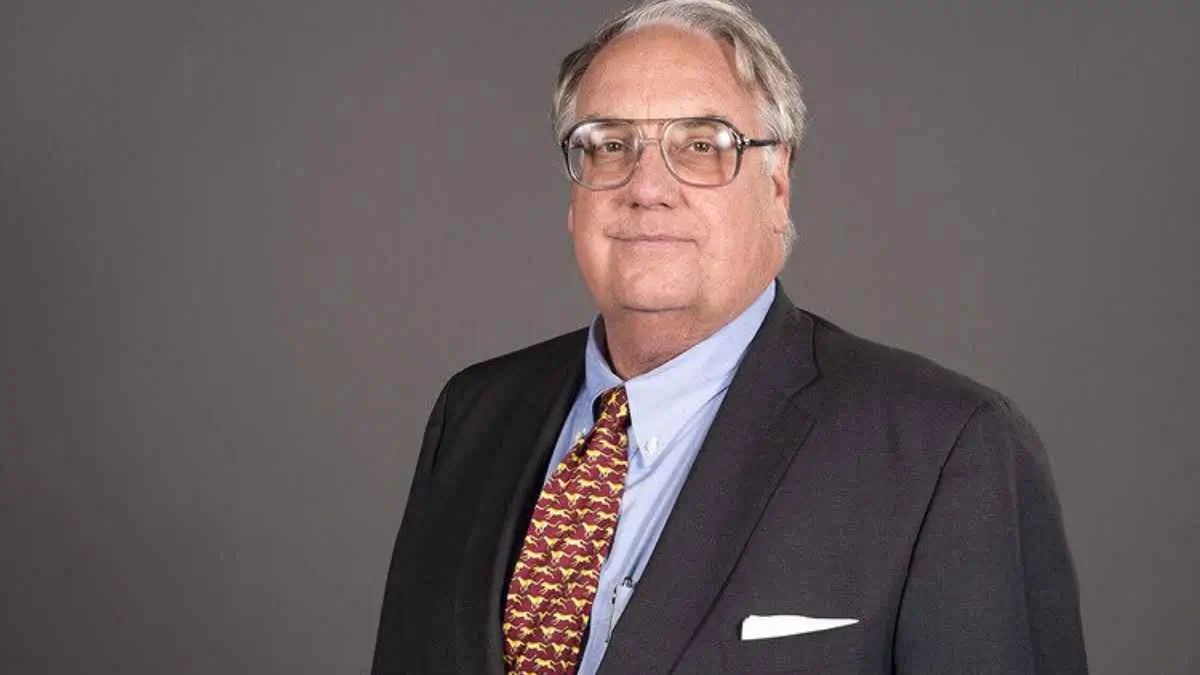
Warren Buffett has a son, Howard Graham Buffett who is a working farmer conservationist author and the chairman of the Howard G. Buffett Foundation, which is one of the world’s foremost charities that aims to end hunger in the most fragile and conflict affected parts of the world.
KEY POINTS:
- Howard Graham Buffett is a working farmer who farms corn and soybean fields in Illinois and manages agricultural operations in several countries.
- His foundation focuses on food security, water access and agriculture in conflict zones, a humanitarian intersection shunned by most large donors.
- He is co-author of 40 Chances: Finding Hope in a Hungry World, a book based on a farmer’s view of hunger around the world.
- His approach is radical proximity—that to create long-term solutions, leaders must work the field, not just fund from afar.
Introduction: The Buffett You Don’t Know
When most people hear the name Buffett, they have a specific image in mind – shareholder letters, Coca-Cola, the measured certainty of compound interest. But Warren Buffett’s middle child, Howard Graham Buffett, has spent decades crafting a public persona that deliberately inverts that image.
He is first and foremost a farmer. He raises corn and soybeans on Illinois land. He has operated farms internationally. He’s worked in conflict zones, drought-hit communities and fragile post-war states for years – not as a visiting dignitary, but one who understands crop cycles, soil degradation and water tables from the ground up.
That background lends his philanthropy unusual credibility and informs a model that is not typical big-giving.
Who Is Howard Graham Buffett?
Howard Graham Buffett (b. 1954) is the second child of Warren Buffett and the recently deceased Susan Buffett (who had two siblings, Susie and Peter respectively who would later pursue careers in music and philanthropy, but Howard developed an interest in the fields of agriculture, wildlife conservation, and policy that would lead him to pursue his own career.
He sat on the board of directors at Berkshire Hathaway, so he’s been right there with institutional governance, capital allocation and the way big organizations operate. But his more formative education was in the field, in the developing world, in conflict zones, on working farms, where mistakes have real consequences.
Howard G. Buffett Foundation
His primary tool for public work is the Howard G. Buffett Foundation, which he currently chairs. The foundation is largely financed by a substantial donation from his father to the foundation and works in dozens of countries. The foundation’s work centers on three related issues, global food security, water access, and agriculture in fragile and conflict-affected regions.
The framing is intentionally non-standard. Most large philanthropies focus their resources in stable, accessible parts of the world where results can be measured and optics are good. Howard’s foundation actively pursues the more difficult cases – communities that are in the midst of active conflict, post-war societies trying to rebuild their agricultural systems, and governments working under extreme instability.
You Might Be Interested In:
- Zhang Yiming Became Asia’s Richest Person
- Nick Solomos: The Founder of Derrimut 24:7 Gym
- Before You Leap: What Every Aspiring Entrepreneur Must Learn First
The logic is simple: food insecurity and armed conflict reinforce each other. Hunger breeds instability; instability destroys food systems. Addressing the intersection, not either factor in isolation, is among the least-funded and most consequential problems in international development.
First Farmer, Second Philanthropist
What makes Howard Graham Buffett different from many foundation chairs is his insistence on real agricultural involvement. His farming operations in Illinois aren’t ceremonial. For decades he has been actively involved in planting and harvest cycles and has expanded this internationally—most notably through farming operations in South Africa—using them as working laboratories to develop and test techniques applicable in low resource settings.
This philosophy is part of the fabric of the book he co-wrote in 2013 with his son, Howard W. Buffett, 40 Chances: Finding Hope in a Hungry World. The title plays on a simple agricultural fact: a farmer has about 40 growing seasons in a full career — 40 separate chances to learn, adapt and do better. Applied to the world food crisis it becomes a structure for urgency. Every season lost is a season that can’t be regained. There’s no luxury in waiting for the perfect conditions.
The Lens as a Tool for Advocacy
Howard is also a brilliant photographer who has been published and exhibited on the world stage, and who has a range of photography that covers both human welfare and wildlife preservation. This isn’t a footnote to his career. It is a part of his core proposition. Photography makes real what policy documents make idea. A spreadsheet can’t out-optimize a photo of a subsistence farmer watching a crop fail. It needs an answer.
An Analysis of Why the Model Matters
Howard Buffett’s approach implicitly challenges a dominant assumption in big philanthropy—that expertise, capital and institutional leverage are the main levers of change. His model adds something harder to replicate: credibility born of experience.
He is not a guy who has been to the conflict zones and then talks about agricultural investment, he has farmed in those zones. That difference matters in the rooms where policy is actually made. And it’s important to the communities his foundation works with, who would rather have a hands-on practitioner than a delegation of development economists.
The question is fair: does this model scale beyond a family foundation with extraordinary inherited resources? The answer is probably not, at least not literally. But its value, as a critique of boardroom philanthropy and a proof of concept for proximity-first development, goes way beyond the Buffett name.
Summary
Howard Graham Buffett has spent the better part of three decades crafting a philanthropic identity that eschews the shortcuts most wealthy donors take. He works on real land. He works in hard places. His books are built on agricultural reality, not development theory. And he funnels serious resources through the Howard G. Buffett Foundation to the people and places that conventional charity has largely ignored. As global food insecurity worsens in conflict-affected areas, his insistence on radical proximity provides a model that the broader philanthropic sector would do well to study – even if it cannot directly replicate.

Digital entrepreneur and content expert I help businesses with AI, SEO and the latest tech trends. I started Silicon Valley Weekly to make complex tech concepts easy to understand and use for business growth. I know a lot about systems and help startups, entrepreneurs and brands navigate the fast-changing world of tech and online marketing.
I build strategies that use data, search optimization, content marketing and AI tools to get visibility, engagement and revenue. I love finding ways for businesses to grow increasing their presence and turning new ideas into successful businesses. My goal is to connect the technology, with practical business use so brands can succeed online.