
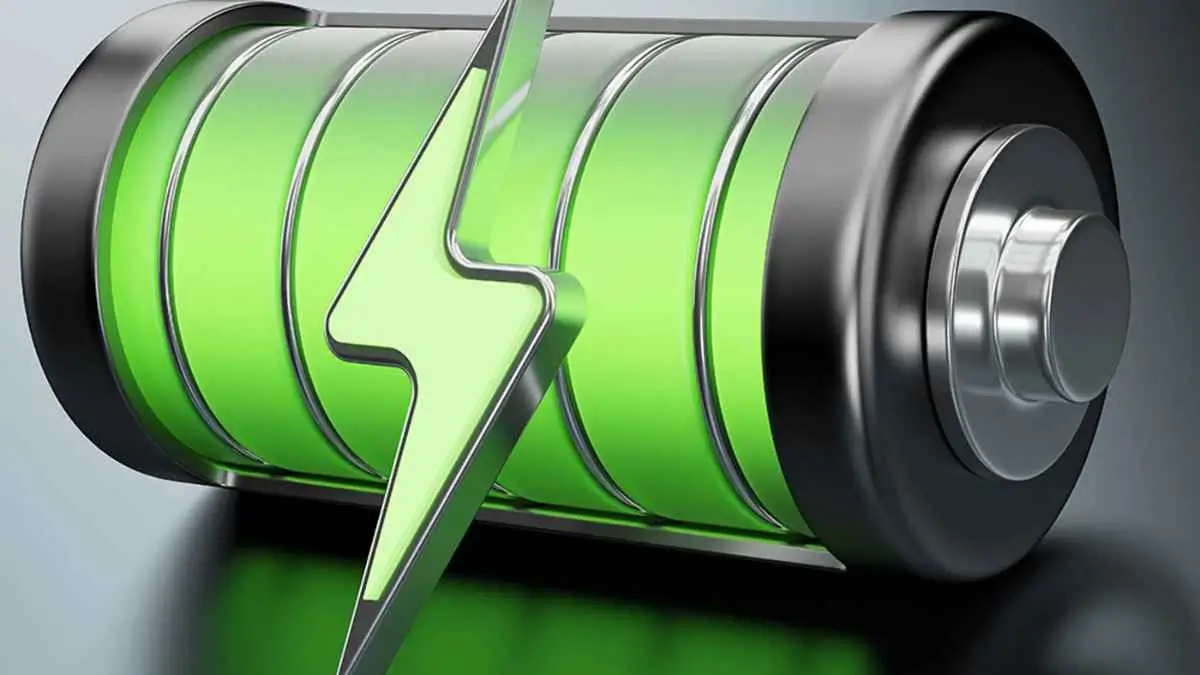
For most parts of the twentieth century, the battery was a minor technology – it made life more convenient when we needed a flashlight, a radio or later a laptop. Now, the situation is completely different. The battery has become a main driver of the battle that will decide how fast the decarbonization will happen. It is not only a question of the geopolitical relations of the countries who rely heavily on energy but also their industrial development and their way of managing their natural resources.
As the world is striving to transition their modes of transport, their generation mix to more environmentally friendly ones and reduce the dependence of their economies on fossil fuels, the electrochemical cell, so small and seemingly insignificant, is at the same time an item of the highest strategic importance and a field of discovery of new scientific knowledge. Its changes – in chemical aspects, in storage capacities, and in supply of basic raw materials – are far more interesting than just small improvements in engineering that come one after another; they are the story of resource geopolitics, thermodynamic limits, and imaginative material science.
From Lead-Acid to Lithium: A Chemistry of Ambition
The primitive rechargeable batteries of the 1850s relied on lead-acid chemistry and delivered dependable yet very poor energy density, roughly 30, 50 Wh/kg. Nickel-cadmium and later nickel-metal hydride batteries were a slight upgrade allowing one to power the first-generation hybrids in the 90’s. But the real breakthrough happened when lithium-ion (Li-ion), first commercialized by Sony in 1991, became the major breakthrough in portable energy storage and later in grid-scale energy storage too.
Lithium is attractive because of its electrochemical potential, being the lightest metals as well as having the highest reduction potential, so that in the newest versions of battery the energy density was over 250, 300 Wh/kg, about five times as much as lead-acid. But it was achieved as little step by little step. It was the result of a refinement process of different cathode materials used. Lithium cobalt oxide (LCO) was the first generation and it was followed by blends of nickel-manganese-cobalt (NMC) and nickel-cobalt-aluminum (NCA). Through each step, they got closer to the best combination for energy density, thermal stability, and affordability.
The Cobalt Problem and the Rise of LFP
Cobalt, a key thing in providing cathodes stability for lithium-ion batteries, however turned out to be the weakest link in the chain. Since approximately 70% of world cobalt supply is coming from the Democratic Republic of Congo which is notorious for its use of child labor and causing serious environmental issues, it is a perfect breeding ground of ethical concerns and price volatility.
This has resulted in most of the industries moving towards lithium iron phosphate (LFP) batteries. LFP battery although has relatively low energy density it doesn’t have cobalt and has good thermal stability at high temperature besides its exceptional cycle life of over 3,000, 4,000 charge cycles. Tesla’s use of LFP in its lower-end version of cars and also its widespread use in Chinese EV manufacturing point to a fundamental change: availability of materials and supply chain reliability are not only competing metrics against raw performance ones in a new battery but also a design parameter that has to be included.
Beyond Lithium: The Next Material Frontier
Even though the lithium-ion technology is growing and becoming a mature product, the limits of its physical potential are becoming clearer nowadays. A big disadvantage of the liquid electrolyte in battery manufacturing is its impact on the safety of batteries and limiting the ability to increase the battery’s density quite a bit. This has become motivation for a large investment in developing solid-state batteries, which substitute highly flammable electrolytes with non-flammable ceramic or polymer solid phases that often means more than twice the energy density, and at the same time, they can cut down fire hazards much. Companies such as Toyota have shared their plans and QuantumScape and Samsung SDI for commercial solid-state batterie that will hit the market in the coming several years. Yet, the scalability of the manufacturing process remains a big question.
In a similar way, there are research teams that are investigating another type of technology based on sodium-ion batteries which is using sodium, a mineral found in Earth’s crust that is about 1,000 times more plentiful than lithium. Sodium-ion batteries may still show inferior results mostly for a measure of the energy density versus lithium-ion batteries but since the main issue that will be faced in the deployment of grid storage is actually the cost not the weight, these kinds of batteries can become a great option. CATL, for example, started sodium-ion production in 2023 in which the company is making a strategic choice acknowledging that not every application calls for the level of energy density to be maximum, some applications only require the possibility to manufacture at a high scale. For all these reasons, the sodium-ion is expected to open up a big potential for grid storage as a new business segment.
Capacity as a Geopolitical Instrument
The shift to green energy has completely changed the view of battery capacity, turning it into a national issue instead of just an engineering parameter. Based on the International Energy Agency, global battery demand could increase several times by 2030 thanks to the popularity of electric vehicles and large-scale batteries which help manage solar and wind power generation with their intermittent nature. This surge in demand has led to competition over key battery metals, with countries like Chile, Australia, and Indonesia becoming the new leaders of lithium, nickel, and rare earth element, changing the trade alliances that previously were based on oil.
Besides, battery recycling is no longer a small part of the process; it has become a matter of major importance to the companies. Firms like Redwood Materials are at the forefront of developing closed-loop material recovery, that is, recovering lithium, nickel, and cobalt for instance, from old batteries to limit the use of new mineral resources. This would definitely help to reduce the environmental impact of a technology that claims to be sustainable.
The Road Ahead
What emerges from this pattern is a diversified chemistry ecosystem that can meet the very different needs at the heart of each specific application scenario: high-density NMC cells for long-range vehicles, rugged and affordable LFP cells for mass-market EVs, sodium-ion technology for stationary storage and eventually premium performance solid-state batteries. This rich biodiversity signals an industry in its third phase of development which stopped looking for one silver bullet technology solution and now is concentrating on what works for the situation and price.
What has happened so far with batteries is actually a good match for the whole green energy contest – slow and cautious, lots of opposition, but more heavily dependent on raw materials availability and the political forces that shape economies than on mere scientific exploration. The story of tomorrow will not only be the product of a new scientific insight, but above all of a very difficult combination of chemistry, sourcing and the world community’s eagerness to have energy storage for zero-emission technologies.

Digital entrepreneur and content expert I help businesses with AI, SEO and the latest tech trends. I started Silicon Valley Weekly to make complex tech concepts easy to understand and use for business growth. I know a lot about systems and help startups, entrepreneurs and brands navigate the fast-changing world of tech and online marketing.
I build strategies that use data, search optimization, content marketing and AI tools to get visibility, engagement and revenue. I love finding ways for businesses to grow increasing their presence and turning new ideas into successful businesses. My goal is to connect the technology, with practical business use so brands can succeed online.