

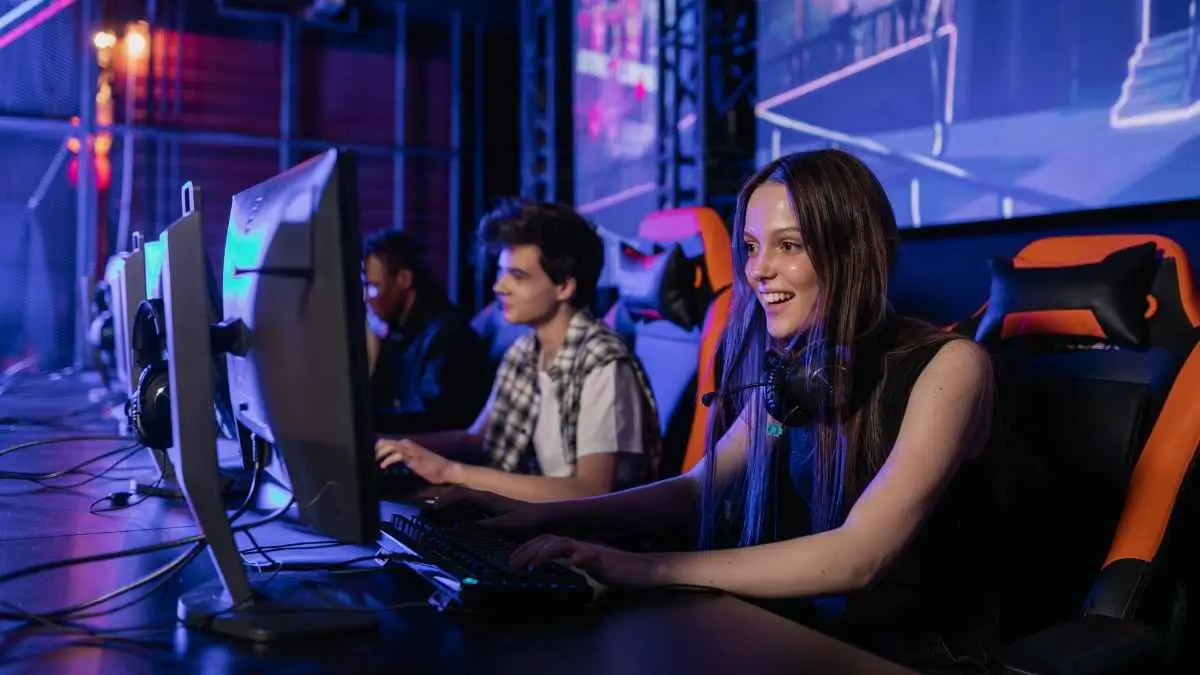
The digital era has hardly yielded the number of major things as the concurrent rise of gaming, streaming, and social media. What initially were separate industries for the few has developed and intertwined to create a network of sorts that now dictates how hundreds of millions of people on the globe entertain themselves, build communities, express identities, and allocate time. Game development has come along such a long way from the pixelated arcades of the 1970s and living room game consoles of the 1980s.
Dur ing nearly all its early periods, gaming was regarded as an activity mainly for children and teenagers, a kind of something that one grows out of rather than develops and. Still, this view has been completely changed by the sheer magnitude of the industry. Currently, the world-wide gaming industry is making hundreds of billion of dollars each year, and its overall profit is the largest one of all other industries, e.g. music and film combined games have become far more than mere entertainment, now they are considered an art form that has narrative characters worlds and even communities similar to those in sports leagues and TV productions. The growth of mobile gaming further expanded the audience, enabling casual and mid-core games to reach billions of mobile users who never saw themselves as gamers.
Streaming dramatically altered the way content is created and consumed and has affected almost all entertainment areas in a very deep manner. On TV and cinema, the coming of streaming giants like Netflix, Amazon Prime Video, Disney+ has brought broadcasting networks and cable packages out of the spotlight, thereby empowering the viewers. “Appointment television” – the concept of watching a show at a fixed time and place because it was the only way one could see it – has become an outdated notion. But, streaming not only did this but something more, a kind of fundamental shift in content creation. Streaming introduced an ecosystem where massive collections of content are all fighting for one person’s attention, Because of this discovering and algorithms became the central ways culture was consumed. The shows that failed to get audiences through their first season on network television have rediscovered a global audience through streaming platforms and even completely new genres of content have emerged without the need to broadcast.
In fact, the rise of the streaming model did not only affect the movie and TV industries but it also extended to gaming via the live streaming platforms such as Twitch, YouTube Gaming, Microsoft’s Xbox Cloud Gaming, and also through the cloud services of PlayStation. Broadcasting a game playing session live, which is what live game streaming means, turned out to be one of the most successful entertainment forms of the 2010s decade very quickly. What made this event even more fascinating was the type of the content people were interested in. There were millions of people who rather watched someone else play a video game than playing their own copy of the game. While at first this seemed like a strange trend, it gradually made sense as the main reasons were related to entertainment value and also creating a sense of community. When people, for example, get a chance to see a streamer who is good at what s/he does overcoming game-related challenges, they get the same thrill and sense of involvement that one gets while watching any great artist perform – that is suspense laughs, demonstration of skill, and finally a shared moment at a live event.
Gaming and streaming were combined by social media as a bridge to become something bigger than either could have been alone. YouTube Twitter Instagram TikTok etc. were used as channels for gaming culture where it was talked about argued appreciated, and shared in the social media platform. A great in-game moment captured as a clip might go viral in a flash. A streamer might have a large audience on Twitch and they would be followed by subscribers to his/her YouTube channel besides becoming followers of his/her Instagram. Discords servers subreddits Facebook groups, and similar places gave life through different types of communication. Social media made gaming which used to be done in isolation or with close friends only a networked activity globally where a Manila and a Berlin gamers could have the same memes, follow the same people, and even identify that they are part of the same gaming community.
The new types of creators resulting from this ecosystem were a breed of public figure like never before. The streaming/gaming YouTubers like Ninja Pokimane etc. became famous not really through their game-playing skills at all but their entertaining presence and parasocial relationships as well as the combination of those two. Thanks to the platforms like YouTube and Twitch, it was possible for a person to create, not just one piece of content, but an entire series of media content without even getting a record label or a network. The production and distribution tools were fully democratized by social media, So many voices came up, personalities emerged, and there was a whole range of approaches to creativity that would never be thought of or signed off by traditional gatekeepers of media. The trend didn’t stay unnoticed for long; soon after that, major brands came in and the field of creator economy exploded via sponsorship, merchandise selling, and various other endorsement deals, changing many of the games from a hobby into a legitimate career that could earn a lot and sometimes even be really a good source of income.
The distinction between gaming, streaming, and social media still remained fuzzy as each business took on features of the others. For instance, gaming titles now featured social platform-like features, like profile pages, status updates, activity feeds, and even content-sharing tools that were all a part of the gaming experience. Streaming platforms integrated live chat features, subscriber badges, and channel points, all of which gave the audience a feeling of being present and a part of the scene in which they were a passive audience. Social media companies, in their turn, moved quickly into short-form videos through live streaming where Facebook Live, Instagram Live, and TikTok LIVE were all fighting for audiences who before had mainly concentrated on dedicated platforms.
Esports’ increasing popularity introduced yetlayer to this very complicated field. Gaming competitions, once informal LAN events held at community centers, are now globally broadcast sports events held in stadiums and arenas, filling them with thousands of spectators and attracting figures that rival or exceed those of traditional mass sports. Titles like League of Legends, Counter-Strike/Global Offensive, Dota 2, and Valorant now have leagues with players franchises contracts between the players and the franchises, and prize pools in the millions. Without a doubt, streaming and social media were crucial in the growth of esport, which made it possible for loyal fans to be in touch with their heroes, join their favorite teams, and be an integral part of the culture surrounding competitive gaming.
What links all these developments is a basic change in the way people view entertainment, community, and identity in the digital world. Gaming, streaming, and social networking are not things that have developed together without interaction. Rather, their development happened due to their mutual support; each one helped others become more popular and, by doing that, they have all made their imprint on the way modern cultural practices look today. So we have here a kind of network or system which is a combination of all these elements. It is a network still in its infancy with lots of potential for growth, capable of generating completely new formats and attracting new consumers, and continuously redefining the concept of linking, creative expression, and feeling of identity and closeness in a digitally connected environment.

Digital entrepreneur and content expert I help businesses with AI, SEO and the latest tech trends. I started Silicon Valley Weekly to make complex tech concepts easy to understand and use for business growth. I know a lot about systems and help startups, entrepreneurs and brands navigate the fast-changing world of tech and online marketing.
I build strategies that use data, search optimization, content marketing and AI tools to get visibility, engagement and revenue. I love finding ways for businesses to grow increasing their presence and turning new ideas into successful businesses. My goal is to connect the technology, with practical business use so brands can succeed online.
Pingback: Gyro Ball Review