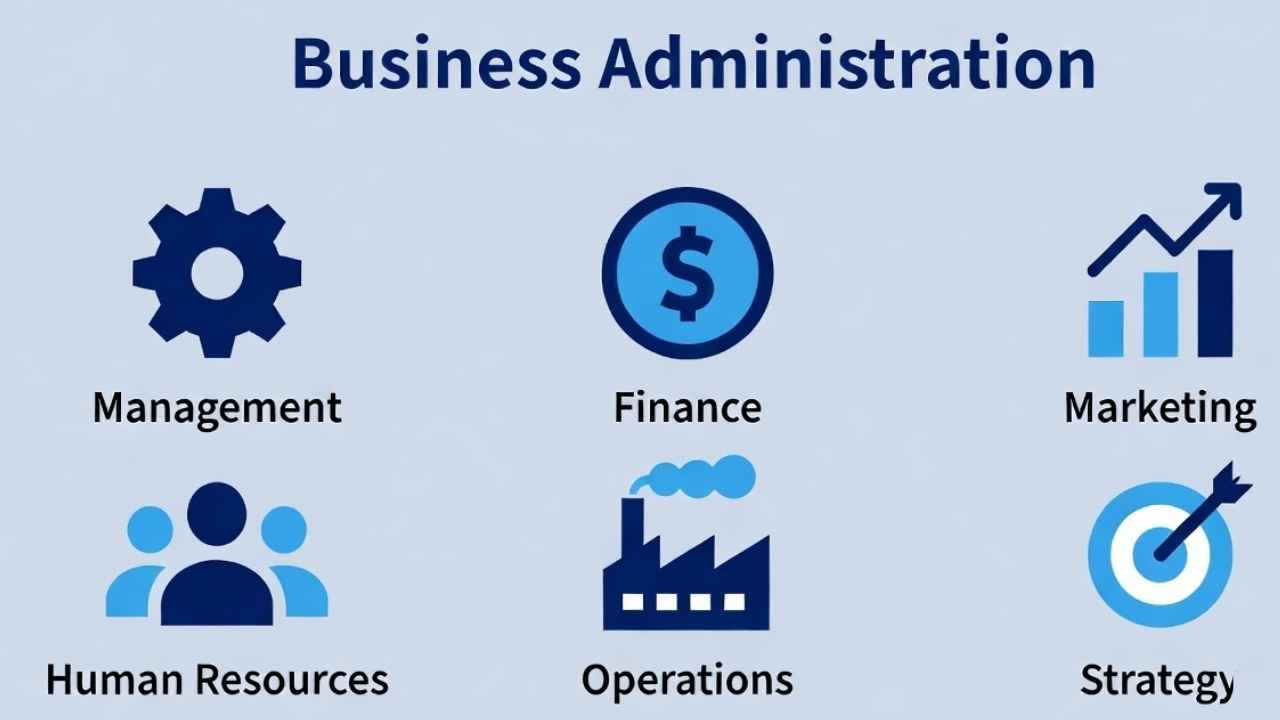

People often talk about business management in academic terms, like planning, organizing, leading, and controlling. However, in real life, it is much more complicated. In my opinion, it is the engine that turns ideas into businesses that work and dreams into real results. Structured management is what every successful business, from a small startup to a huge multinational corporation, uses to make sure that its goals and actions are in line with each other.
I’ve seen that managing a business isn’t just about keeping an eye on things; it’s also about making smart choices when things aren’t clear. Managers are always trying to find a balance between different priorities, like cost and quality, speed and sustainability, and innovation and risk. This balancing act is what makes or breaks a business.
At its most basic level, business management gives you a structure. It makes sure that people, money, and technology are used in the best way possible. Even the best ideas can fail if they aren’t followed through on or aren’t given clear direction.
The Business Model: The Key to Making Money
Every business has a model, even if it’s not written down. The business model answers a very important question: how does the company make money? This is always the first thing I look at when I study successful businesses.
A strong business model brings together three important parts: creating value, delivering value, and capturing value. Companies that are good at these things often do better than their competitors. For example, businesses that charge a monthly fee have changed whole industries by making their income streams more predictable. They don’t just make one-time sales; they build long-term relationships with customers, which helps them keep customers and make more money.
Data shows that companies with recurring revenue models tend to be worth more because they are more stable. This predictability makes it easier to plan finances and gives investors more faith. I’ve noticed that these kinds of models also encourage constant innovation because businesses have to keep giving customers value in order to keep them.
On the other hand, weak business models often don’t grow. They might get a lot of attention at first, but they might not make money because their costs are too high or they don’t stand out enough. This is why I think it’s not just important to create a strong business model; it’s necessary for survival.
Financial Performance: Going Beyond Growth in Revenue
One of the biggest mistakes people make in business is thinking that making more money means being successful. Revenue is important, but it’s not the whole story. I’ve seen businesses report great sales numbers even though their finances aren’t stable.
Profitability, efficiency, and sustainability are the keys to real financial success. Net profit margin, return on investment (ROI), and operating cash flow are some metrics that give a better idea of how healthy a business is. Even if a business’s total revenue is lower than its competitors, it shows that it can manage its costs and set prices well if it has a 20% profit margin.
Another important thing is keeping costs down. Companies that know how to keep their costs down can still make money even when the economy is bad. On the other hand, businesses with high fixed costs often have a hard time when their sales drop.
In my experience, how you spend your money is very important. Companies that do well invest in technology, people, and new markets in a smart way. But bad investment choices can waste resources and miss out on chances.
In the end, financial discipline is what keeps growth going. It makes sure that businesses are growing, but not just any way, but in a way that adds value over time.
Market Impact: Making Change Happen and New Ideas
Management of a business doesn’t happen in a vacuum; it affects markets and how people act. Companies change whole industries when they come up with new ideas and carry them out well.
I have seen how digital transformation has changed the way businesses used to work. Companies that have embraced technology have gained a lot of competitive advantages, while those that have been slow to change have had a hard time staying relevant. This change shows how important it is for business managers to be flexible.
Businesses that are well-run help the market work better. They use new ideas to make better products, better service, and lower costs. This is good for customers and also makes businesses compete with each other more.
Businesses also play a big part in creating jobs and growing the economy. As businesses grow, they create jobs and increase demand throughout their supply chains. This interconnected effect makes it even more important to use good management techniques.
Why This Is Important for the Economy (A Personal Perspective)
From my point of view, business management is more than just a job in a company; it is what keeps the economy stable and growing. A well-run business helps the economy in many ways.
When businesses run well, they make money, pay taxes, and put that money back into growth. This has a chain reaction effect. Suppliers get more orders, workers have steady jobs, and customers get better goods and services.
I often think about this in terms of real life: a single well-run business can affect the lives of hundreds of people. The effect is huge when you multiply that by a lot of industries. Good business management makes economies stronger.
On the other hand, bad management can have very bad effects. Poor financial management can lead to business failures, job losses, and less trust from investors. These effects can spread quickly, especially in markets that are linked to each other.
Business management is even more important in countries that are just starting to grow. It helps businesses grow, brings in money, and encourages people to start their own businesses. I think that one of the best ways to speed up economic growth is to improve how businesses are run.
What Entrepreneurs Can Learn
People often think of entrepreneurship as being about taking risks and coming up with new ideas, but I think that managing things well is just as important. Many new businesses fail not because their ideas are bad, but because they don’t follow through on them.
Here are some important things that I think every entrepreneur should know:
- Make a clear value proposition
A company needs to fix a real problem. If customers don’t see the value, growth won’t last. - Know Your Numbers
It is very important to know about money. To make smart choices, business owners need to keep track of their costs, revenues, and cash flow. - Pay attention to unit economics
Make sure that every transaction is profitable before you scale. Long-term losses can happen when a company grows but doesn’t make money. - Create systems that can grow
Using ad-hoc processes slows growth. Structured systems make things more consistent and efficient. - Be flexible
Markets change very quickly. Companies that can quickly adapt to change are more likely to do well. - Make managing cash flow a top priority
Money coming in and going out is the most important thing for any business. Companies that make money can still go out of business if they run out of cash. - Put money into people
Having a strong team gives you an edge over your competitors. Hiring and keeping good employees should be a top priority.
I think the best entrepreneurs are those who have both vision and discipline. They are not only good at coming up with new ideas, but they are also good at running things.
Conclusion: The Strategic Importance of Business Management
Managing a business is not just a necessary skill; it is a strategic field that can make or break a company. It links every part of a business, from its finances to its operations to its market position.
From what I’ve seen, the best businesses are the ones that see management as a process that never ends. They change with the times, make smart investments, and keep their goals in mind.
As markets around the world become more competitive, managing a business well will become even more important. Both entrepreneurs and leaders need to know how to do this well.
Ultimately, businesses do not prosper by mere coincidence. They do well because they are run with clear goals, discipline, and purpose.
Frequently Asked Questions (FAQs)
Business management is the process of planning, organizing, leading, and controlling resources—such as people, money, and operations—to achieve specific business goals efficiently and profitably.
Business management ensures that all parts of a company work together effectively. It helps improve productivity, control costs, guide decision-making, and ultimately achieve long-term growth and stability.
The four key functions are:
Planning (setting goals and strategies)
Organizing (allocating resources)
Leading (motivating and guiding teams)
Controlling (monitoring performance and making adjustments)
A business model determines how a company creates and earns money. A strong model ensures consistent revenue, scalability, and profitability, while a weak one can lead to financial instability even if sales are high.
Key skills include leadership, communication, financial understanding, strategic thinking, problem-solving, and adaptability. These skills help managers make informed decisions and navigate changing market conditions.