
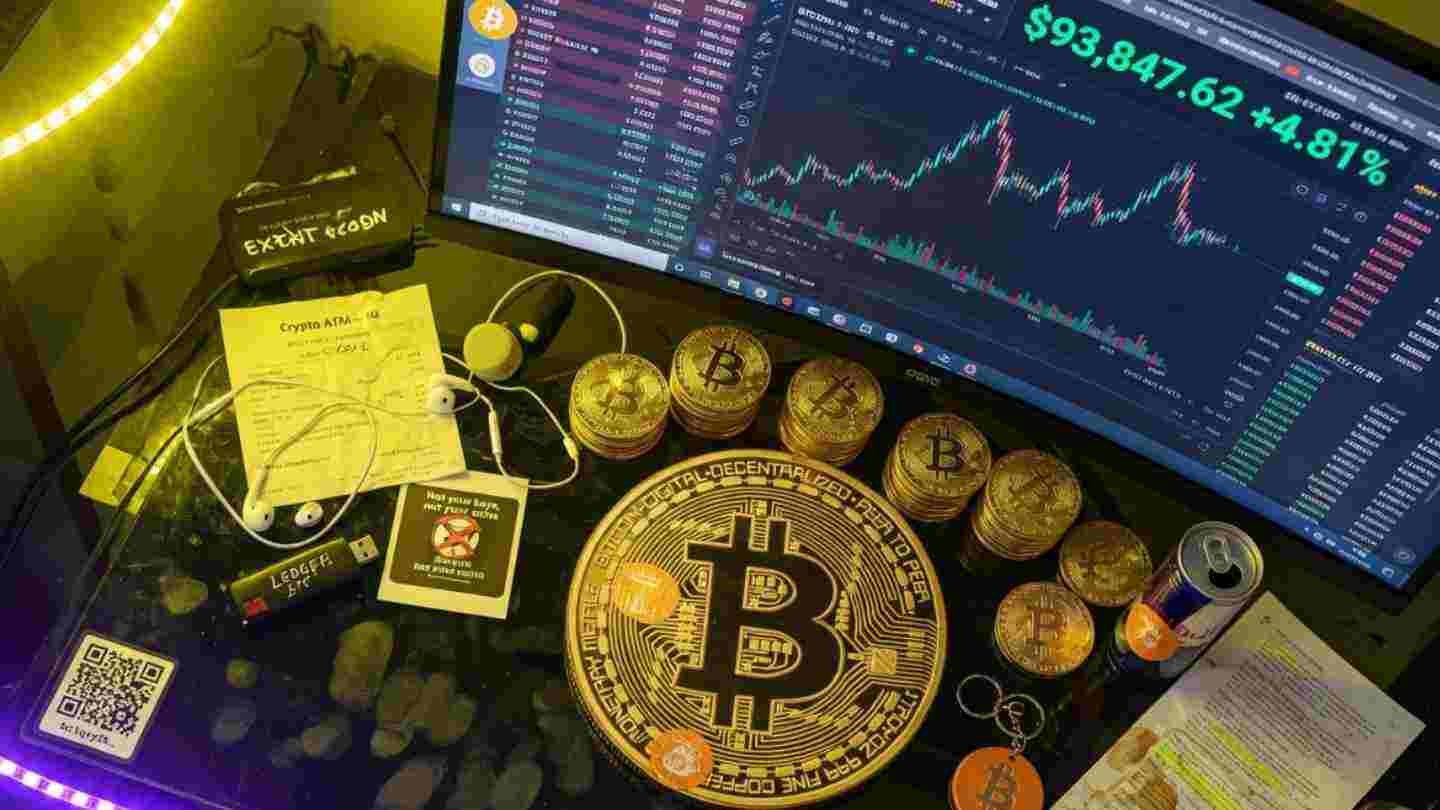
Bitcoin, the first cryptocurrency, was created in 2008 by the pseudonymous Satoshi Nakamoto. It started out as a small digital experiment but has grown into a major force in global finance. Bitcoin’s whitepaper, which came out during the 2008 financial crisis, suggested a peer-to-peer electronic cash system that doesn’t need banks or governments to work. Its underlying blockchain technology, which is a decentralized ledger that keeps track of transactions in a clear and unchangeable way, has since changed the way money works. Bitcoin is worth about $68,000 as of April 2026, and its market cap is over $1.33 trillion. This shows how strong it is and how important it is becoming in the mainstream. This article talks about the many benefits of Bitcoin and its wider effects. It focuses on how it gives people power, challenges institutions, and changes the future of money, while also acknowledging the problems that still exist.
Bitcoin’s main benefit is that it is decentralized. Bitcoin works on a global network of nodes where no one person or group has power, unlike fiat currencies that are controlled by central banks. This structure gets rid of the possibility of censorship, inflation from printing too much money, or random policy choices. Proof of Work is a consensus method that checks transactions and makes sure they are safe by having miners all over the world solve cryptographic puzzles. This decentralization builds trust in a place where trust is hard to come by, which makes Bitcoin especially appealing in places where governments are unstable or financial systems are corrupt. For example, Bitcoin is a safe alternative in countries with hyperinflation or capital controls because it lets people store and move value across borders without restrictions.
Another important benefit of Bitcoin is that it is programmed to be scarce. Bitcoin is called “digital gold” because it has a hard cap of 21 million coins, and by March 2026, about 20 million of those coins had already been mined. This makes it similar to precious metals like gold. This set amount of coins, along with halvings that happen every so often and lower mining rewards (the last one was in 2024), puts deflationary pressure on the economy over time. This lack of supply makes Bitcoin a good way to protect against the devaluation of fiat currency as demand from institutional investors and regular people grows. With rising global debt and inflation, Bitcoin offers a stable monetary policy that central banks can’t copy. This makes it appealing to long-term holders who want to keep their wealth.
One of the best things about Bitcoin for society is that it makes it easier for people to get money. Billions of people around the world still don’t have bank accounts or don’t have enough money to open one. This is because of where they live, the paperwork they need, or the fact that they can’t afford to open an account. To be part of the global economy, all you need is a smartphone and an internet connection. Remittances are often very expensive because of high fees from services like Western Union. With Bitcoin and its Layer 2 solutions like the Lightning Network, they are cheaper and faster. This has given small businesses and people in developing countries the power to trade with other countries without having to pay too much, which has helped the economy move and lowered poverty traps.
Bitcoin’s appeal grows even more because it is safe and open. The blockchain keeps a permanent record of every transaction. Anyone can see it, but it is also anonymous enough to protect users’ privacy. Advanced cryptography makes it almost impossible to fake or change records, making it safer than many older systems that are easy to hack or commit fraud on. This has led to new ideas in areas other than money. Bitcoin’s blockchain has led to decentralized finance (DeFi) apps, smart contracts on networks that can use them, and even non-fungible tokens (NFTs). However, Bitcoin is still mostly a store of value.
Bitcoin has an effect on the economy that goes beyond just its users. Institutional adoption has skyrocketed, with spot Bitcoin ETFs in the US managing billions of dollars in assets and holding more than 6% of the circulating supply by early 2026. Many big companies and family offices have put some of their money into Bitcoin because they see it as a way to diversify their investments that isn’t tied to other assets. El Salvador’s brave choice to make Bitcoin legal tender in 2021 is still paying off in 2026. 85% of small businesses accept it, and the country is using Bitcoin in schools, for sending money home, and even for AI-driven economic strategies. This has lowered the cost of sending money home for its diaspora and brought in tourists and investors, proving that Bitcoin can work as a sovereign currency.
Bitcoin has had an effect on monetary policy and regulation around the world. Bitcoin ETFs have been approved, and rules are clearer in places like the U.S. and Europe. This has made the asset more legitimate and attracted trillions of dollars in potential capital. It has pushed central banks to look into central bank digital currencies (CBDCs) as a way to compete, which has sped up digital innovation in finance. Bitcoin mining has created jobs and income streams in areas with a lot of energy, and it has even helped rural economies by building new infrastructure.
But not all of Bitcoin’s effects are good. Its mining process uses a lot of electricity, about 100–200 terawatt-hours per year, which is about the same as the entire countries of Thailand or Poland. Some studies have linked the carbon footprint to high CO2 emissions when fossil fuels are used, which is what critics point out. Supporters say that mining is moving more and more toward renewables (up to 50% in some studies) and can help stabilize grids by acting as flexible demand response for extra renewable energy. People are still worried about the water use and electronic waste that comes from mining hardware. This has led to calls for more environmentally friendly methods and better technology.
Another important effect is volatility. Bitcoin’s price changes, which reached highs of over $126,000 in late 2025 before going back down, give traders chances but scare off conservative investors and put users at financial risk. Problems with scalability, which Layer 2 technologies help with, can cause the network to get crowded during busy times. In many places, there is still uncertainty about the rules, which could lead to crackdowns that stop new ideas from coming to light or push activity underground. A small number of scams, hacks, and illegal use hurt its reputation and make it necessary to improve education and security.
Bitcoin empowers people by making finance more accessible to everyone, but it could also make inequality worse if rich people or institutions own most of it. Its lack of borders helps activists and dissidents in oppressive regimes, but it also raises concerns about how to keep an eye on money laundering or terrorism financing.
Bitcoin’s future looks bright as institutions grow and mature. Analysts expect growth to continue because of adoption metrics, and prices could reach new highs as global fiat risks rise. Integration with AI, tokenizing real-world assets, and more Layer 2 solutions will probably make it more useful. Bitcoin could become a basic reserve asset, like gold in traditional portfolios, as more countries and businesses use it.
In conclusion, Bitcoin’s benefits—decentralization, scarcity, inclusion, and security—have changed the way we think about and use money. It has effects on economic empowerment, technological innovation, and policy evolution, even though environmental and volatility problems need to be solved all the time. Bitcoin is not just a speculative asset; it represents a vision of financial freedom in a world that is becoming more digital. As more people start using it in 2026 and beyond, its true legacy will depend on balanced innovation that makes the most of the good things while fixing the bad things. Bitcoin gives people, businesses, and countries that are willing to get involved not only an opportunity, but also a stake in the future of a more open, strong global economy.