
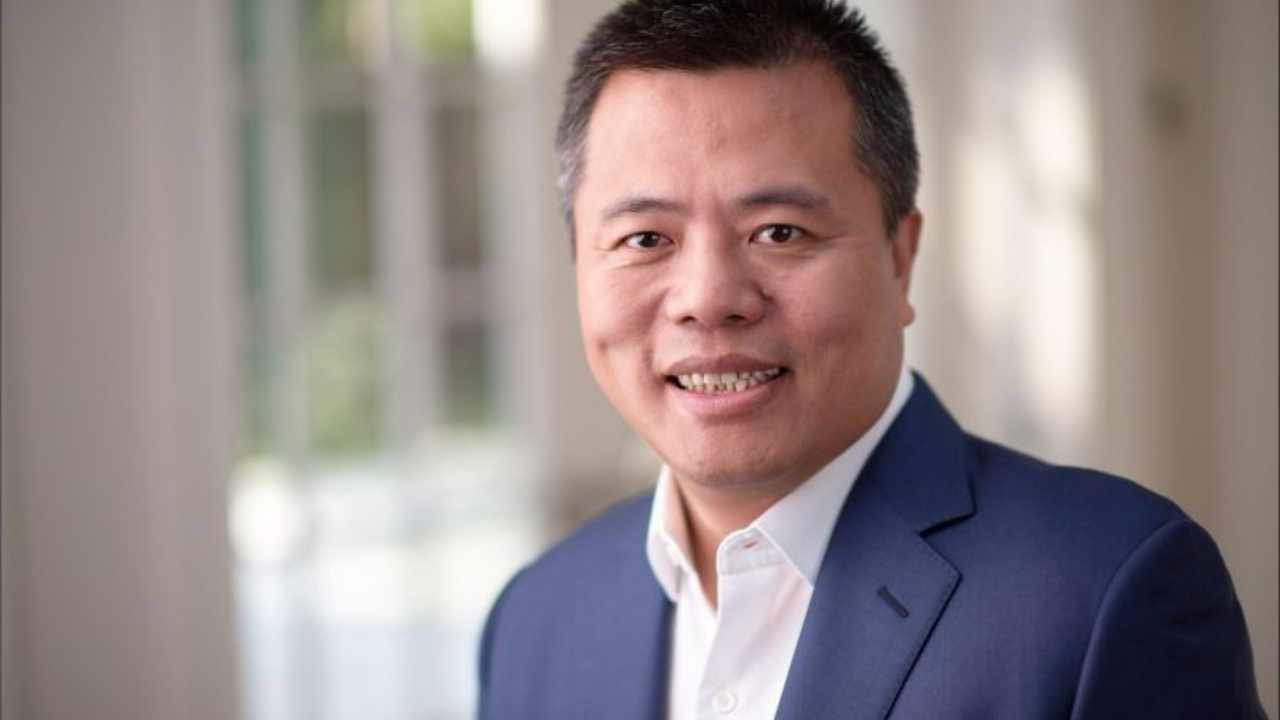
Chen Tianqiao, born in 1973, is a well-known Chinese entrepreneur, investor, and philanthropist. He’s perhaps best recognized for establishing Shanda Group and for his role in shaping China’s online gaming sector. Once the wealthiest man in China, he’s since shifted his focus to global investments, substantial real estate ventures, and significant contributions to neuroscience research.
Early Life and Education
Chen was born in Xinchang County, Zhejiang Province, and spent his formative years close to Shanghai. His father was an engineer, and his mother taught English at a middle school. He earned a bachelor’s degree in economics from Fudan University in 1993. Early on, he worked for a state-owned property developer in Shanghai before co-founding his own company.
Rise in the Gaming Industry
In 1999, Chen, his wife Chrissy Luo (also known as Qianqian Luo), and his brother Chen Danian started Shanda Interactive Entertainment in Shanghai, working with a modest amount of money. The company quickly became a leader in China’s online gaming scene, thanks to its licensing and operation of games like The Legend of Mir II, which originated in South Korea.
Shanda was instrumental in popularizing the freemium model—free-to-play games that offer in-game purchases—a move that fundamentally changed the industry. The company went public on Nasdaq in 2004, briefly becoming China’s largest internet company by market value. At its height, Shanda boasted tens of millions of concurrent users. Chen, in his early 30s, became China’s wealthiest individual, with a fortune that exceeded billions.
In 2009, Shanda Games was spun off and went public, raising over $1 billion. However, due to health problems, including debilitating anxiety attacks, Chen withdrew from the company’s day-to-day management. In 2012, the family took Shanda Interactive private, a deal worth $2.3 billion. By 2014, they’d divested their interests in Shanda Games, effectively repositioning Shanda Group as a private family investment firm, now with a global focus.
Investment and Real Estate Pursuits
Following its gaming ventures, Shanda Group became a significant player in public markets, private equity, and real estate. The firm held substantial stakes in companies such as LendingClub, Legg Mason (where Chen was vice-chairman until 2017), and Community Health Systems.
Chen has built a considerable land portfolio, including a near-200,000-acre timberland acquisition in Oregon in 2015 for $85 million, a move that made him one of the largest foreign landowners in the U.S. Other investments include properties in Canada and luxury estates in New York and California.
Philanthropy and Brain Research
Motivated partly by his health struggles, Chen and his wife, Chrissy Luo, shifted focus to philanthropy in 2016. They founded the Tianqiao and Chrissy Chen Institute (TCCI) with a $1 billion commitment to advance brain science. The institute aims to understand how the brain perceives, learns, and interacts with the world, emphasizing discovery, treatment, and development.
Key initiatives include:
An $115 million donation to establish the Chen Institute for Neuroscience at Caltech (opened in 2021).
Chen has established partnerships with various institutions in Shanghai, one of which is Huashan Hospital.
The Chen Institute for Neuroscience provides support for young researchers, integrates AI into brain studies, and engages in translational research.
Recently, Chen has increasingly linked brain science with artificial intelligence, announcing further investments in “AI + Brain Science” and concepts like “Discoverative Intelligence” to enable machines to drive scientific breakthroughs.
Personal Life and Legacy
Chen is married to Chrissy Luo, his business partner and co-founder of TCCI. The pair moved from Shanghai to Singapore in 2009, then to California in 2017, and now call Menlo Park home. They’ve kept a relatively private life, even as they pursued ambitious scientific objectives.
Estimates for Chen’s net worth in 2025-2026 put it in the low billions, a result of investments and previous ventures. His evolution from tech innovator to neuroscience advocate shows a dedication to understanding the most profound enigmas of existence—the human brain. Through TCCI and his ongoing AI work, Chen continues to shape global research, merging entrepreneurship with philanthropy to create a lasting legacy.