Introduction: The End of the “Replacement” Myth
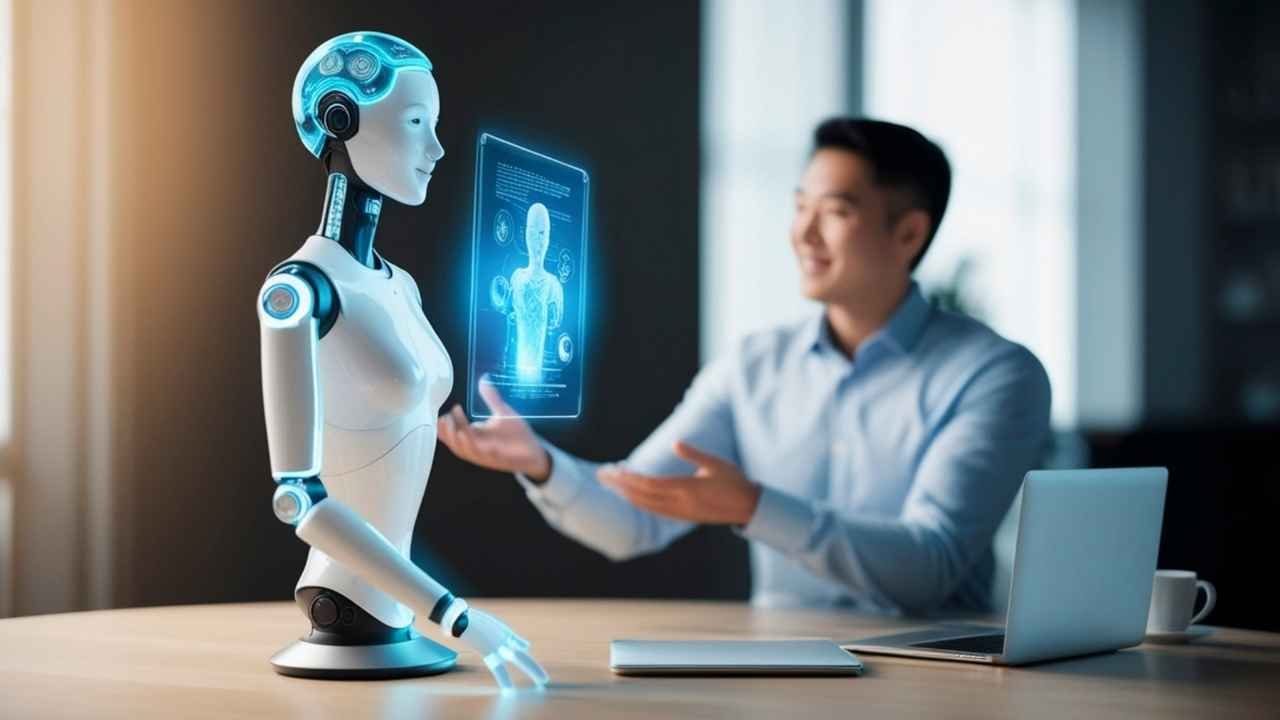
For years, the AI debate was a simple one, framed around a straightforward question: would the machines take our jobs? Now, as we look ahead to 2026, that particular worry seems almost quaint. The truth is more complex, and, frankly, more encouraging. We’re not seeing human intelligence pushed aside, but rather, we’re witnessing its broadening. We’re stepping into a world of “Co-intelligence,” a partnership where the rapid processing power of computers and the deep understanding of humans combine to create a powerful engine for advancement. The future isn’t about choosing between people and machines; it’s about embracing the idea of working “together.”
The workplace of 2026 looks quite different. The old idea of a “digital tool” has transformed into something more: the “digital colleague.” This change is fueled by the rise of agentic AI—autonomous systems that can run entire workflows, from figuring out where things go to managing risks, instead of just responding to a single command.
In forward-thinking companies, the workforce is now intentionally hybrid. AI agents are taking over the “hyper-automation” of everyday tasks, data processing, and logistical details, essentially becoming a “silicon workforce.” This shift frees up human professionals to concentrate on strategic planning and tackling complex problems. The “Agent Orchestrator” is emerging: a professional whose expertise lies not in executing tasks, but in directing a team of specialized AI agents toward a shared objective. This represents a fundamental shift, moving the human role from direct execution to the design of the work itself.
Cognitive Capital: The New Gold Standard for Human Insight
As AI becomes adept at mastering the “knowable”—the established patterns, the data, the predictable outcomes—the worth of “Cognitive Capital” has surged. This concept encompasses the distinctly human abilities that algorithms have yet to replicate: ethical reasoning, creative synthesis, and the ability to empathize with stakeholders. In a landscape where AI can churn out a thousand plausible marketing strategies in mere seconds, the human “taste” and “judgment” needed to select the one that truly connects with a culture’s current emotional state is more precious than ever.
A cultural shift is occurring, moving from “searching” to “delegating judgment.” When faced with complex problems, we no longer look for answers ourselves. Instead, we use AI to analyze the situation, and then we apply human judgment to the results. This “earned judgment” is now a key competitive advantage. While AI provides the “what” and the “how” through its ability to process large amounts of data quickly, humans provide the “why.” Therefore, in 2026, the most successful people will be those who see AI as a partner in thinking, using it to find trade-offs and predict outcomes, while keeping the final, value-based decision for themselves.
Creative Co-Intelligence: The New Artistic Paradigm
The creative realm, once considered the last bastion of human originality, is now the proving ground for human-AI collaboration. By 2026, the “lone genius” archetype is giving way to “human-AI co-creation.” Architects are employing AI tools to manage the tedious aspects of modeling and clash detection, thereby liberating themselves to concentrate on a building’s philosophical and aesthetic implications. Musicians are composing alongside AI partners that grasp the subtleties of rhythm and emotion, serving as an endless wellspring of melodic ideas.
This collaboration doesn’t stifle human creativity; it democratizes access to intricate forms of expression. We’re witnessing “multimodal” creativity, where a single artist can guide AI to handle the demanding tasks of video rendering, audio engineering, and 3D modeling, enabling one individual to realize a vision that would have once necessitated a fifty-person studio. The machine functions as a perpetual learner, whereas the human contributes the essence, the story, and the purpose.
The Trust Deficit and the Imperative for Human Guidance
Notwithstanding these developments, the collaboration encounters challenges. The “AI Trust Deficit” persists as a considerable obstacle in 2026. With the increasing autonomy of AI systems, their inherent “black box” characteristic—the challenge of elucidating the precise reasoning behind an algorithm’s decision—gives rise to a crisis of responsibility. Consequently, the human component emerges as an indispensable protective measure.
The “Human-in-the-Loop” (HITL) paradigm has evolved from a mere technical preference to a critical regulatory and ethical imperative. In instances ranging from medical professionals validating AI-generated diagnoses to judges scrutinizing risk assessments, the human element functions as the ethical safeguard. Empirical evidence suggests that, although AI systems may demonstrate superior average accuracy, they are deficient in the moral judgment necessary to address “edge cases”—those infrequent, nuanced human scenarios where the established data-driven rules are inapplicable. Consequently, the continued advancement of AI necessitates human oversight to counteract bias, promote transparency, and uphold the “social license” essential for the deployment of these technologies in sensitive domains.
Connected Intelligence and the “Phygital” Identity
Looking forward, the convergence of human and artificial intelligence is expanding beyond the digital realm and into our physical environment. We’re seeing the emergence of “Connected Intelligence,” a framework that connects people, machines, and the spaces we inhabit. Our physical world is getting smarter, thanks to sensors and AI that actively shape our environments for both ecological responsibility and personal ease.
Moreover, our identities are evolving into “phygital” forms—a fusion of the physical and digital, with personal AI at the core. These digital counterparts can participate in meetings, sift through data, and manage our online presence, freeing us to focus on the real world. This isn’t about diminishing our humanity; it’s about using technology to ease the burdens of contemporary life, ultimately giving us back our most valuable asset: time.
In short, we need to design a future that puts people first.
The narrative of 2026 isn’t about robots seizing control; it’s about people evolving. We’re at a crucial juncture where the most prosperous nations, businesses, and individuals are those who have embraced the “hybrid” approach. By delegating the monotonous and data-intensive tasks to our digital assistants, we’re rediscovering the worth of our own humanity—our capacity for compassion, our moral compass, and our singular ability to envision a future.
Looking ahead, the key isn’t to create a more intelligent machine, but to cultivate a more effective partnership. The future is a collaborative work of art, a “co-intelligence” where machines supply the strength and humans provide the direction. In this shared endeavor, we’re learning that the more we integrate with AI, the more we must define—and appreciate—what it means to be human.