
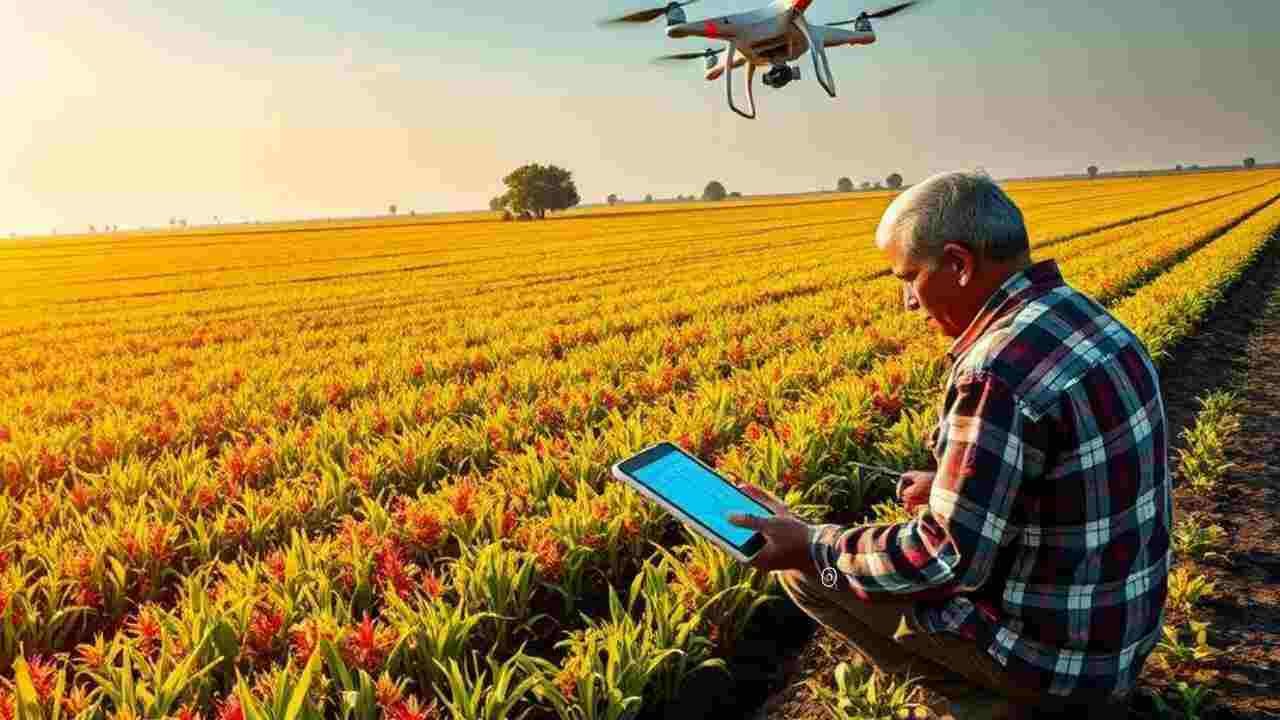
Artificial intelligence (AI) is quickly changing farming from a labor-intensive field to one that is based on data and precision. Farmers are under more and more pressure to grow more food with fewer resources as the world’s population grows and climate change gets worse. AI combines data analytics, machine learning, robotics, and automation to find the best ways to boost productivity, cut down on waste, and encourage eco-friendly farming practices.
For a long time, farmers had to rely on their own experience and observations. But now, intelligent systems are changing the way decisions are made and changing the future of food production.
Why agriculture needs to change
Agriculture has a lot of problems to deal with. Changes in the weather mess up growing cycles, a lack of water puts irrigation systems at risk, and soil degradation lowers crop yields. At the same time, the world’s growing demand for food means that production needs to go up without adding more farmland.
These needs can’t be met well with just traditional farming methods. AI fills this gap by making precision agriculture possible. In precision agriculture, data-driven insights guide every step of growing, from planting to harvesting.
AI helps farmers make smart choices that boost yields while saving resources by looking at huge amounts of environmental and crop data.
Data-Driven Insights and Precision Farming
Precision farming is one of the most important ways that AI is used in agriculture. AI systems get real-time information about soil conditions, crop health, and changes in the environment from satellite images, drones, IoT sensors, and weather data.
Machine learning algorithms look at this data and suggest the best times to plant, water, and apply fertilizer. Farmers can now focus on specific areas that need work instead of treating the whole field the same way.
This level of accuracy cuts down on waste, saves money, and has less of an effect on the environment. It also improves the health of crops by finding problems before they get worse.
Intelligent Water Management and Irrigation
One of the biggest problems for farmers is that there isn’t enough water. AI-powered irrigation systems figure out exactly when and how much water crops need by using sensors that measure soil moisture and climate data.
These smart systems change the watering schedule automatically based on the weather, so plants don’t get too much or too little water. Farmers save water and make sure their plants grow as well as possible.
In places where water is scarce, AI-driven irrigation can make farming more sustainable and viable in the long run.
Finding Pests and Diseases
If you don’t find them early, crop diseases and pests can ruin your harvest. AI-powered image recognition tools look at photos from drones or smartphones to find early signs of disease, lack of nutrients, or pest problems.
These systems use computer vision to compare pictures of plants to huge databases of known conditions. Farmers get alerts and treatment suggestions when problems are found.
Finding problems early on helps save crops and cuts down on the need for too many pesticides, which is good for both the economy and the environment.
Robotics and Automation in Agriculture
Robots powered by AI are changing farming jobs that require a lot of work. GPS and machine learning systems guide autonomous tractors, robotic harvesters, and planting machines so that they work perfectly.
These robots can work all day and night, which makes them more efficient and less reliant on seasonal labor shortages. In fruit and vegetable farming, robotic arms with computer vision systems carefully find and pick ripe fruits and vegetables without hurting the plants.
Automation not only makes work more productive, but it also helps solve problems with the workforce in many farming areas.
Yield Forecasting and Predictive Analytics
AI makes it possible to use predictive modeling, which helps farmers guess what will happen before it does. AI systems use data on past weather patterns, soil conditions, and crop performance to predict possible yields and risks.
This ability to predict helps with better planning for storage, transportation, and getting goods to market. It also helps farmers get loans or insurance by giving them reliable estimates of how much they will make.
Governments and agribusinesses both use AI tools to look at food supply chains and get ready for possible shortages or problems.
Optimizing the Supply Chain
AI is very important in agricultural supply chains outside of the farm. Smart systems keep an eye on storage conditions, transportation routes, and market demand to cut down on food waste and make distribution more efficient.
AI-powered logistics platforms find the best delivery routes so that fresh produce can get to markets quickly. Predictive demand analysis helps producers match supply with what customers want, which cuts down on waste and extra stock.
AI gives you the tools you need to manage supply chains well, which is important for food security in a globalized economy.
Impact on the environment and sustainability
Sustainability is the most important part of changing farming. AI helps the environment by using fewer chemicals, using water more efficiently, and improving soil health.
Making decisions based on data lowers carbon footprints and improves the balance of ecosystems. AI analytics can help farmers keep an eye on how well crop rotation works, how much nutrients are in the soil, and how it affects biodiversity.
AI helps agriculture stay strong over time by combining sustainability with productivity.
Problems and Ethical Issues
Even though AI has a lot of potential, it is hard to get farmers to use it. High costs of implementation, limited digital infrastructure in rural areas, and a lack of technical training can make it hard for people to use widely.
Another worry is data privacy and ownership. Farmers need to know how their information is gathered, kept, and used. For AI to help both small and large producers, there must be clear rules and fair access to technology.
To make agriculture more inclusive, it will be important to close the digital divide.
The Future of AI in Farming
AI will probably become more connected to new technologies like blockchain, 5G connectivity, and advanced robotics in the future of farming. Smart farms that use interconnected systems might not need much human help to run.
AI-powered climate models could help farmers choose which crops to grow based on changes in the environment in their area. Automated AI systems may be very important for vertical farming and urban agriculture because they can help make indoor growing conditions better.
As innovation speeds up, the future of agriculture will depend on how well technology companies, farmers, policymakers, and researchers work together.
Final Thoughts
Artificial Intelligence is changing agriculture by turning old ways of doing things into smart, long-lasting systems. AI gives farmers tools that make them more efficient and resilient, like smart irrigation, robotics, and predictive analytics.
AI-driven agricultural transformation gives us hope in a world with a growing population, climate uncertainty, and limited resources. The agricultural sector can meet future food needs while protecting the planet by using data, new ideas, and sustainable practices.
The combination of technology and farming is not only an evolution, but also a revolution, in how people grow and keep their food supply.