As of March 13, 2026, Saudi Aramco, which is also known as the Saudi Arabian Oil Company, is still the most important company in the world’s energy industry. It is the world’s largest integrated energy and chemicals company, with its headquarters in Dhahran, Saudi Arabia. Aramco manages huge amounts of hydrocarbons and is a major player in the global oil market. It is also the backbone of Saudi Arabia’s economy. Even with geopolitical tensions, unstable oil prices, and ongoing efforts to diversify, it is still one of the most valuable companies in the world, with a market capitalization of about $1.75 trillion.
Aramco Profile Summary
| Attribute | Details |
|---|---|
| Company Name | Saudi Arabian Oil Company (Saudi Aramco) |
| Founded | 29 May 1933 (92 years ago) |
| Headquarters | Dhahran, Saudi Arabia |
| Industry | Oil, Gas, Petrochemicals |
| Key Executives | Amin H. Nasser (President & CEO), Yasir Al-Rumayyan (Chairman) |
| Ownership | Government of Saudi Arabia (82.19%), Public Investment Fund (12%), Sanabil (4%) |
| Stock Listing | Tadawul: 2222 |
| Global Presence | Operations in 50+ countries |
| Subsidiaries | SABIC (70%), Petro Rabigh, SATORP, among others |
| Employees | ~76,664 (2025) |
| Products | Petroleum, Natural Gas, Petrochemical Derivatives |
| Revenue (2024) | US$480.4 billion |
| Operating Income (2024) | US$206.6 billion |
| Net Income (2024) | US$106.2 billion |
| Total Assets (2024) | US$646.3 billion |
| Total Equity (2024) | US$440.4 billion |
| Hydrocarbon Production (2025) | 12.9 MMboed (million barrels of oil equivalent per day) |
| Free Cash Flow (2025) | US$85.4 billion |
| EBIT (2025) | US$186.8 billion |
Strategic Importance
- Global Energy Leader: Aramco is the largest oil exporter in the world, critical to global energy supply.
- Economic Role: It is the backbone of Saudi Arabia’s economy, funding Vision 2030 diversification projects.
- Innovation: Investing in carbon capture, hydrogen, and renewable energy technologies to transition toward sustainability.
Key Considerations & Risks
- Oil Price Volatility: Revenues are highly dependent on global crude oil prices.
- Geopolitical Risks: Regional instability in the Middle East can affect operations.
- Energy Transition Pressure: Global push toward renewable energy challenges Aramco’s long-term dominance.
- Environmental Concerns: As the largest oil producer, Aramco faces scrutiny over emissions and climate impact.
The beginnings and growth of history
The Kingdom of Saudi Arabia gave the California-Arabian Standard Oil Company, which was the first company to look for oil in the area, permission to do so in 1933. This company is now known as Chevron. The first major oil discovery that changed everything happened at Dammam No. 7 in 1938. This started commercial oil production in the kingdom. The company was first called the Arabian American Oil Company (Aramco) and had American partners like Standard Oil of California, Texaco, Exxon, and Mobil. Saudi Arabia slowly took over more and more of the company, and by 1980 it was fully nationalized and renamed the Saudi Arabian Oil Company, or Saudi Aramco. This change turned it from a foreign concession into a state-owned powerhouse that was important to the country’s growth.
Important Steps in Growth
The company’s growth included important discoveries like the Ghawar Field, which is the largest oil field on land in the world, and the Safaniya Field, which is the largest oil field offshore. These assets in the Eastern Province make it possible to produce at a very low cost, often $3 to $10 per barrel, which is better than many competitors. By the end of the 20th century, Aramco had built a lot of infrastructure, including the Master Gas System, which is one of the largest hydrocarbon pipeline networks in the world. It had the biggest IPO in the world on the Tadawul exchange in 2019, bringing in $25.6 billion and giving the company an initial value of more than $1.7 trillion. This partial privatization helped Saudi Vision 2030 reach its goal of reducing the country’s reliance on oil by diversifying its economy.
Net Worth
Saudi Aramco’s latest reported net worth (measured by equity) is approximately US$440 billion as of 2025, making it the most valuable energy company globally. Its net income for 2025 was between US$93.4–104.7 billion, depending on reporting sources, reflecting a decline from 2024 due to weaker oil prices.
Aramco Financial Snapshot (2025)
| Metric | Value (2025) | Notes |
|---|---|---|
| Net Income | US$93.4–104.7 billion | Down from US$106.2 billion in 2024 |
| Total Assets | ~US$646 billion | Among the largest globally |
| Total Equity (Net Worth) | ~US$440 billion | Represents shareholder value |
| Revenue | ~US$480 billion (2024) | Slight decline in 2025 due to oil price volatility |
| Free Cash Flow | US$85.4 billion | Strong liquidity |
| Market Cap | ~US$2 trillion (Tadawul, 2025) | Largest listed company worldwide |
Context & Importance
- Global Leader: Aramco remains the largest oil exporter and one of the most profitable companies in the world.
- Economic Role: Its profits are central to Saudi Arabia’s Vision 2030 diversification strategy.
- Volatility: Net worth and profits fluctuate with global oil prices, geopolitical risks, and energy transition pressures.
Risks & Considerations
- Oil Price Dependence: A fall in crude prices directly impacts revenue and net worth.
- Energy Transition: Global push toward renewables challenges long-term profitability.
- Geopolitical Risks: Middle East instability can affect operations and investor confidence.
In short: Aramco’s net worth is about US$440 billion, with 2025 profits around US$93–104 billion, keeping it the world’s most valuable energy company despite recent declines.
Current Operations and Reserves
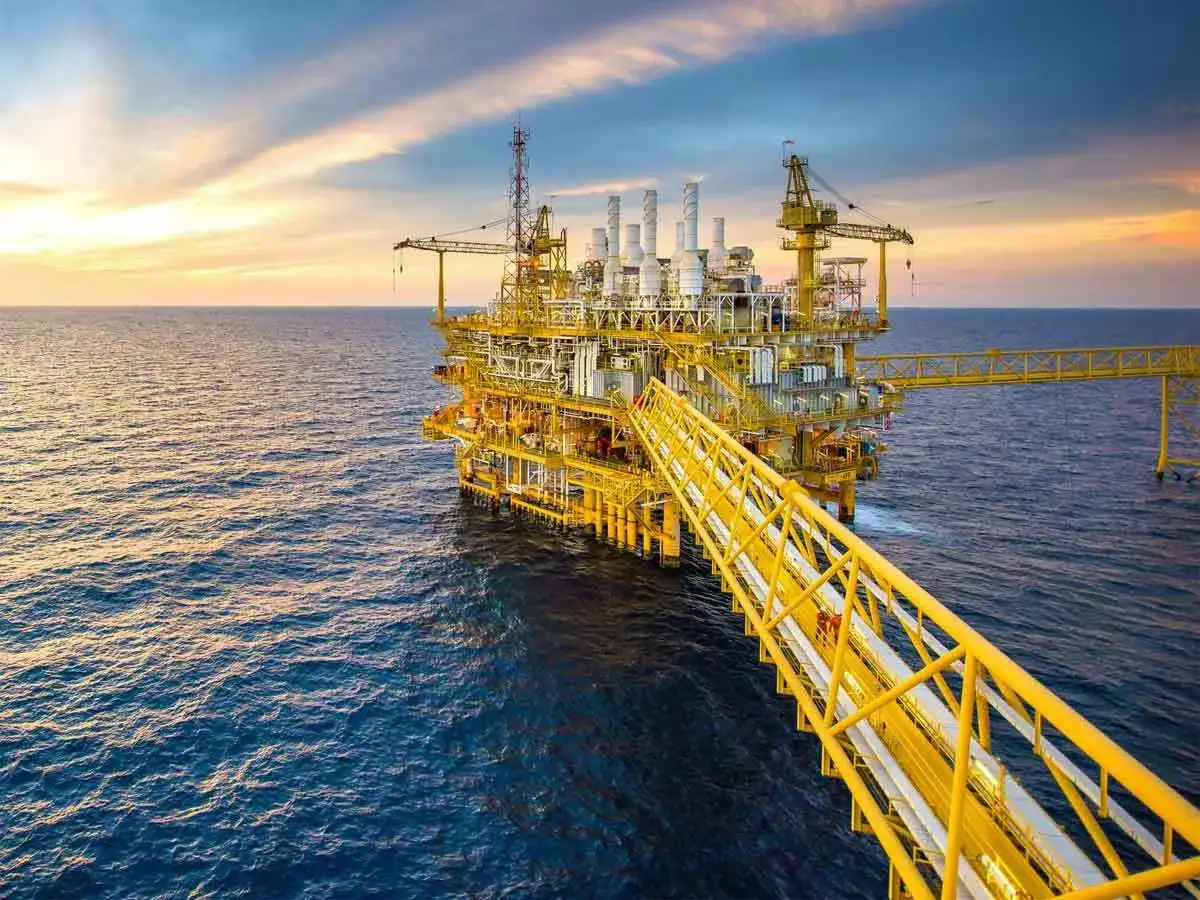
Aramco is in charge of the whole hydrocarbon value chain. In upstream activities, it controls Saudi Arabia’s huge reserves, which are about 247 to 268 billion barrels of proven crude oil equivalent, making it the second largest in the world. The daily output is 10 to 11 million barrels per day (bpd), and the maximum output is close to 12 million bpd. In early 2026, production stayed around levels that were adjusted for market conditions and OPEC+ agreements. However, some fields had to cut back because of recent problems. Major assets like Ghawar and Safaniya use the latest technologies for enhanced recovery and exploration.
Presence in Downstream and Around the World
Downstream operations include a lot of refining and petrochemical work. Aramco owns or has a stake in refineries all over the world that make fuels, lubricants, and chemicals. In Jubail and Yanbu, integrated complexes work with companies like TotalEnergies on projects like Amiral to get more value than just crude oil extraction. This global presence makes marketing and distribution strong.
Strategic Initiatives and Diversification
Aramco is working to diversify its business in line with Vision 2030. By 2030, it wants to increase the amount of gas it can sell by 80% from what it can sell now. Milestones include starting production at Jafurah, the Middle East’s largest unconventional shale gas field, in December 2025 and starting operations at the Tanajib Gas Plant. These use techniques from U.S. shale. Renewables, carbon capture, blue hydrogen, and digital transformation (including AI that makes billions of dollars) all work well with hydrocarbons.
How well the company did financially in 2025
Despite some problems, Aramco did well in 2025. The adjusted net income for the whole year was $104.7 billion, and the net income was $93.4 billion, which is a 12% drop from 2024 because crude prices were lower. The company made about $445.7 billion in sales. The gearing ratio went up to 3.8%, operational cash flow reached $136.2 billion, and free cash flow reached $85.4 billion. The total amount spent on capital was $52.2 billion, mostly on gas and crude oil projects like Marjan and Berri. Shareholders got $85.5 billion back, which included a 3.5% increase in the base dividend for the fourth quarter.
Recent Events and the Share Buyback
In March 2026, Aramco announced its first-ever share buyback program. It would buy back up to $3 billion worth of shares over 18 months, buying back up to 350 million ordinary shares for an employee share plan. This shows that people believe in the long-term value even when things are unstable. The move goes along with the company’s ongoing dividend commitments.
Problems with geopolitics in 2026
As of March 2026, Aramco is dealing with major problems caused by the Iran conflict, which has effectively closed the Strait of Hormuz to most commercial shipping. Amin Nasser, the CEO, said that if this goes on for too long, it will have “catastrophic consequences” for the global oil markets and the economy. The East-West pipeline sends Aramco’s exports to Red Sea terminals like Yanbu, which are almost full. Some fields had to cut back on production, like the Ras Tanura refinery, which had to stop working after a drone attack. Aramco stays flexible through its inventories and infrastructure, even when things get tough.
Looking ahead and giving advice
Aramco says that capital spending will be between $50 and $55 billion in 2026, with gas, petrochemicals, and flexibility being the most important areas. Transportation and petrochemicals are likely to drive a rise in global oil demand of 1.1 million barrels per day, which could set records. Hydrocarbons make up the majority of Aramco’s business, but investments in lower-emission technologies, AI (which will be worth $5.3 billion by 2025), and possible AI ventures set the company up for a transition. The iktva localization program reached 70% of its goal for procurement, with a goal of reaching 75% by 2030.
Final Thoughts
Saudi Aramco is a mix of geology, geopolitics, and economics. It guarantees energy security with its unmatched reserves, size, and ability to see the future. Aramco is the world’s leading hydrocarbons company because it provides a steady supply even when things are uncertain in 2026, like problems in Hormuz.
Frequently Asked Questions (FAQs)
What is the official name of Saudi Aramco and where is its headquarters?
The Saudi Arabian Oil Company, or Saudi Aramco, is based in Dhahran, Saudi Arabia. It is the kingdom’s main national oil company and the largest company in the world that deals with both energy and chemicals.
How much of Saudi Arabia’s proven oil reserves does Aramco manage?
As of early 2026, Saudi Arabia has about 247–268 billion barrels of proven crude oil reserves (some estimates put it at more than 260 billion barrels of oil equivalent), making it the second-largest in the world. Aramco manages these huge reserves, which give it a cost advantage in production.
How much oil does Aramco make and how much can it hold?
Aramco can only produce about 12 million barrels per day (bpd) at a time. Actual output usually falls between 10 and 11 million barrels per day, depending on market conditions, OPEC+ quotas, and other factors. In March 2026, production will have to be changed for a short time because of geopolitical problems in the Strait of Hormuz. This will mean rerouting through different pipelines.
As of March 2026, how much is Aramco worth on the stock market?
As of mid-March 2026, Saudi Aramco’s market value is about $1.73 to $1.75 trillion USD, making it one of the most valuable companies in the world and the biggest energy company in the world.
What were the most important financial results for Aramco in 2025?
Aramco said that for 2025, its adjusted net income was $104.7 billion and its net income was $93.4 billion. This was about 12% less than in 2024 because crude prices were lower. The company made about $445 billion in sales, had $136.2 billion in operational cash flow, $85.4 billion in free cash flow, and a gearing ratio of 3.8%. The total amount spent on capital was $52.2 billion.
What did Aramco recently say about shareholder returns?
Aramco keeps paying out a lot of money, with total payouts of $85.5 billion in 2025. The base dividend for Q4 2025 went up by 3.5% (to be paid in Q1 2026). In March 2026, the company started its first-ever share buyback program, which would last for 18 months and cost up to $3 billion. It would buy back up to 350 million ordinary shares, showing that it was confident in the long-term value.
What are the main strategic goals that Aramco is working toward?
As part of Saudi Vision 2030, Aramco wants to boost its sales gas production capacity by about 80% by 2030, compared to levels in 2021. Some important dates are when production starts at the Jafurah unconventional shale gas field and when operations start at the Tanajib Gas Plant in late 2025. The company also puts money into downstream petrochemicals, carbon capture, blue hydrogen, integrating renewables, and digital transformation (including AI, which brought in a lot of value in 2025).
What is Aramco doing about the problems in the Strait of Hormuz in 2026?
The ongoing conflict between the U.S. and Iran is making it hard for ships to pass through the Strait of Hormuz, which is a bottleneck for about 20% of the world’s crude oil. To get around this, Aramco has rerouted exports through its East-West pipeline (which can carry about 7 million barrels per day) to Red Sea terminals like Yanbu, which will be full by March 2026. Amin Nasser, the CEO, called the situation the “biggest crisis” in the industry and said that if it went on for too long, it would have “catastrophic consequences” for the global oil markets and the economy. Aramco has suggested different loadings (like Arab Light from Yanbu), changed output at some fields, and stressed how quickly things could get better once the problem is fixed.
What does Aramco think will happen to world oil demand in 2026?
Aramco says that global oil demand will grow by about 1.1 million barrels per day in 2026, possibly setting new records. This growth will mostly come from the transportation and petrochemical sectors. The company plans to spend $50–55 billion on capital projects in 2026, with a focus on expanding gas production, petrochemicals, and market flexibility.
What does Aramco do to help Saudi Arabia’s economy and make it more local?
Aramco is the kingdom’s main source of income (the government and Public Investment Fund own more than 97% of it). It pays for national development, including the Vision 2030 giga-projects. Its iktva (In-Kingdom Total Value Add) program reached about 70% localization in procurement, with a goal of 75% by 2030 to make domestic supply chains and the economy more resilient.