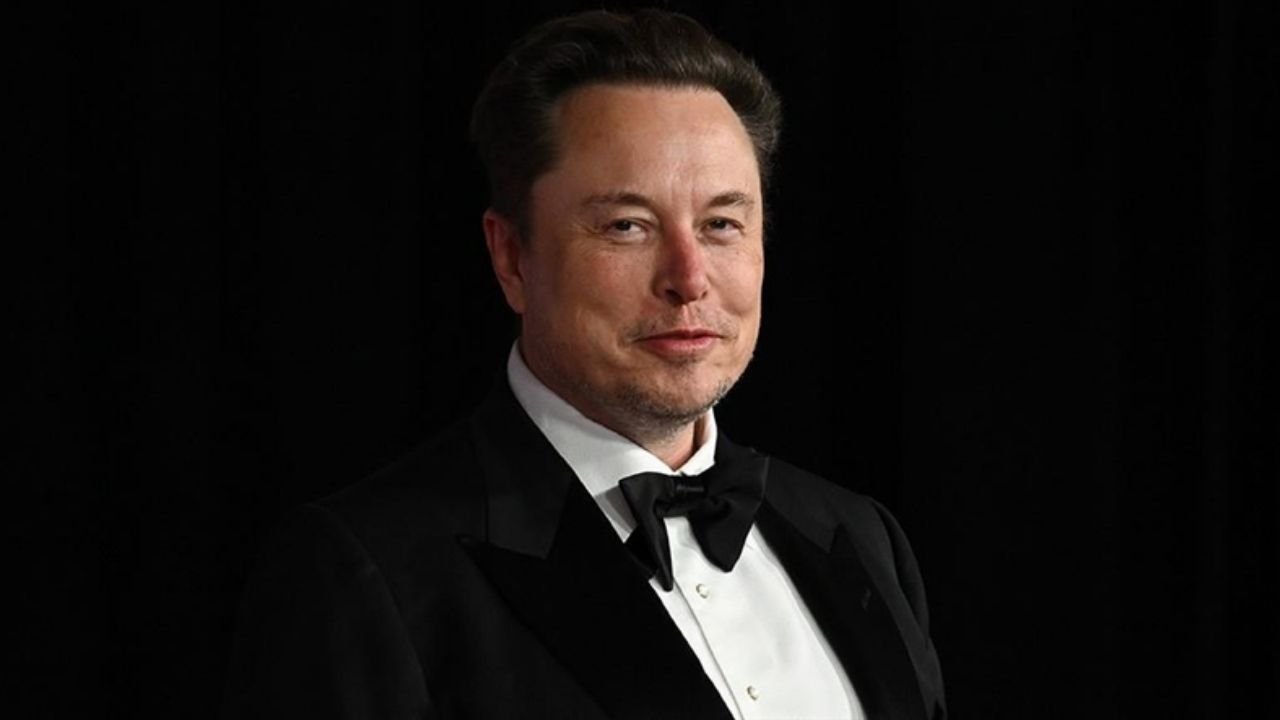
Elon Musk: The Future’s Architect
One of the most influential businesspeople of the twenty-first century is Elon Musk. Musk was born in Pretoria, South Africa, on June 28, 1971, and was raised in a household that respected intelligence and creativity. His father, Errol Musk, was an engineer, and his mother, Maye Musk, is a model and dietitian from Canada. Musk showed a remarkable interest in science and technology from an early age. He started a lifelong pattern of turning ideas into value when, at the age of 12, he developed and sold a video game called Blastar for $500. He obtained dual degrees in physics and economics from the University of Pennsylvania after moving to Canada at the age of 17 and then to the United States. His remarkable career was built on this combination of scientific rigor and business savvy.
The Dot-Com Fortune and Early Ventures
The internet boom of the 1990s accelerated Musk’s entrepreneurial journey. He co-founded Zip2 in 1995, a business that offered online maps and city guides to newspapers making the switch to digital media. After attracting substantial funding, the business was sold to Compaq in 1999 for roughly $307 million, earning Musk about $22 million. He quickly invested the majority of his profits in X.com, an online banking and payment platform, rather than taking a break from this achievement. In order to create PayPal, which led the way in safe online transactions, X.com and Confinity merged in 2000. Musk made about $180 million when eBay bought PayPal in 2002 for $1.5 billion in stock. His ability to spot underserved markets in emerging technologies and scale solutions quickly was evident in these early exits, which provided the funding for much more ambitious endeavors.
Creating SpaceX: Transforming Space Travel
Musk established Space Exploration Technologies Corp. (SpaceX) in 2002 with the audacious goal of drastically lowering the cost of space travel so that people could settle on Mars and become multiplanetary. Space launches were controlled by legacy contractors and government organizations at the time, and they were incredibly costly. Reusable rocket technology was introduced by SpaceX, marking a significant shift away from disposable systems. In 2008, the first privately funded orbital launch was accomplished by the Falcon 1. A turning point was reached in 2015 with the successful first-stage landing of the Falcon 9 rocket, which reduced costs and allowed for more frequent missions. As of January 2026, SpaceX has regularly transported astronauts to the International Space Station, carried out hundreds of launches, and deployed the Starlink satellite constellation for worldwide broadband. As Musk reaffirmed at Davos, Starship, the fully reusable next-generation vehicle, is undergoing rapid iteration. Recent test flights have advanced toward full reusability, possibly by late 2026.
Tesla: Transforming the Automotive Industry
During a near-bankruptcy crisis in 2008, Musk took over as CEO of Tesla Motors after joining the company in 2004 as chairman and principal investor. Internal combustion engine dominance was challenged by Tesla’s mission to expedite the global shift to sustainable energy. The Roadster (2008) demonstrated that electric cars could be thrilling and quick. While the Model 3 (2017) introduced affordability and widespread adoption, the Model S (2012) redefined luxury EVs. Unmatched advantages were produced by Tesla’s vertical integration, which included energy storage devices like Powerwall and Megapack, software for autonomous driving, and internal battery production via Gigafactories. With Full Self-Driving software moving closer to widespread unsupervised operation, Tesla is expected to lead the world in EV sales by 2026. According to Musk’s recent Davos remarks, there will be a “widespread” robotaxi network in the United States by the end of 2026; unsupervised rides have already been shown in places like Austin, Texas.
Neuralink, The Boring Company, xAI, and X comprise the broader portfolio.
Musk’s goals go beyond energy and transportation. Founded in 2016, Neuralink creates implantable brain-machine interfaces to treat neurological conditions and eventually combine AI and human cognition. With early patients demonstrating restored abilities, the company started human trials in 2024 and plans to produce implants in large quantities in 2026. The Boring Company uses high-speed tunnel networks to alleviate urban congestion. With the goal of developing a “everything app” focused on free speech and real-time information, Musk paid $44 billion to acquire Twitter in 2022 (which was renamed X in 2023). The goal of xAI, which was introduced in 2023, is to understand the universe through artificial general intelligence. Despite recent content creation controversies that led to investigations and safety modifications, Grok AI is developing quickly.
Influence and Wealth in 2026
With estimates ranging from $690 billion (Bloomberg) to a record $788 billion (Forbes real-time tracking) as of January 2026, Musk’s net worth has reached previously unheard-of heights thanks to spikes in Tesla stock linked to robotaxi optimism and broader AI enthusiasm. He surpasses historical records and is now by far the richest person in the world. The market’s faith in his vision is reflected in his wealth, which is mostly derived from stock in SpaceX and Tesla. Musk has an impact on public opinion and policy. At the 2026 World Economic Forum in Davos, he criticized U.S. solar tariffs, cautioned about the limitations of AI power, and predicted that by year’s end, AI would surpass human intelligence.
Important Characteristics of Success
Musk’s accomplishments are the result of unique qualities. He establishes bold, long-term objectives that motivate teams and draw talent, such as sustainable energy, multiplanetary life, and human-AI symbiosis. His depth of engineering enables him to actively participate in technical choices. His companies are set by his extreme work ethic, which frequently entails 80–100-hour workweeks. Having personally experienced near-collapse at Tesla and SpaceX in 2008, Musk embraces high risk. Progress is fueled by rapid iteration—learning from mistakes fast, as in the case of Starship test explosions. Compounding benefits are produced by cross-company synergies, such as Tesla batteries helping SpaceX or xAI developments possibly improving Tesla autonomy.
Arguments and Criticisms
Musk’s strategy has generated controversy. Critics point to divided attention across projects, divisive public remarks, and missed deadlines (such as frequent delays in full autonomy or Mars missions). While Grok of xAI was subject to bipartisan attorney general demands in January 2026 regarding nonconsensual image generation, his management of X has come under fire for content moderation. Complexity is increased by political involvement, such as focusing on the midterm election and criticizing tariffs. However, observable outcomes—such as reusable rockets, mass-market EVs, and the worldwide internet through Starlink—often surpass the worries of critics.
Prospects for the Future
Musk’s outlook was summed up in his Davos 2026 speech: robots will eventually outnumber humans, AI will surpass human intelligence by year’s end, and widespread robotaxis will revolutionize mobility. He restated Neuralink’s scaling for medical and cognitive improvement, Starship’s route to complete reusability, and space cost reductions. Despite their ambitious nature, these predictions fit with his track record of pushing boundaries. Climate change, single-planet vulnerability, neurological decline, and intelligence limitations are existential risks that Musk sees technology as a solution to.
Inspiration and Legacy
Elon Musk’s story demonstrates how one driven person can transform entire industries. His businesses address the major issues facing humanity, from internet payments (PayPal) to electric cars (Tesla), reusable rocketry (SpaceX), brain interfaces (Neuralink), urban infrastructure (Boring Company), social platforms (X), and frontier AI (xAI). Success has come at a personal cost, including intense scrutiny, unrelenting pressure, and high-stakes risks, but the results are significant: increased adoption of clean energy, democratized space access, connected remote populations, and enhanced human potential.
Musk encourages businesspeople all over the world to take calculated risks, solve difficult problems at scale, and put long-term human progress ahead of immediate comfort. As 2026 progresses, with robotaxi networks growing, Starship developing, and AI speeding up, Musk keeps demonstrating that audacious ideas and skillful execution can make science fiction a reality.
Digital entrepreneur and content expert I help businesses with AI, SEO and the latest tech trends. I started Silicon Valley Weekly to make complex tech concepts easy to understand and use for business growth. I know a lot about systems and help startups, entrepreneurs and brands navigate the fast-changing world of tech and online marketing.
I build strategies that use data, search optimization, content marketing and AI tools to get visibility, engagement and revenue. I love finding ways for businesses to grow increasing their presence and turning new ideas into successful businesses. My goal is to connect the technology, with practical business use so brands can succeed online.