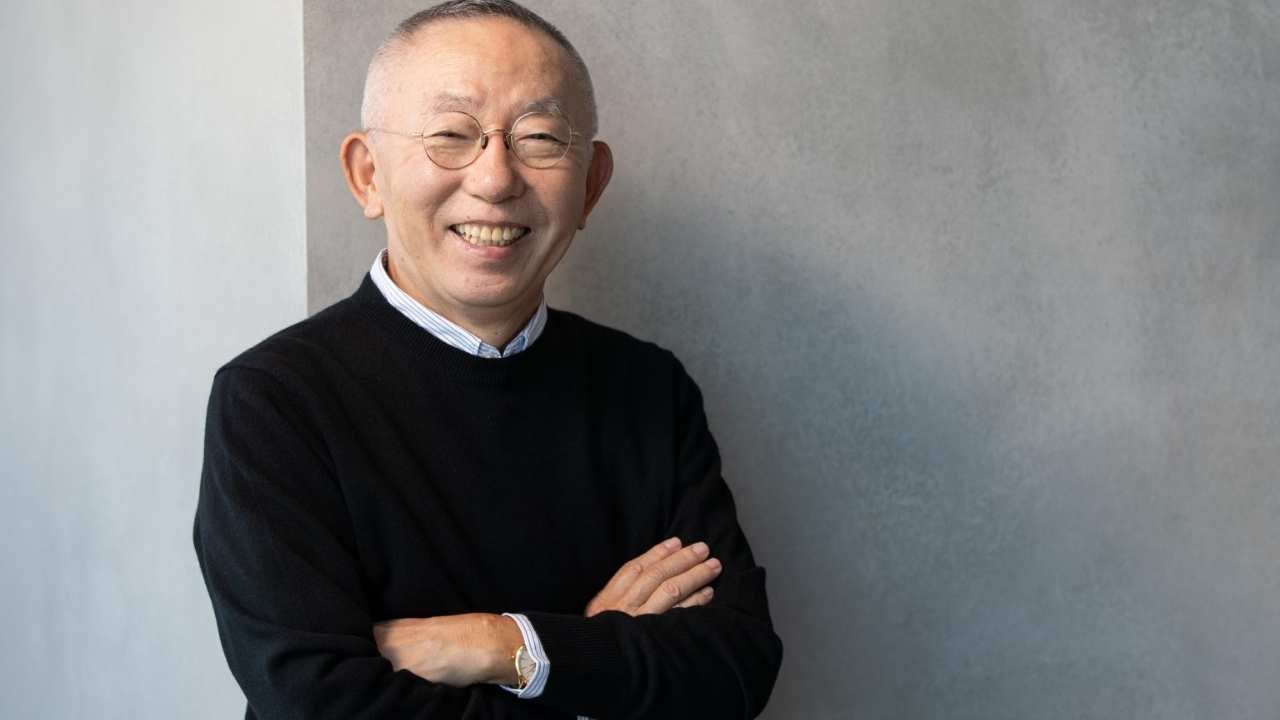
Tadashi Yanai, the founder and chairman, president, and CEO of Fast Retailing—the parent company of Uniqlo—stands as one of the most influential figures in global retail. Born on February 7, 1949, in Ube, Yamaguchi Prefecture, Japan, Yanai has transformed a small family tailoring business into a multinational apparel giant, making him Japan’s richest individual with an estimated net worth exceeding $50 billion as of late 2025.
From Humble Beginnings to Retail Revolution
Yanai’s journey began modestly. After graduating from Waseda University in 1971 with a degree in economics and politics, he briefly worked at a supermarket before joining his father’s roadside men’s clothing store, Ogori Shoji. In 1984, he opened the first Unique Clothing Warehouse store in Hiroshima, which later became Uniqlo—a name reflecting its mission to provide unique, high-quality clothing at affordable prices.
Under Yanai’s leadership, the company rebranded to Fast Retailing in 1991, emphasizing speed and efficiency in production and retail.Uniqlo’s ascent began with game-changing products, such as fleece jackets in the late ’90s. These became instant classics, celebrated for their quality and affordability. Yanai’s guiding principle—”Uniqlo is not a fashion company; it’s a technology company”—underscores his commitment to functional, enduring “LifeWear” items, setting them apart from fast-fashion competitors like Zara and H&M.
A Global Expansion
Fast Retailing now boasts over 3,500 stores globally, with Uniqlo, its primary brand, operating in more than 2,500 locations across 25+ countries. The company has pursued aggressive growth, acquiring brands such as Theory, Helmut Lang, and J Brand, while GU caters to a more trend-conscious, budget-minded audience.
In fiscal 2025, which concluded on August 31, Fast Retailing achieved record revenue of ¥3.4 trillion (roughly $22.9 billion) and an operating profit of ¥564 billion, fueled by robust international performance, especially in North America and Europe.
Uniqlo International experienced robust growth, particularly in the U.S. and Europe. Looking ahead to fiscal 2026, the company anticipates even more impressive figures: ¥3.75 trillion in revenue and ¥610 billion in operating profit, alongside plans to increase its global store count to 3,594.
Yanai’s long-term vision is ambitious, aiming to position Fast Retailing as the world’s largest clothing retailer, with a sales target of ¥10 trillion annually. His approach prioritizes quality, long-term planning (often a year ahead), and advancements in materials and sustainability.
Regarding leadership and philanthropy, Yanai is recognized for his direct involvement and modesty, even after achieving significant success. He embodies principles such as “one win, nine losses,” viewing setbacks as integral to progress. He’s been outspoken on international matters, voicing worries about American protectionism even as he pushes for growth within the U.S., a market he considers both personal and crucial.
Outside of business, Yanai is a dedicated philanthropist. He gave generously following the 2011 Tōhoku disaster, backs refugee efforts through Uniqlo’s recycling programs, and provides educational scholarships through the Yanai Tadashi Foundation. In 2025, he was honored with the Malcolm S. Forbes Lifetime Achievement Award for his impact on the apparel industry.
Married and the father of two sons, Yanai remains a driven leader at 76. As Uniqlo solidifies its place as a global symbol of straightforward, practical fashion, Tadashi Yanai’s influence persists: demonstrating that enduring essentials, inventive ideas, and persistent action can succeed worldwide.

Digital entrepreneur and content expert I help businesses with AI, SEO and the latest tech trends. I started Silicon Valley Weekly to make complex tech concepts easy to understand and use for business growth. I know a lot about systems and help startups, entrepreneurs and brands navigate the fast-changing world of tech and online marketing.
I build strategies that use data, search optimization, content marketing and AI tools to get visibility, engagement and revenue. I love finding ways for businesses to grow increasing their presence and turning new ideas into successful businesses. My goal is to connect the technology, with practical business use so brands can succeed online.