
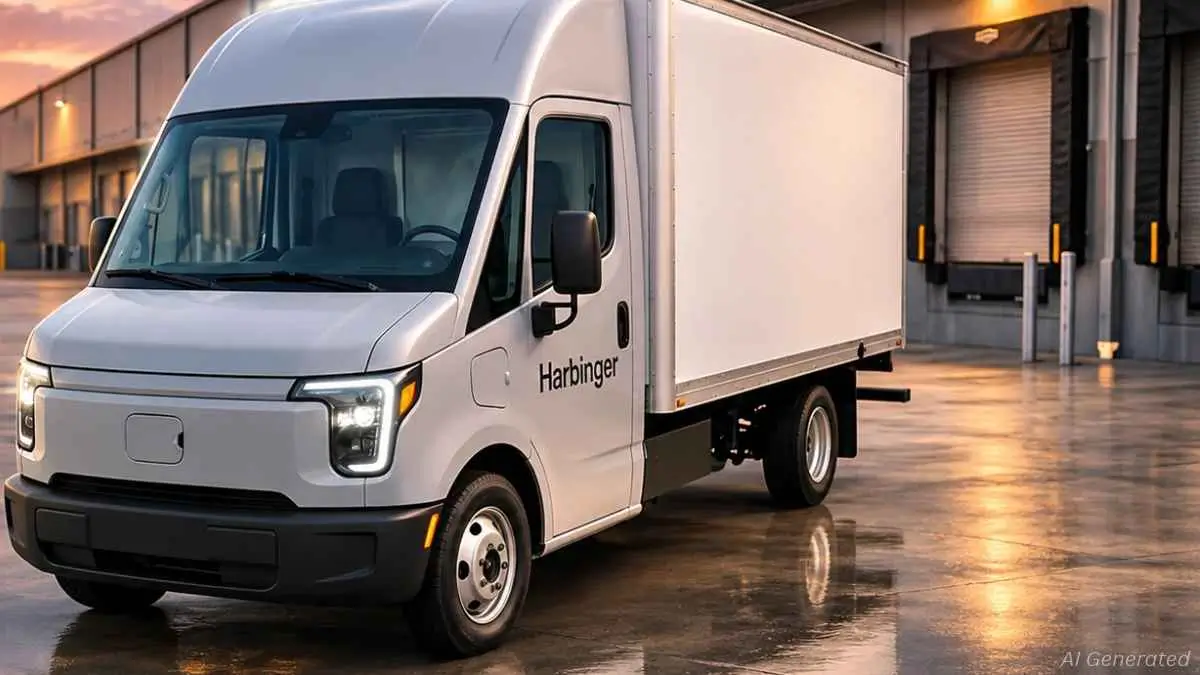
Whilst some legacy car companies are reviewing their approach to electric vehicles, start-up commercial EV company Harbinger has received $240 million in fresh investment. Further fuelling its current expansion phase, Harbinger has reportedly also won a $300 million deal with mail and logistics company FedEx and has recently secured a defence sector contract with the US military.
Whereas many companies are seeking to gain market share in the increasingly competitive consumer EV area, Harbinger is concentrating on supplying medium duty commercial vehicles. This includes mainly Class 4-6 vans and boxes which are key to areas such as logistics and manufacturing.
FedEx Deal Boosts Harbinger’s Commercial Vehicle Efforts
Harbinger has seen one of its most notable recent successes in securing what is claimed to be a $300 million deal with FedEx. This involves supplying thousands of electric commercial delivery and logistics vehicles.
Generally, the vehicles used for delivering goods will make numerous daily deliveries and then head back to a main location at which they can charge during the night.
In doing so, they are less reliant on general public charging points and so are easier to incorporate into a company’s fleet.
When organisations like FedEx assess vehicle options, cost, robustness and servicing concerns are usually more influential considerations than those relating to end users.
Harbinger is addressing these factors effectively with its commercial vehicle offering.
Why Harbinger is Concentrating On Medium Duty Electric Vehicles
Harbinger is targeting a market area which sits between passenger and heavy duty commercial sectors.
Class 4-6 vehicles are commonly utilised for local delivery and logistics, amongst other commercial endeavours. Nonetheless, there are differing engineering and production issues to those encountered when making electric passenger cars.
Harbinger feels that it can successfully exploit this and supply specialised electric vehicles to commercial vehicle fleets.
Furthermore, Harbinger is steering clear of the consumer EV area. Here, the market is highly competitive and both customer tastes and the marketing burden continually evolve.
Concentrating on the commercial sphere, Harbinger exploits the fact that within this area, people tend to judge vehicles primarily on their financial impact.
Electric delivery vehicles may offer lower running and servicing costs than diesel vehicles. Even slight per-vehicle cost savings can accumulate to considerable annual sums for extensive fleets.
Further Expansion Via US Defence Sector Contract
Harbinger’s defence sector contract with the US military represents further scope for the company’s expansion.
Vehicles used by the defence sector must be robust and able to perform under tough circumstances. Collaborating with defence clients can also enable Harbinger to showcase its engineering, production and vehicle performance expertise.
Such defence sector contracts can therefore aid start-ups in diversifying their reputations away from just the commercial logistics sphere.
Unfortunately, specifics regarding the value, timescale and nature of the defence contract have not been shared.
Increasing Competition In Commercial EV Market
Apart from Harbinger, there are already a number of companies working on commercial electric vehicles.
As well as Harbinger, Rivian has made in-roads in this area via supplying Amazon with electric delivery vans. Likewise, companies including Xos and Lightning eMotors are also seeking to supply commercial vehicle fleets with electric vehicles.
Across the whole of the USA too, there is considerable scope for development in this sector. Indeed, there are around 11 million commercial trucks in the country, predominantly in Classes 3-7. Most of these continue to run on diesel.
Even a limited transition to electric vehicles therefore holds considerable potential for those who can successfully produce robust and reasonably priced trucks.
Commercial Fleets Benefit From Charging Facilities
In comparison to private EV users, commercial vehicle fleets also benefit from having access to charging facilities.
Many delivery vehicles will drive back to a main site after completing their daily runs. Here, custom-built charging infrastructure can be installed and a company can regulate when its vehicles charge. This again decreases reliance on general public charging points and facilitates the incorporation of electric vehicles within a company’s transport provision.
Therefore, this regulated charging process further underpins the commercial viability of Harbinger’s offerings.
Can Harbinger Successfully Manufacture And Supply Vehicles On A Wide Scale?
Although Harbinger has had notable recent successes, manufacturing represents a major area in which the business faces difficulties.
Whilst obtaining investment and winning high profile clients are important successes, in order to supply thousands of commercial vehicles, Harbinger must effectively manage extensive production resources, together with its supply chain and maintain product quality standards.
Although the FedEx deal represents a major commercial prospect, efficiently meeting large supply targets will be key to ensuring the company’s continued success in the future.
Unfortunately, no details have been given about Harbinger’s production resources and timescales.
The Future Of Commercial EVs
Recent investment in Harbinger emphasises the promising prospects for electrifying the commercial vehicle sector. Although novel styling and performance are frequently highlighted in relation to consumer EVs, commercial vehicle fleets are more concerned with a vehicle’s robustness, cost-efficiency and efficiency.
By emphasising these key areas, Harbinger is well placed to exploit the financial advantages which may be realised through the introduction of electric vehicles. With its latest $240 million investment, plus the FedEx and defence contracts, Harbinger is well set for further development. However, its long term success in this commercial led approach will hinge on its effectiveness in both scaling up manufacturing and in meeting supply targets.

Digital entrepreneur and content expert I help businesses with AI, SEO and the latest tech trends. I started Silicon Valley Weekly to make complex tech concepts easy to understand and use for business growth. I know a lot about systems and help startups, entrepreneurs and brands navigate the fast-changing world of tech and online marketing.
I build strategies that use data, search optimization, content marketing and AI tools to get visibility, engagement and revenue. I love finding ways for businesses to grow increasing their presence and turning new ideas into successful businesses. My goal is to connect the technology, with practical business use so brands can succeed online.