Highlights:
Record-sized round: The AI-driven robot-maker Genesis AI has closed a $500 million Series A at a $3.5 billion post-money valuation, announced on November 17, 2026. It was co-led by Khosla Ventures, Premji Invest and Eclipse Ventures and it was one of the biggest robotics rounds in Europe this year.
Rapid growth: The Paris and Silicon Valley-based startup grew from $105 million in a seed round in July 2025 to approximately $605 million raised in just sixteen months.
Eno and 2027: The funding will go into manufacturing Eno, a versatile robot trained using sensor gloves which track human movements. Its deployment in manufacturing and logistics is set to be expanded in 2027 when the company must justify its valuation.
A Round That Rewrites European Expectations
Genesis AI, the robotics startup split between Paris and San Carlos, California, announced on November 17 that it raised $500 million in a Series A round at a $3.5 billion post-money valuation. Khosla Ventures, Premji Invest, and Eclipse co-led the financing, and Nvidia is reportedly among the participating investors.
The figures are striking for a company that emerged from stealth only about sixteen months ago, making this one of the largest robotics rounds Europe has seen this year.
From Seed to Superstar in Record Time
In addition to being of large scale, the growth rate of Genesis AI in the time since it was founded in July 2025 with a $105m seed round, has been impressive. Since then, it has raised around $605m in total. In fact, even at the time of the initial Bloomberg reports on the funding in July, discussions were taking place on what would be a $3bn deal.
As it is related to state-of-the-art language models, these types of increases in valuations are common to see compared to hardware focused companies as they have to develop real products.
The Founders and the Thesis
The Genesis AI founders are Zhou Xian, who is the CEO, and Théophile Gervet. The core thesis is that general purpose robots require an integrated process whereby the AI model, hardware, and deployment process are all created simultaneously instead of being outsourced to different firms.
With all three under one ownership, according to the founders, learning from the practical application of the robot can be used to refine the model directly.
Meet Eno
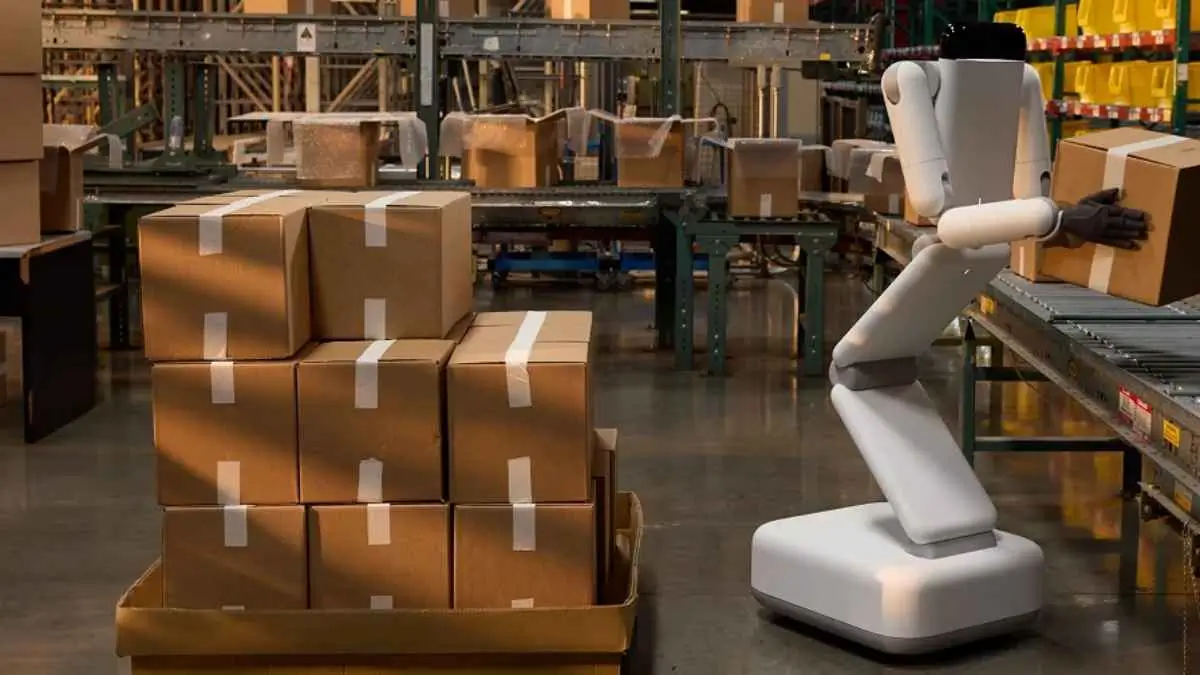
The most important machine of the company is called Eno, a robot designed to carry out physical functions with accuracy similar to human individuals. It relies on an unconventional way of teaching: a human person will wear special gloves for data collection while doing certain operations, and the motion data will help the robot understand how to perform human-like work.
This method can overcome the lack of specific robot training data, which is one of the biggest obstacles in the industry. The funding received will allow manufacturers to increase production volumes, starting the first rollout in 2026, and expanding its introduction to manufacturing processes during the two coming years.
A Crowded and Costly Field
Genesis is certainly not the only company drawing the big bucks. Path Robotics just received $300 million in funding this month, NEURA Robotics is seeking an investment up to $1.4 billion, and a number of other highly capitalized competitors from America and Asia are vying for the exact same thing.
It seems that investors see physical artificial intelligence as the next step after the chatbot craze, that time when intelligence gets off the screen and gets to work.
The Hard Questions Ahead
Prices which have reached this level come with expectations that aren’t easy for breakthrough businesses to accomplish. A $3.5 billion valuation is predicated on the success of the Genesis company in its journey from artisanal to mass-production.
Production of robots at scale, ensuring their safe operation around humans, and justifying their business case are still the obstacles on Genesis’s way to guaranteeing this valuation. Some experts are proposing exporting robot productivity as a service instead of manufacturing robots.
What It Means for France and Beyond
For France, the round represents ambition. For years, the nation has been nurturing an AI ecosystem based on language models startups, and an AI physical champion based in Paris is just another chapter in that story.
It remains to be seen whether Genesis AI will be a true industrial player or just another ambitious project of the cycle, but it will all be known by 2027 when Eno exits the laboratory and enters the production floor. Up until then, the startup has everything it needs to make it work.
Source: Briefs Finnace / Photo: Genesis AI

Digital entrepreneur and content expert I help businesses with AI, SEO and the latest tech trends. I started Silicon Valley Weekly to make complex tech concepts easy to understand and use for business growth. I know a lot about systems and help startups, entrepreneurs and brands navigate the fast-changing world of tech and online marketing.
I build strategies that use data, search optimization, content marketing and AI tools to get visibility, engagement and revenue. I love finding ways for businesses to grow increasing their presence and turning new ideas into successful businesses. My goal is to connect the technology, with practical business use so brands can succeed online.