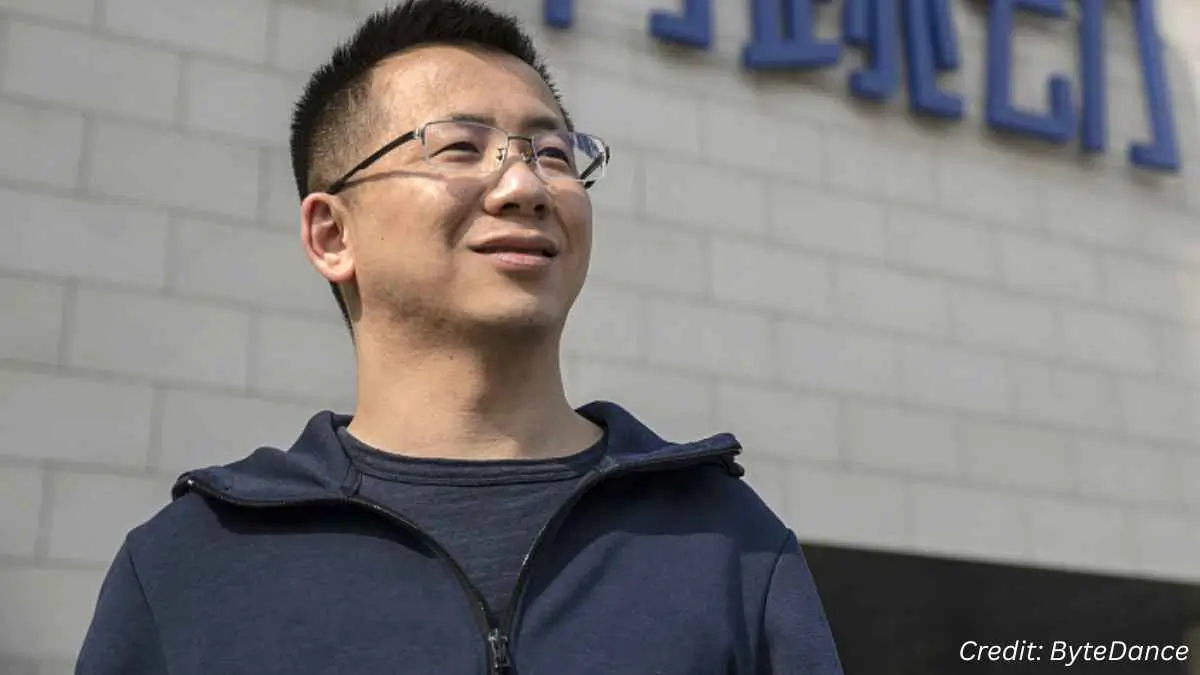
On Sept. 16 2026 Bloomberg’s Billionaires Index estimated that ByteDance founder Zhang Yiming has a net worth over $105 billion, which makes him richer than Gautam Adani. With this, the 43-year-old Chinese internet entrepreneur has for the first time become the richest person in Asia.
The ranking is less of a scoreboard than a signal. Zhang built ByteDance on recommendation algorithms, then watched TikTok become a geopolitical issue. He retired as chief executive in 2021. Five years on, his fortune is still linked to a private company now being valued as much for artificial intelligence as for short video.
That combination — product power, political risk and a founder who never quite left — is why Zhang Yiming remains part of any serious conversation about global tech.
From Beijing apartment to the world’s most watched algorithm
A native of Longyan Fujian born on April 1 1983 Zhang began his career with a degree in engineering and Nankai University as a stepping stone to his professional life which he graduated in 2005. After working as an engineer, he got to be a technical director at Kuxun, an online travel site. He had a very short period at Microsoft after that and then he went to work at Fanfou, a failed microblogging startup, then 99fang.com real estate search engine which he managed for around three years.
In March 2012, he founded ByteDance in a four-bedroom apartment in Beijing along with university friend Liang Rubo. The first big product, news app Toutiao, launched in August that year. The core idea was not a social network. It was machine ranking: give people what they’re most likely to keep watching, without expecting them to follow the right accounts in the first place.
Douyin was launched in China in 2016. The international version, TikTok, scaled after ByteDance’s acquisition of Musical.ly in 2018. The same logic that made Toutiao sticky also made short video feel inescapable. That’s the known history of the product. The more egregious claim – that Zhang “invented attention” – is marketing. Operationally, what he invented was a company that was structured around ranking at massive scale.
He resigned as CEO. Control he did not release
During May 2021, Zhang made public Truth is he was resigning as president and handing the role of CEO over to a successor who would then take over the responsibilities of leading the team and managing the company, which was later done on November 4, 2021. Liang Rubo, the co-founder, became the new CEO. Speaking at the time, Zhang explained that his decision was due to him wanting to have more time for himself to think about the company long-term, and that he didn’t really see himself in a managerial role everyday. The statements were made from within the company letter he wrote to employees and have since been repeated in major media stories.
You might be interested in:
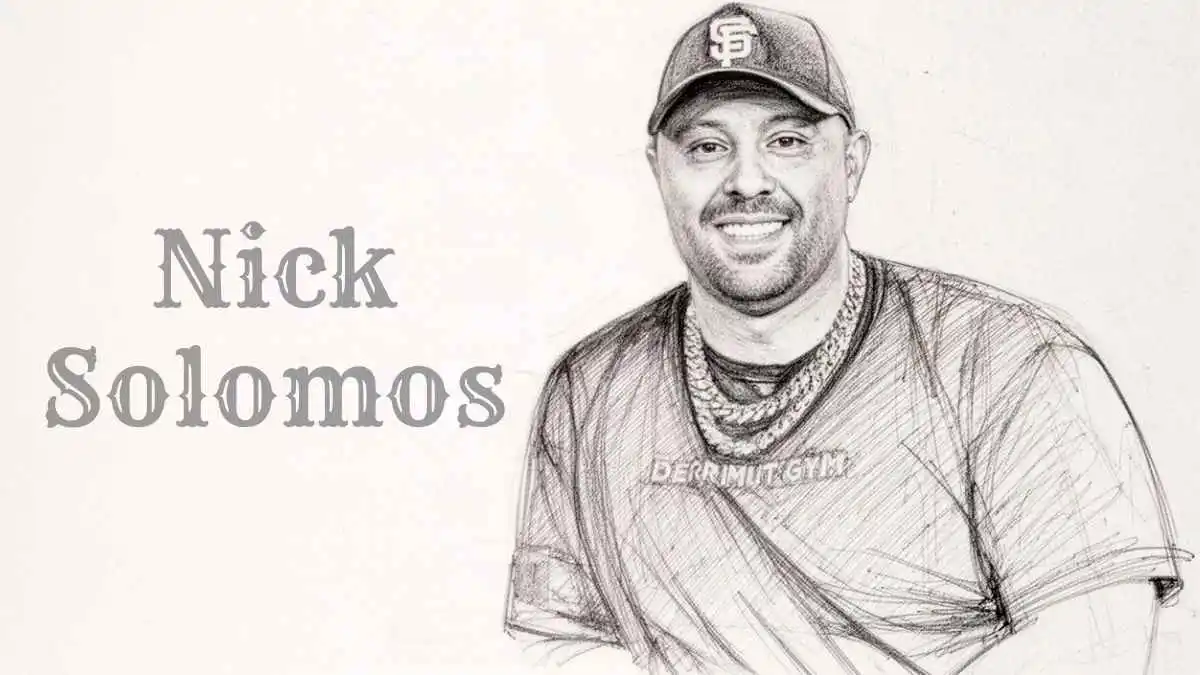
Nick Solomos: The Founder of Derrimut 24:7 Gym
Before You Leap: What Every Aspiring Entrepreneur Must Learn First
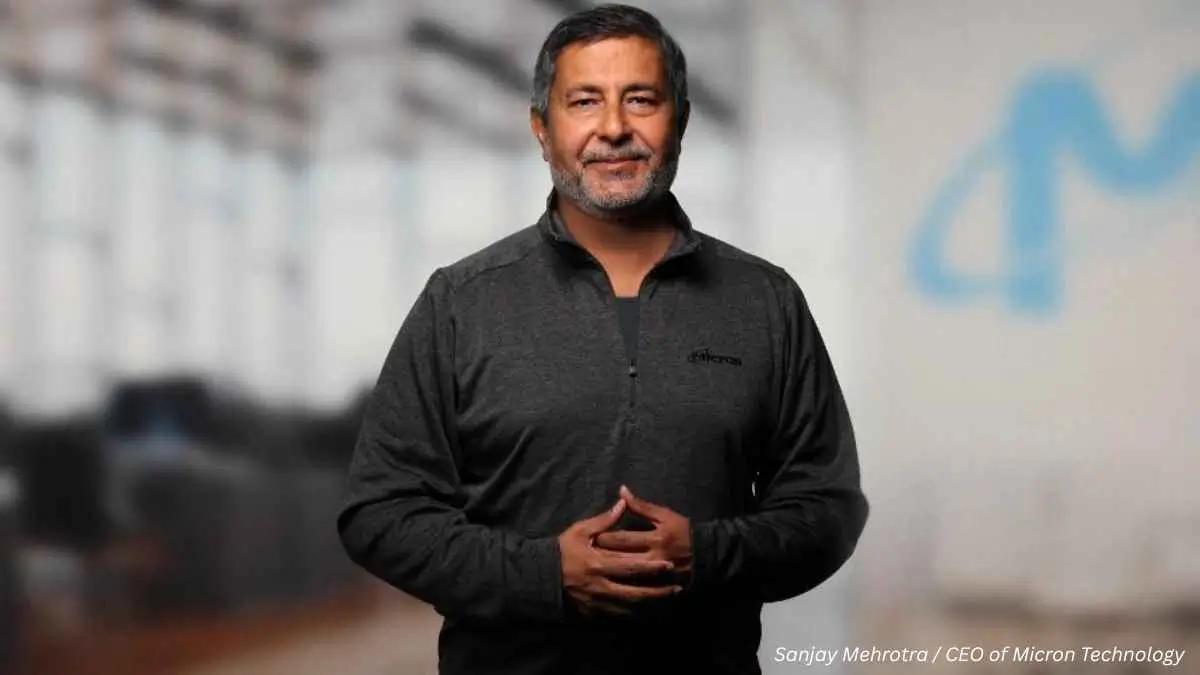
Sanjay Mehrotra: The Semiconductor Visionary Powering the Age of Artificial Intelligence
What didn’t change is who owns direction. Zhang retains more than 50 percent of the voting rights in ByteDance, Reuters has reported. U.S. court filings in 2024 put his stake in the economy at almost 21 percent. Those are different numbers and should be treated differently – voting control is not the same as cash ownership.
Analysis: Silicon Valley is quick to see a founder’s exit as a clean break. Zhang’s scheme is more of a dual model where the CEO is public but the controlling founder is private. That model can cut through the founder’s calendar. It does not weaken the founder’s veto power.
Washington lived through TikTok. The company remains private.
The political risk wasn’t theoretical. U.S. law in 2024 threatening a ban unless ByteDance restructured TikTok’s American operations. In January 2026, TikTok announced it had created TikTok USDS Joint Venture LLC. Oracle, Silver Lake and Abu Dhabi’s MGX took on managing investors, with 15 percent each. ByteDance retained a 19.9 percent stake. Oracle remained the major U.S. data and security partner.
That deal removed one valuation discount. It did not make ByteDance a public company. The shares do not trade so Bloomberg still applies a 10 percent risk discount. In the same week, Forbes published a lower number for Zhang. The gap is no mystery. It’s a reminder that “net worth” for private companies is an estimate based on other investors’ marks.
Bloomberg said Zhang’s estimated wealth soared more than $12 billion in September 2026 after it looked at valuations from firms including BlackRock Inc., Fidelity Investments and T. Rowe Price Group Inc. By the time Bloomberg started tracking him in March 2019, it was $13 billion.
Next bet is AI, and Zhang’s back in the room
When talking about the company, investors now mention ByteDance’s consumer AI products like the Doubao assistant and Seedance video model. Zhang is personally overseeing a real-time spatial video “world model” that could launch as soon as next month, Bloomberg reported on Sept. 7, citing people familiar with the matter. Timing was not set, the same report said, and could shift. That caveat belongs in any serious account.
The detailed finances of ByteDance are private, and secondhand 2025 profit figures have not been consistent across reports. What’s constant is the strategic shift: spending more money on models, chips and research teams, even as that spending pressures reported profits.
The practical takeaway for operators and investors: Zhang’s career suggests the scarce asset is not a charismatic CEO. It’s a ranking system for reuse, first news, then video, then generated media, plus the patience to stay private while regulators redraw the map.
What Zhang Yiming consists of
The established facts are simple. Zhang Yiming, founder and former CEO of ByteDance. He’s forty-three years old. Bloomberg currently ranks him as Asia’s richest person (as of mid-September 2026), thanks in large part to the private valuation of ByteDance. He gave up day-to-day management but still held voting control. In January 2026, TikTok’s U.S. business had been carved out as a majority non-Chinese enterprise. People talking to Bloomberg now portray him as a hands-on force behind the company’s next artificial intelligence (AI) systems.
The speculation is easy to find. Whether the world-model project will ship on time, whether Doubao will become a durable profit engine, and whether a private giant can keep compounding without a U.S. listing are all open questions. They should still be called that.
Zhang’s lesson for Silicon Valley is not for founders to go away. It’s a wider product logic than job titles. He built a company that sees attention as a ranking problem. The question now is, can the same company treat the physical and generated world the same way? It is the $105 billion figure which is what that number is—not the number itself.

Digital entrepreneur and content expert I help businesses with AI, SEO and the latest tech trends. I started Silicon Valley Weekly to make complex tech concepts easy to understand and use for business growth. I know a lot about systems and help startups, entrepreneurs and brands navigate the fast-changing world of tech and online marketing.
I build strategies that use data, search optimization, content marketing and AI tools to get visibility, engagement and revenue. I love finding ways for businesses to grow increasing their presence and turning new ideas into successful businesses. My goal is to connect the technology, with practical business use so brands can succeed online.